


Dream Weavers
Words
Mallika AdvaniPhotos
Aadyam Handwoven, an Aditya Birla initiative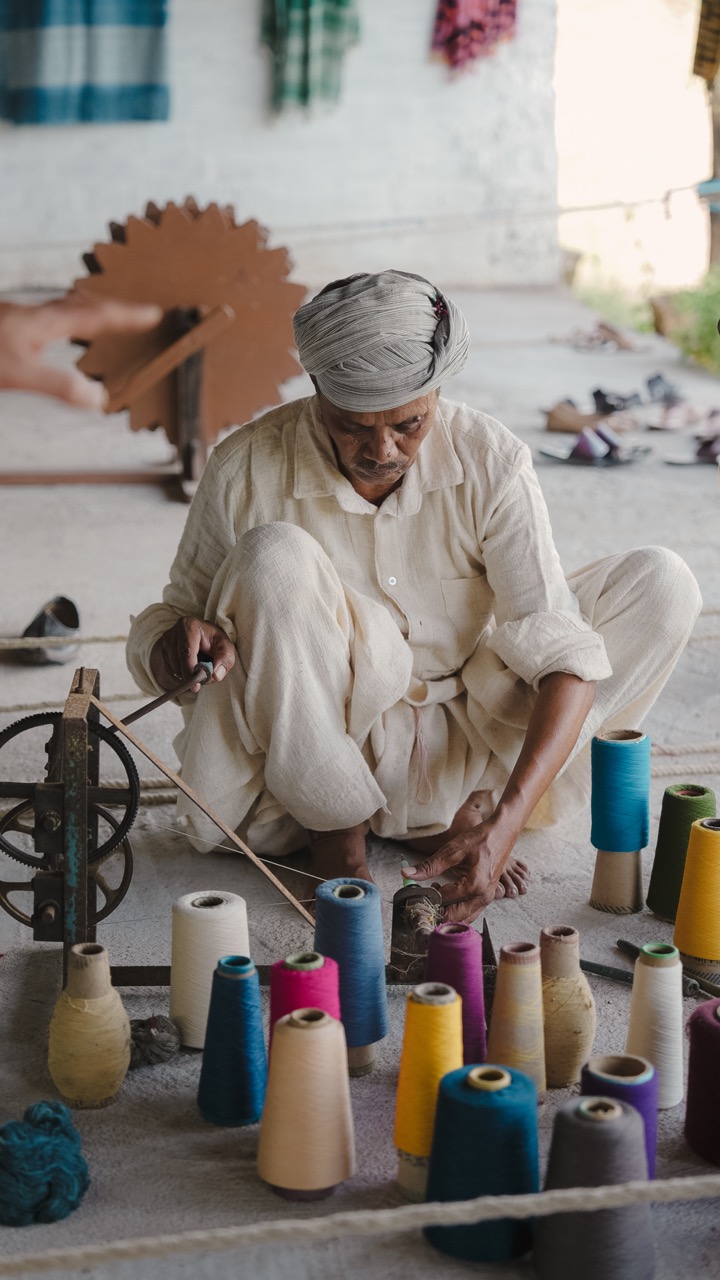
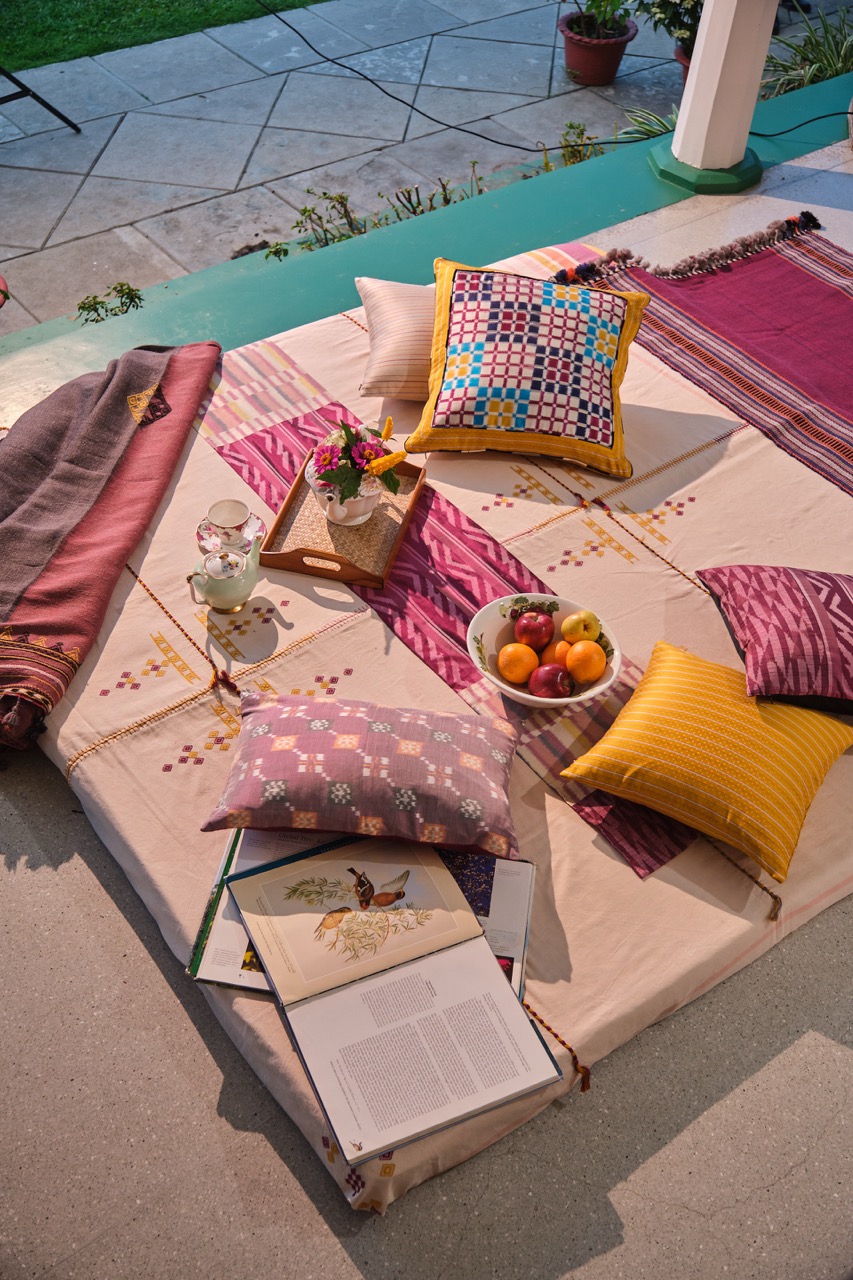
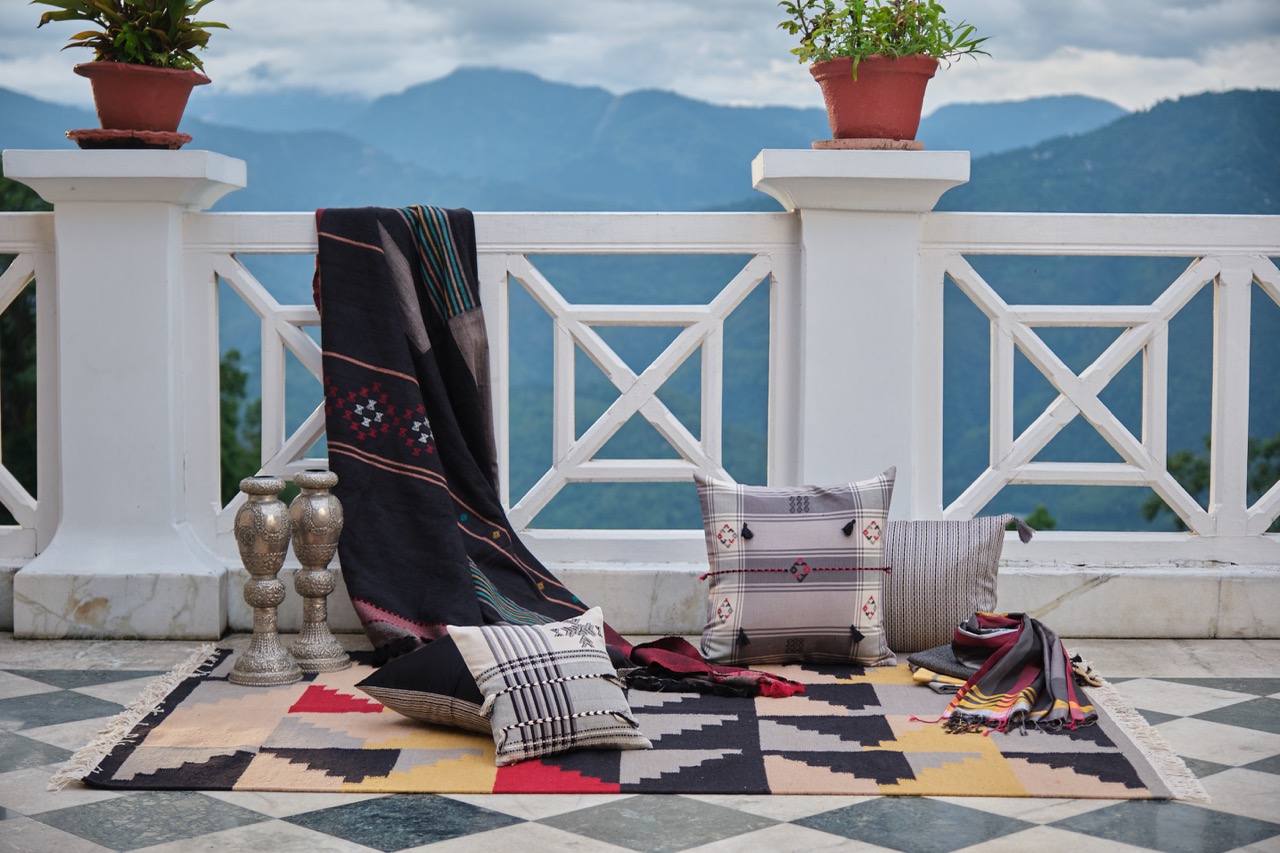
With ten craft clusters, generations of artisans, and one design team, Aadyam Handwoven transforms India’s textile traditions into designs that delight and endure
“Every day is a new day,” says Manish Saksena – an idea that, at Aadyam Handwoven, is woven quite literally into the work. As business head of the Aditya Birla enterprise, Manish works closely with weaver communities across India to keep handloom artistry alive, constantly rethinking what it can look, and even sound, like. It’s a frame of mind that treats textiles as culture, driving the brand into unexpected directions – like HumSaaz, a music album inspired by the sound of weaving – while simultaneously cementing handloom homeware within the contemporary design lexicon.
Ten craft clusters across the country, from the Deccan city of Gadwal to Kashmir, sit at the centre of Aadyam Handwoven’s mission, each transforming regional knowledge and techniques into furnishings that are refined, textured, and design-forward. Within these clusters, each artisan community is adept in specialised weaving techniques, bringing generations of inherited skill to soft furnishings, linens, and rugs. Initial concepts for each home collection start with the brand’s design team, who create a colour board led by trend forecasts, global interior insights, and lifestyle preferences. “Inspiration moves freely from William Morris florals to Rothko colour fields and miniature paintings to modern sculpture,” explains Manish. From there, the craft takes over, and ideas are translated through clusters chosen for their technical and material expertise.
The techniques in Kutch, for instance, lend themselves to geometric motifs and heavier yarns, whereas designs calling for fine sheers or curvilinear patterns find expression elsewhere. While weave techniques are adapted to suit function, the craft’s language is never compromised. “Telangana’s Pochampally ikats stay graphic, while Gujarat’s Patan Patola weaves retain their floral geometry and forms,” continues Manish. “It’s essential not to distort a craft’s signature. Our interpretations always honour its language first.”
This respect for tradition is evident during a trip to Bhuj, the heart of Kutch, where groups of artisans fluent in extra-weft weaving, tangalia, and mashru develop each design with precision and pace. Working with natural yarns and original weaves, they innovate through application rather than alteration: “An extra-weft technique might appear as a sheer, airy fabric in one design, then read as a dense, textural rug in another,” Manish describes.
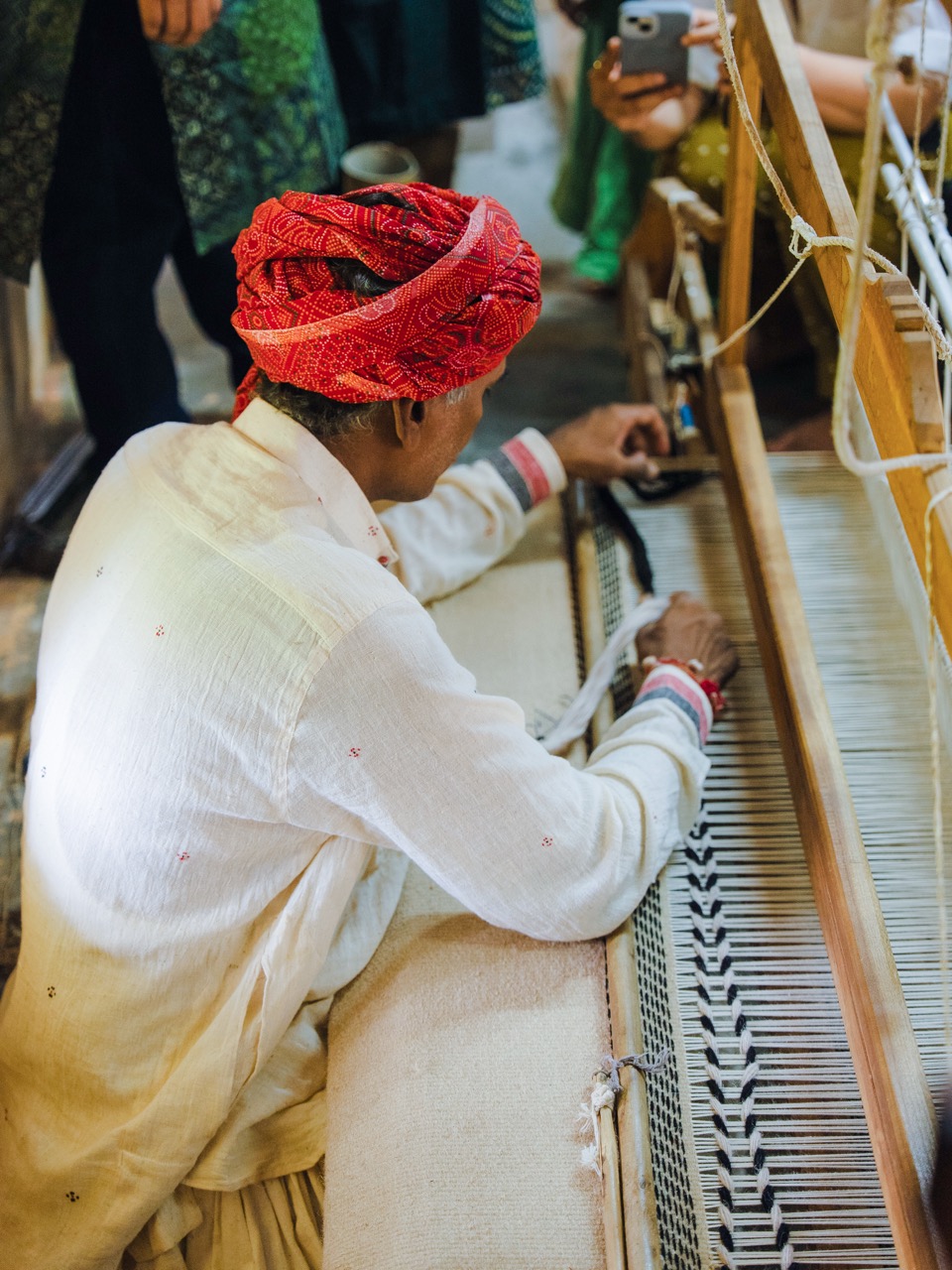
Preserved by the Vankar community of Gujarat, extra-weft weaving – a colourful response to the desert surroundings – has evolved from heavy woollen blankets to a wide range of forms and weights, including table runners, cushions, bed covers, and dhurries. On wooden pit looms, weavers coordinate their hands and feet in steady rhythm, lifting extra loops of coloured yarn above or below the warp to produce effects reminiscent of embroidery or fine jacquard. Tangalia, another extra-weft pattern, twists contrasting threads onto the warp to create raised, geometric dots, while mashru interlaces cotton with viscose or silk yarns to produce a luminous surface punctuated by delicate dots or vibrant stripes. Each technique draws on distinct motifs, colours, and material nuances, resulting in textiles that are visually expressive and shaped by their context.
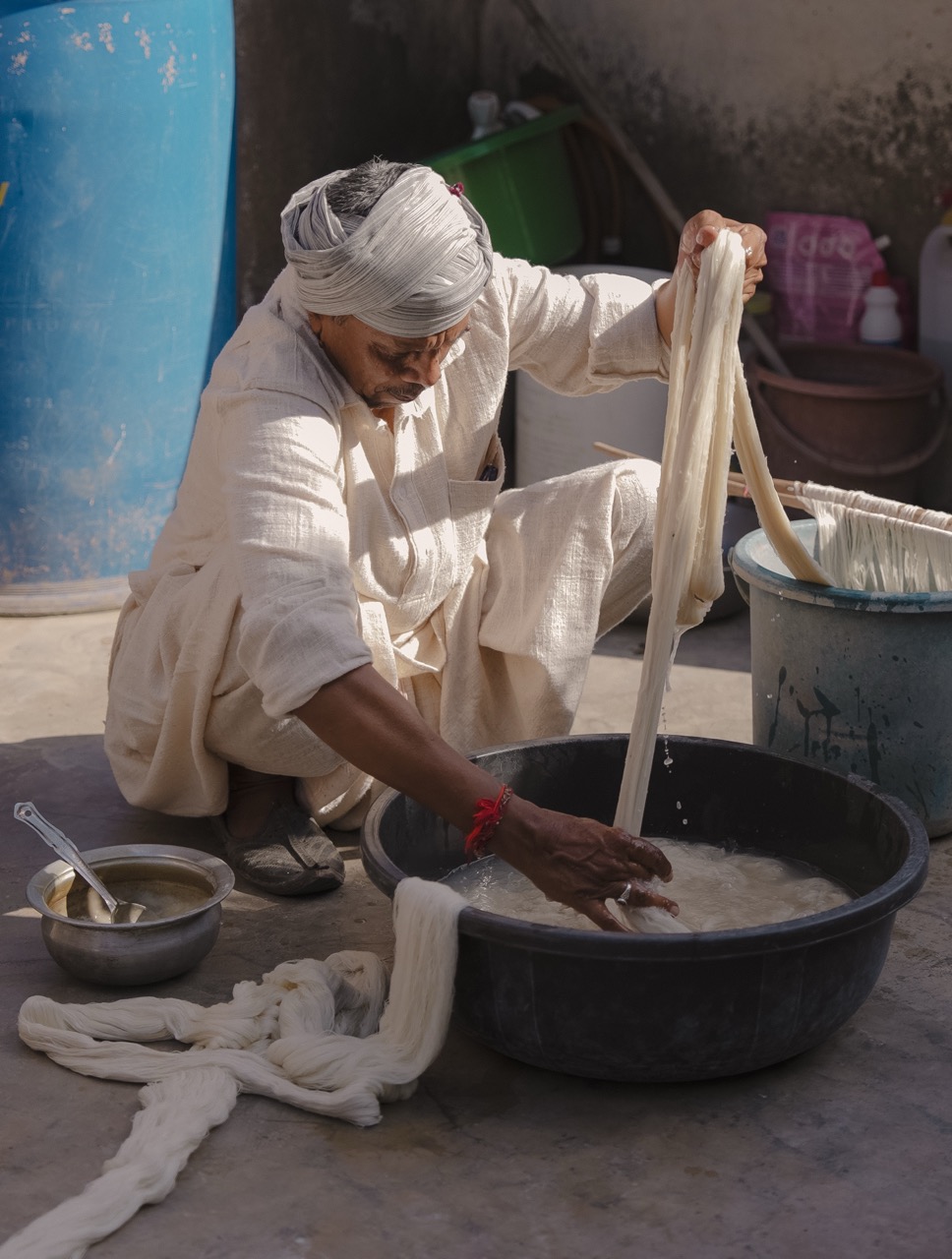
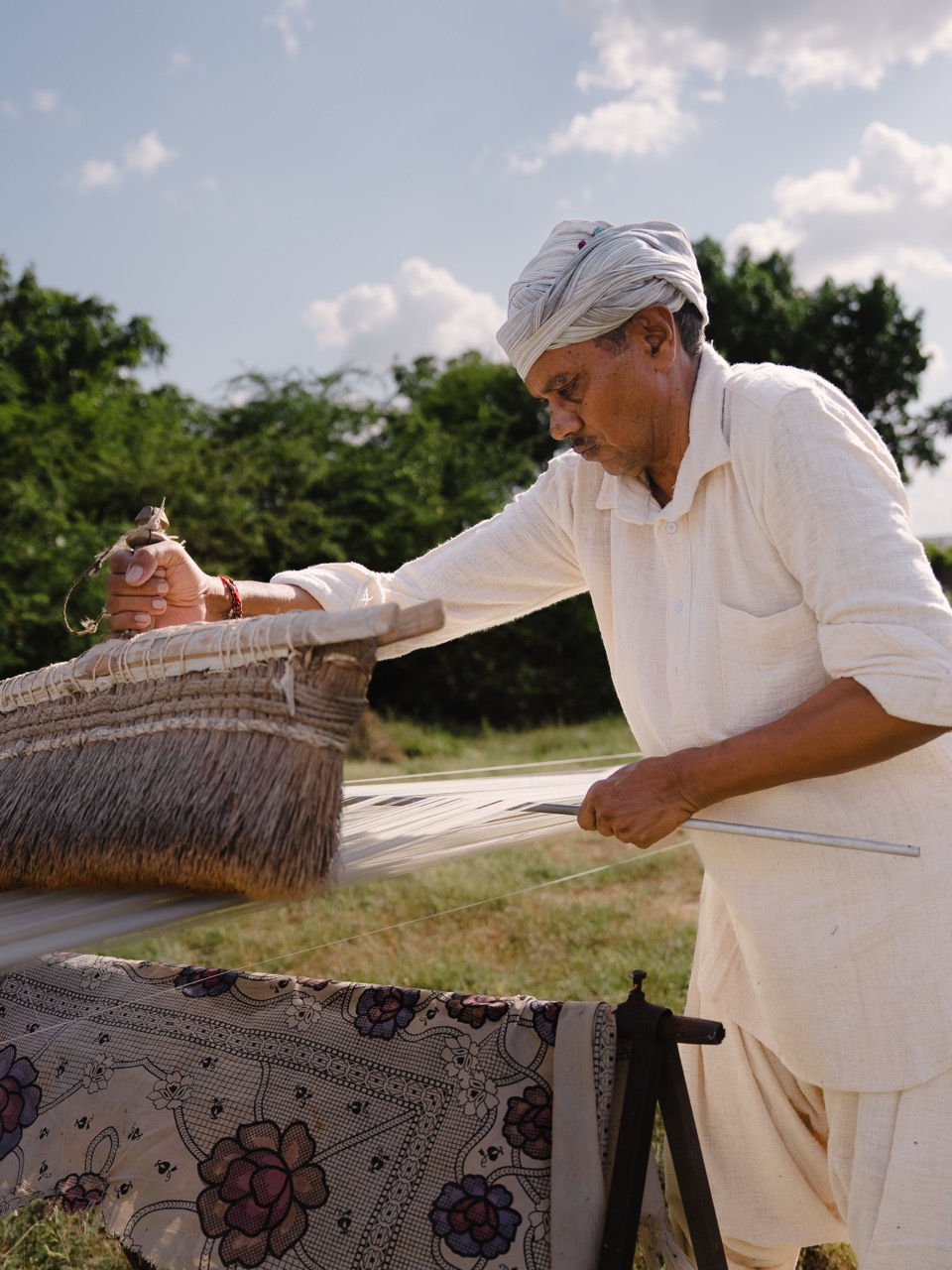
Across these practices, every design reflects its region and, depending on scale, familiarity, and complexity, can take days, weeks, or even months to complete. While much of the weaving is carried out by men, having looms installed at home makes the process collective, with entire families involved in pre-loom steps, from preparing the warp to winding yarn cones. Once woven into finished pieces, the design team pairs weaves and patterns from different regions into layered combinations. “What’s exciting is how each collection brings together diverse influences – a sofa might pair a graphic ikat cushion with a Benaras silk floral,” says Manish. “These juxtapositions give each collection its own identity and keep the craft alive.” Taken together, it’s this spirit of continual creativity, full of surprises, that makes every day at Aadyam Handwoven truly a new day. handwoven.aadyam.co.in