


Tusker Katha turns the culturally revered Manjadi seed into a furniture collection inspired by Kerala’s folklore
Words
Manisha ARPhotos
Hansoga Photography; (Portrait) Dipika Sapre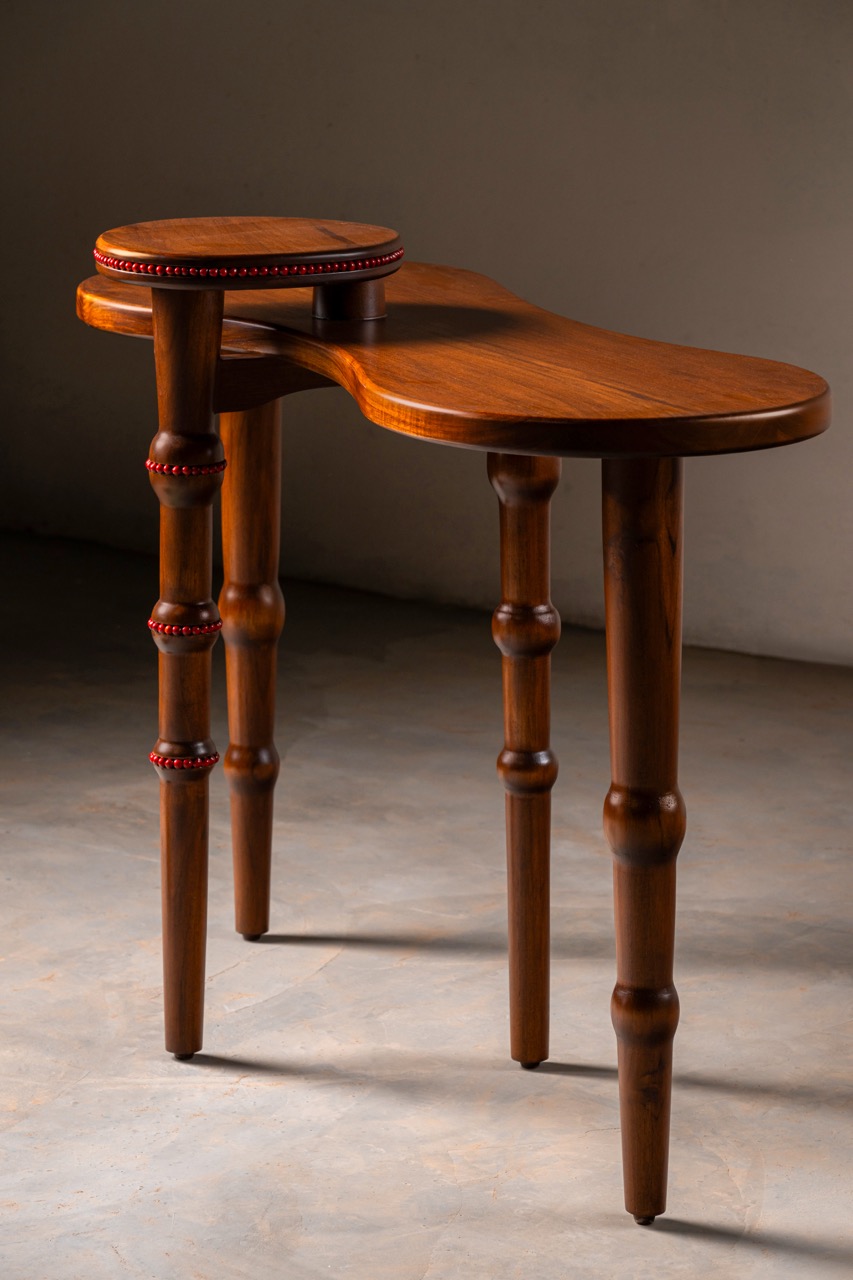
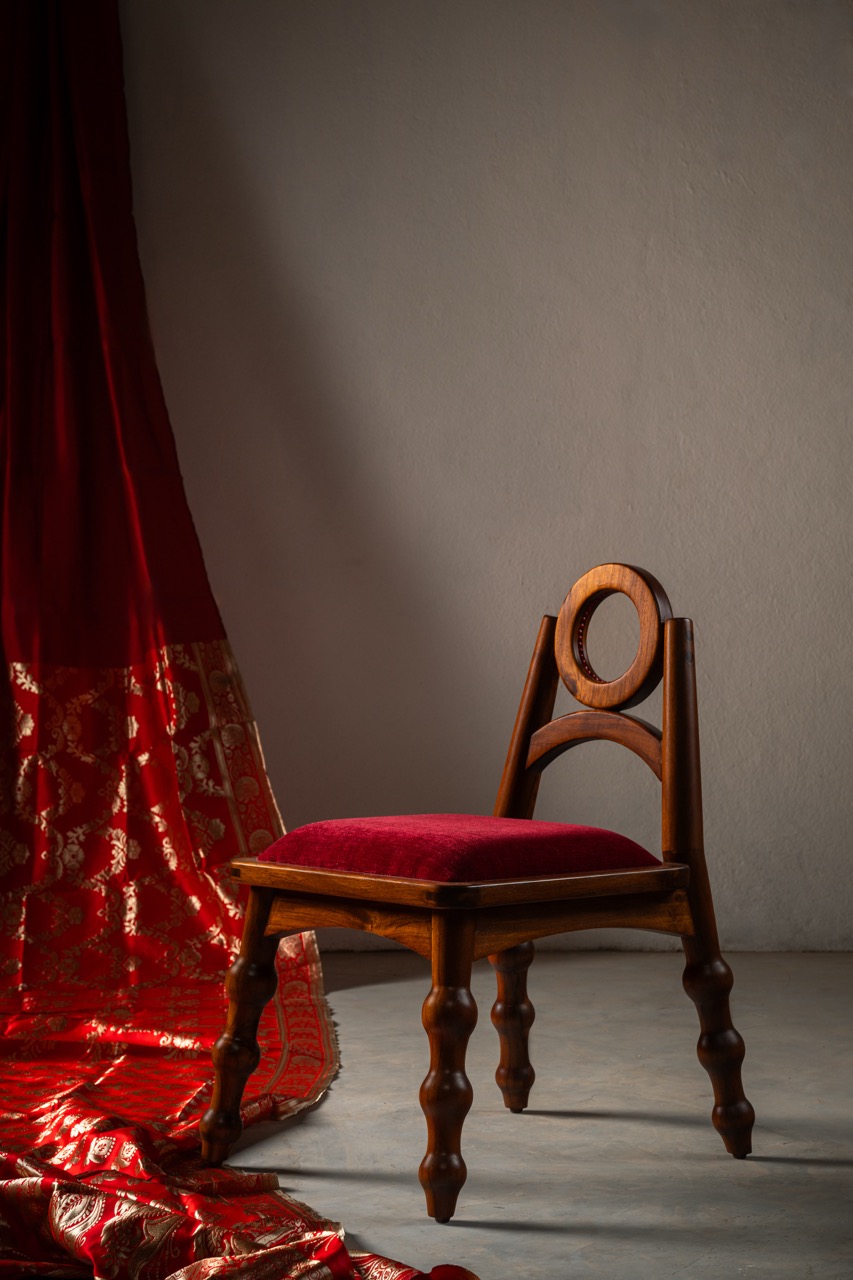
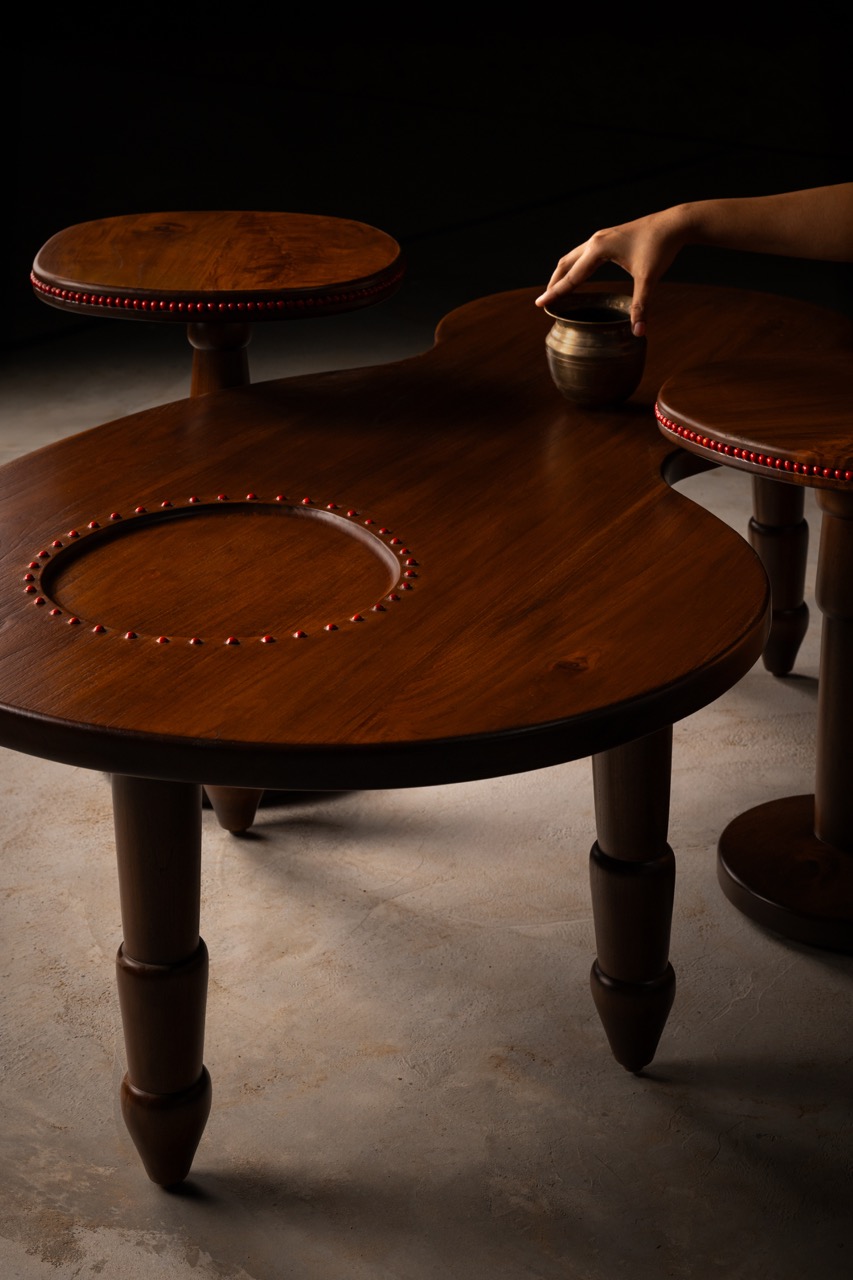
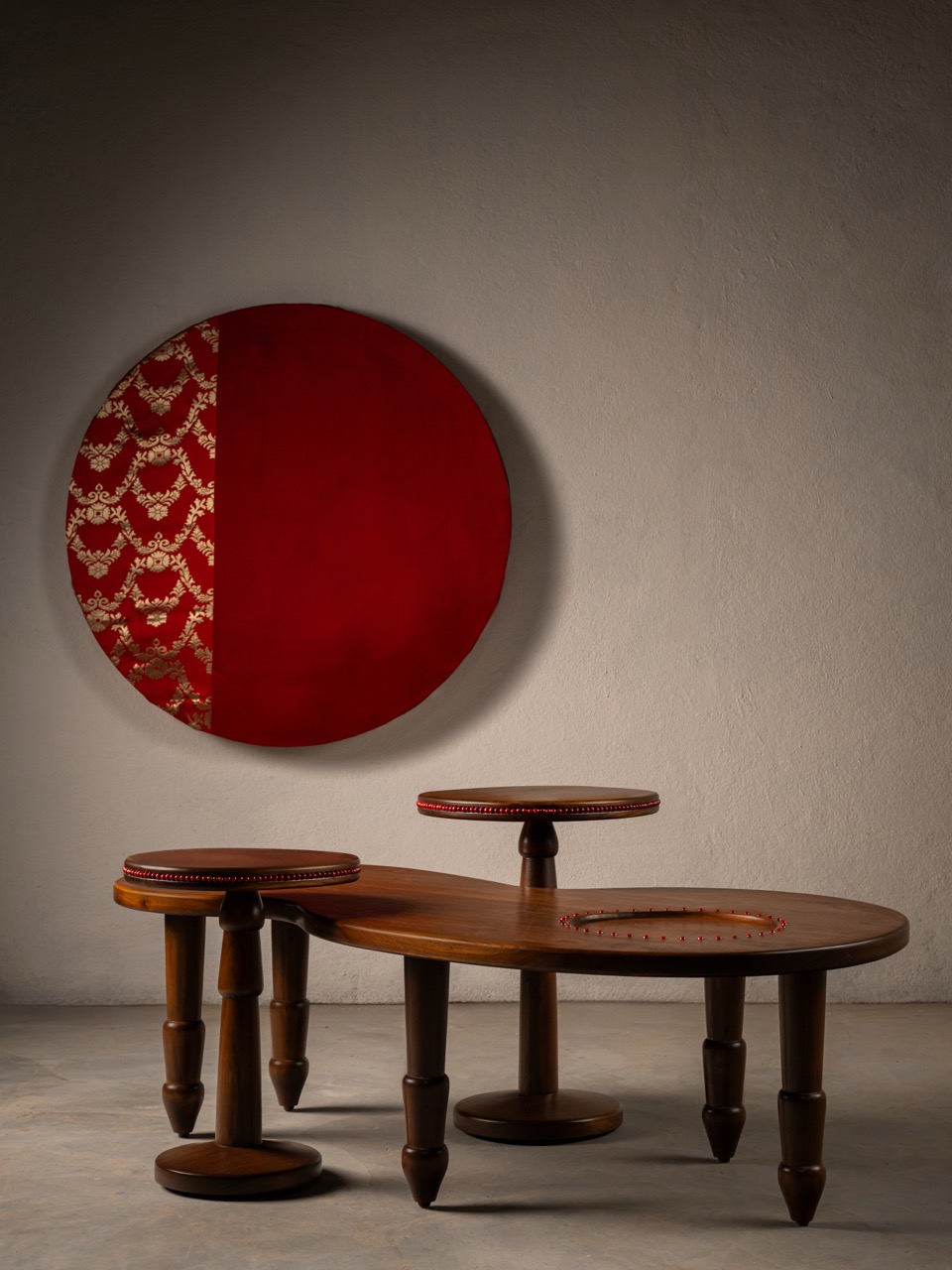
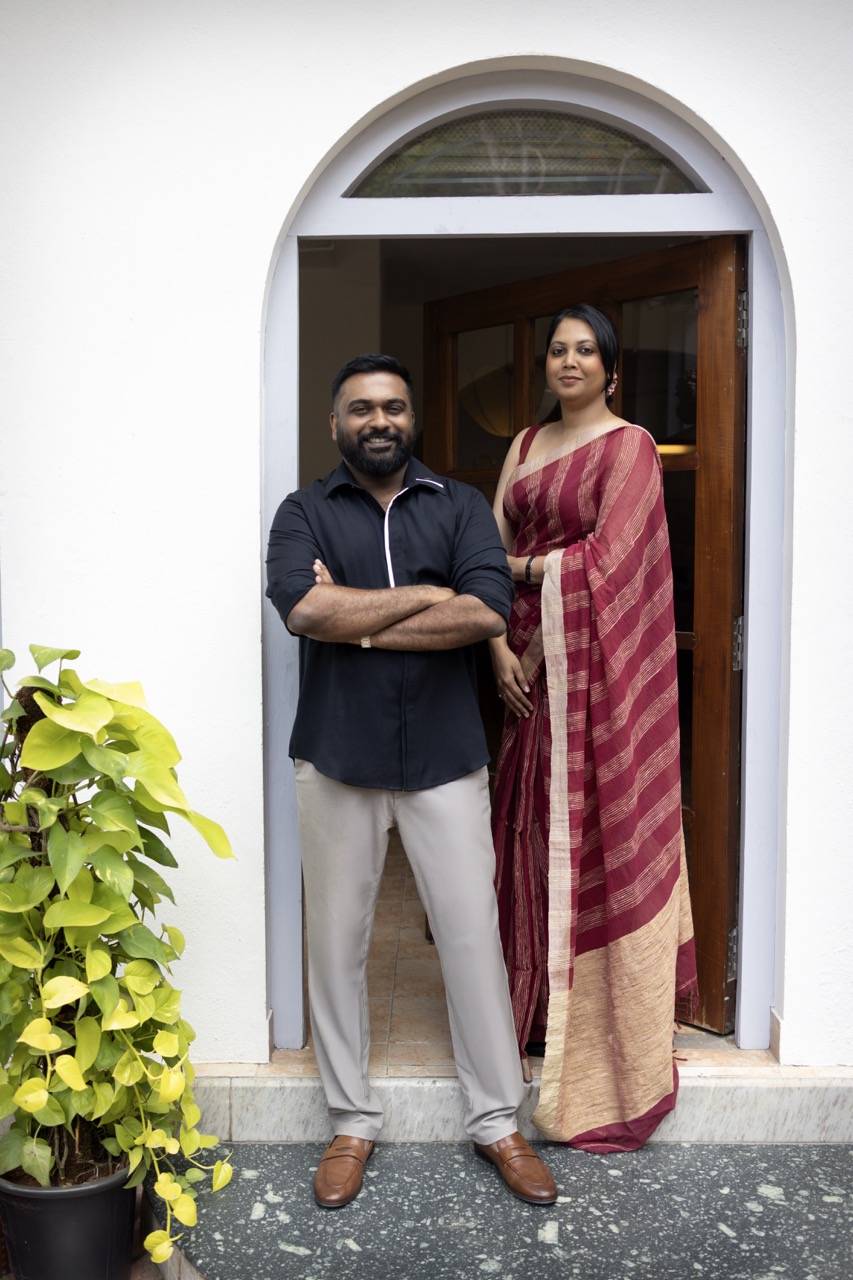
For Gayathri Padmam H and Nikhil Haridas of Aanai Design Studio, their furniture practice Tusker Katha is an ode to the humble elephant – long instrumental in transporting wood and other materials. Reflecting this ethos, each story (katha) or collection at the studio is centred around indigenous concepts that bring nostalgia and regional diversity to the fore. The duo’s latest furniture trio, the Manjadi collection, draws on the cultural resonance of the Manjadi seed and takes shape as a console, chair and centre table inlaid with these vibrant kernels. “The tactility of the Manjadikuru, and the stories it holds for every Malayali, is what led us to use this bright little piece of Kerala culture in our collection,” share the founder duo.
Why did the Manjadi seed become the foundation for this collection?
The region’s Manjadikuru, or auspicious red seeds from red sandalwood trees, occupy an important place in Kerala’s cultural and religious rituals. According to folklore, a small carving of an elephant would be placed inside the Manjadi seed and if you were lucky enough to possess one, it was believed you had been blessed with wealth. To place a tiny carved elephant inside the seed itself requires immense skill as an artisan. While developing the Manjadi collection, we were also exploring how touch can evoke memory, and the seed’s poetic association with the elephant felt deeply aligned with our practice.
How did the seed motif find its way into the design – visually and literally?
This entire collection draws inspiration from the pods of the Manjadi tree and seeds within them. The legs of the chair, console, and centre table all resemble the pods. The shape of the centre table, with the smaller tables nesting into it, mirrors the organic form of the seed itself. We contoured our designs to the natural shapes of the seeds and pods, and then inlaid the seeds onto the furniture itself in two different ways.
What drew you to teak as a primary material?
We chose to work with teak not only for its ready availability but also because of our personal connection to the material. Growing up in Kerala, where teak furniture filled nearly every home, this wood carries a deep sense of nostalgia for us. To ensure sustainability, we craft each table to order, and use the seeds sparingly to maintain their sanctity.
What was the most challenging part of the design process?
We went through stages of refining the design to get to the final form. The challenge was handpicking seeds of the same shape and size to be embedded one-by-one in the collection. We started out with several ideas on how best to lay the seeds but this collection was a lot of learning and unlearning. We worked in collaboration with craftspeople to explore each detail, including whether to polish before or after applying the glue. Over the course of this process, the design organically took shape into its final form.
Where do culturally-specific pieces like Manjadi sit within today’s global design language?
As more people move away from their hometowns, the disconnect from their roots deepens. Pieces like the Manjadi are designed to bridge that gap. The collection works beautifully as a trio or as individual pieces – the chair can stand on its own, or be paired with the centre table for a fuller expression. But beyond versatility, the real intention is creating a connection with each homeowner. While we haven’t currently put a cap on production, if the design becomes common by way of multiple orders, we will retire them. Keeping these pieces rare is part of honouring what they represent.
What’s next for Tusker Katha?
We’re working on two collections based on art forms that have been instrumental in defining the cultural narrative of South India – a natural evolution of where this journey is taking us. tuskerkatha.in