

In this Trivandrum apartment, designer Faisal Manzur builds a bachelor pad around one guiding principle: the art comes first
Words
Mallika AdvaniPhotos
Talib Chitalwala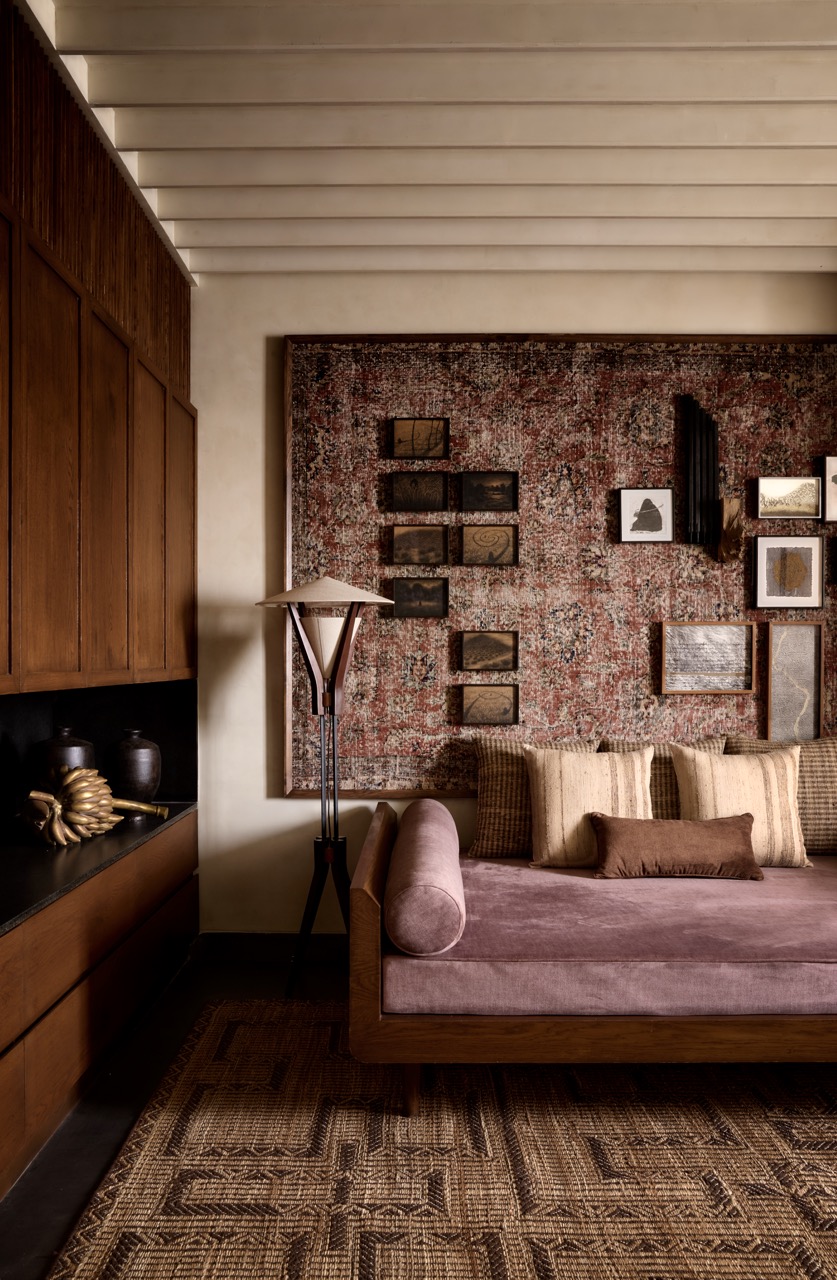
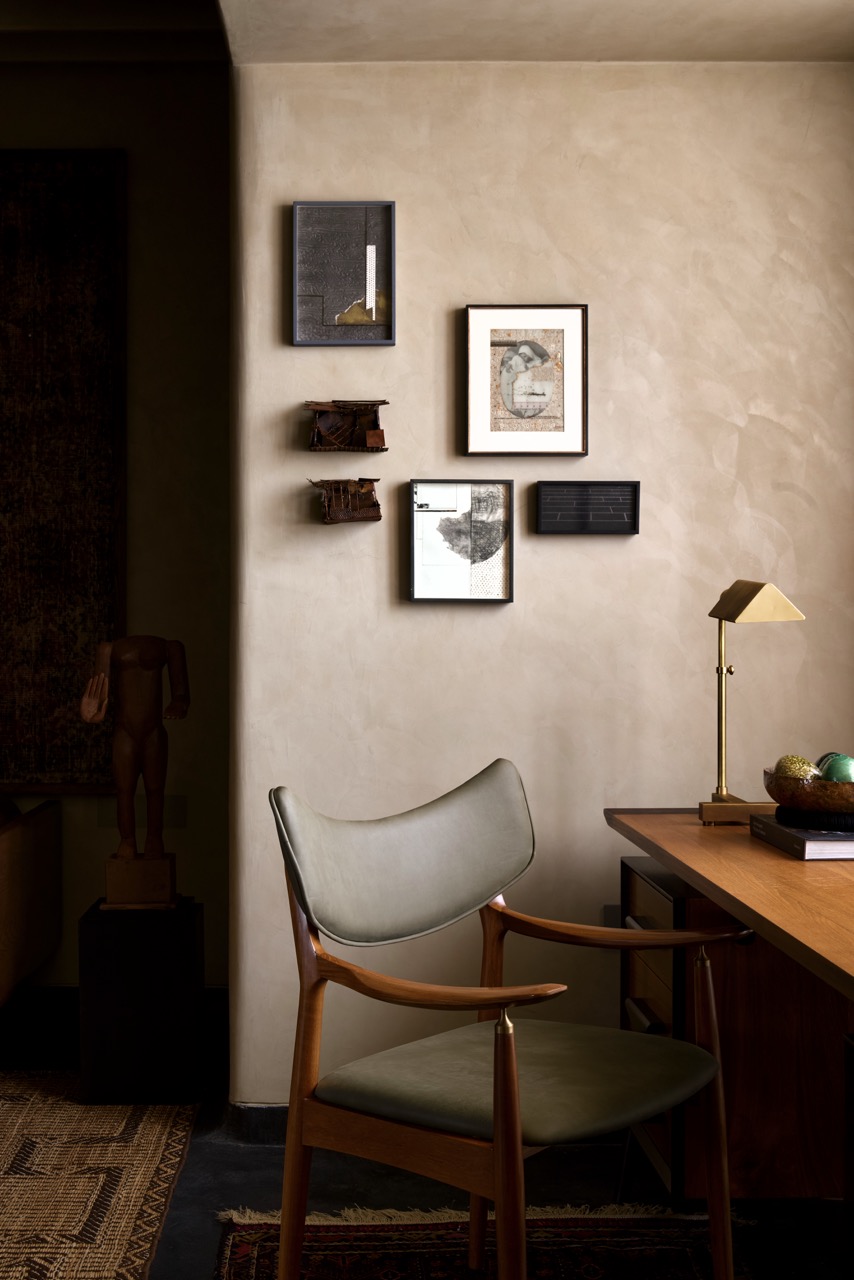
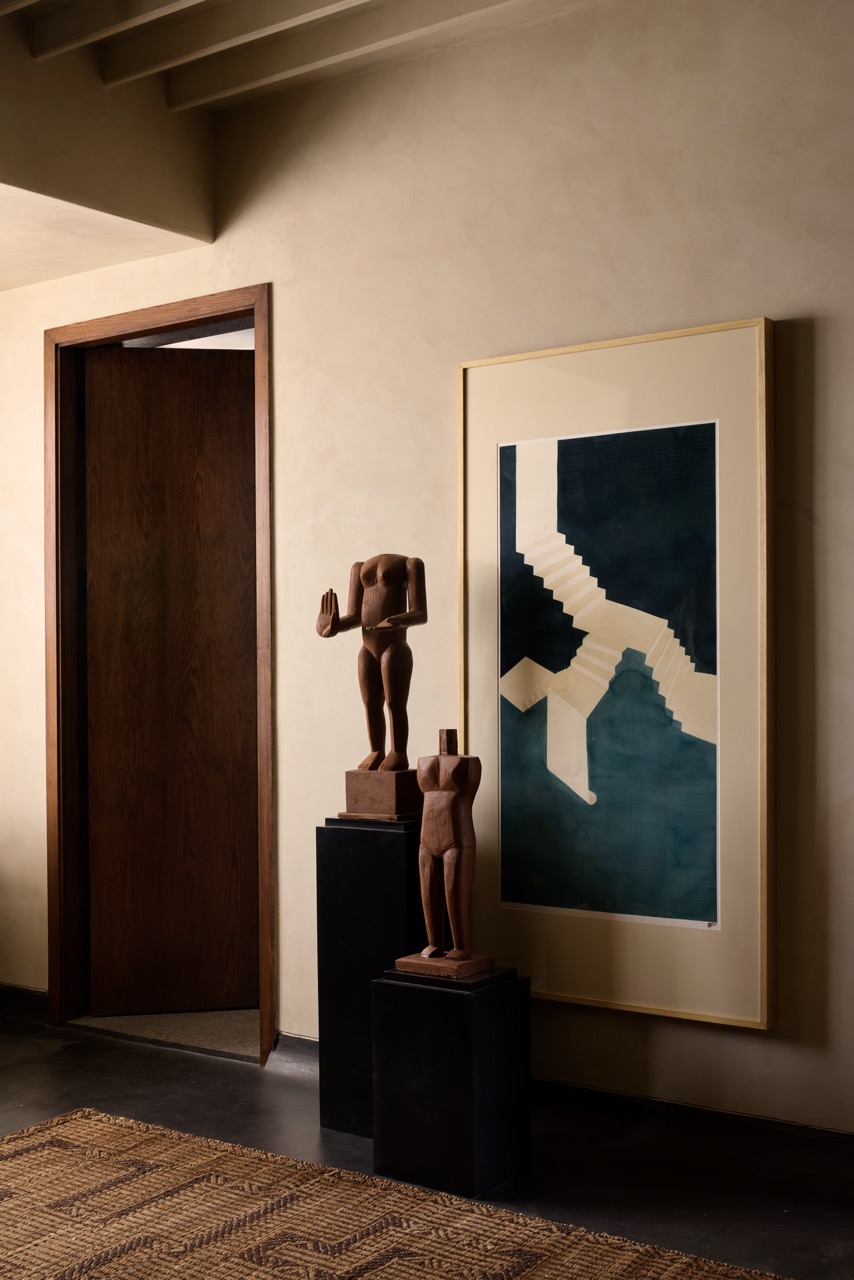
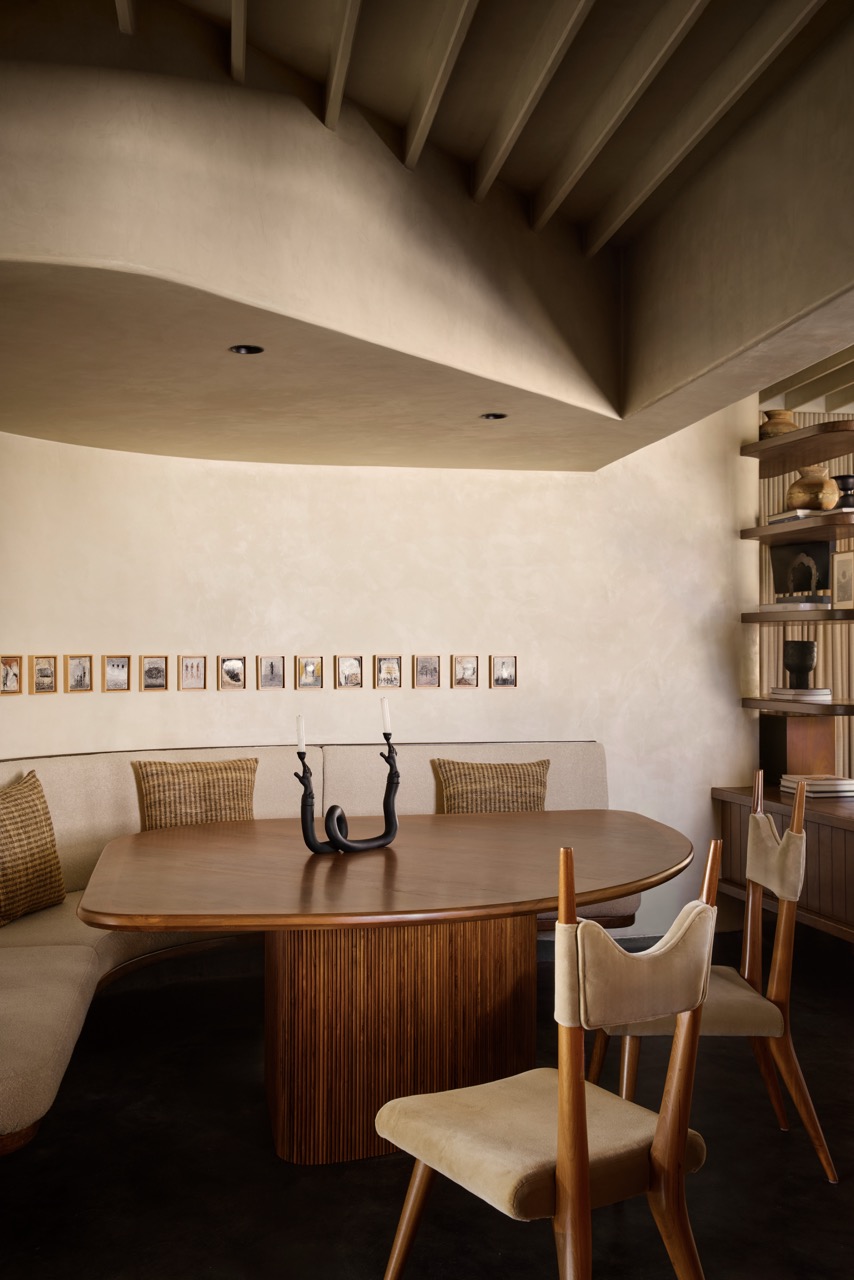
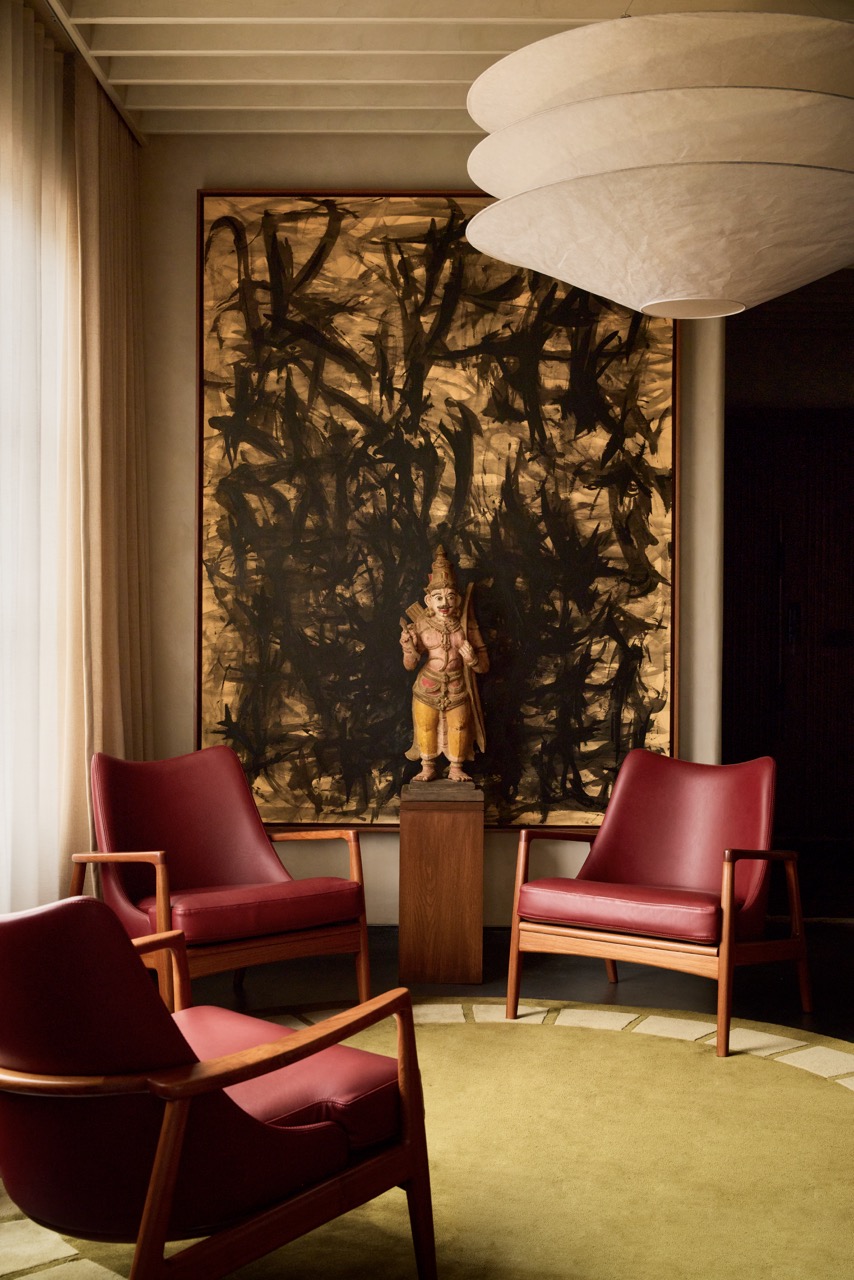
Before the furniture was chosen or the rugs were laid, and before the lighting consultant mapped out her circuits, there was the art: sculptures, charcoal drawings, abstract explorations, and more, each carefully sourced from across the subcontinent. In this 2,080 sq ft Trivandrum apartment, the collection didn’t follow the architecture; instead, it led it. Designed by Faisal Manzur for Dr. Aathithya, an orthopedic surgeon who manages a network of hospitals in the city, the sprawling bachelor pad is akin to a gallery in flux.
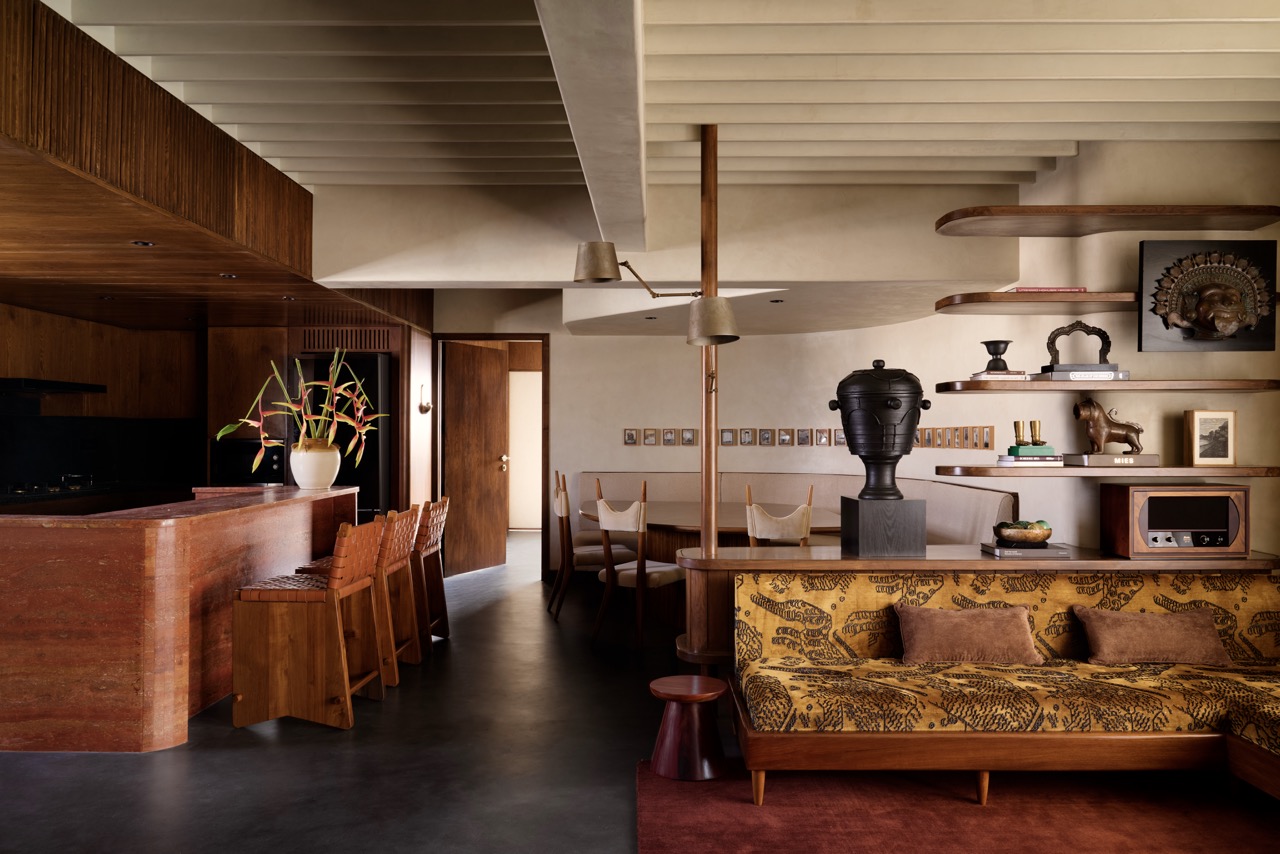
Close to the Travancore Palace in Trivandrum’s old quarter, it was conceived as a place to unwind and host. The art was always going to be central to both. “Faisal and I worked in close collaboration to curate the collection,” says Dr. Aathithya. The work began with subtraction: three bedrooms were stripped back to one, and several walls were removed to let the formal living area flow into the informal one, then into the dining nook, bar, open kitchen, and balcony. When that openness exposed the building’s raw beam structure, Faisal threaded rafters across the ceiling to unify it, a nod to the timber mullions of traditional Kerala homes.
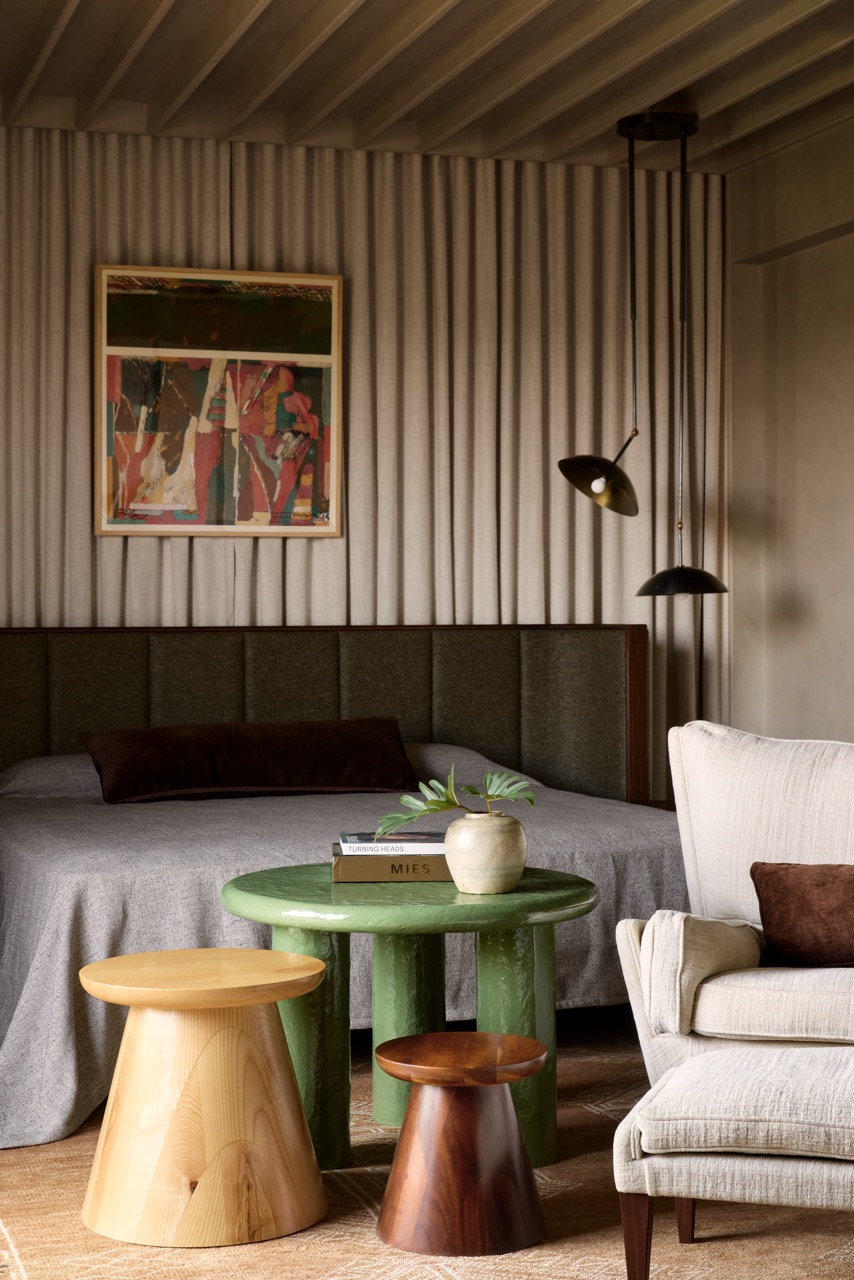
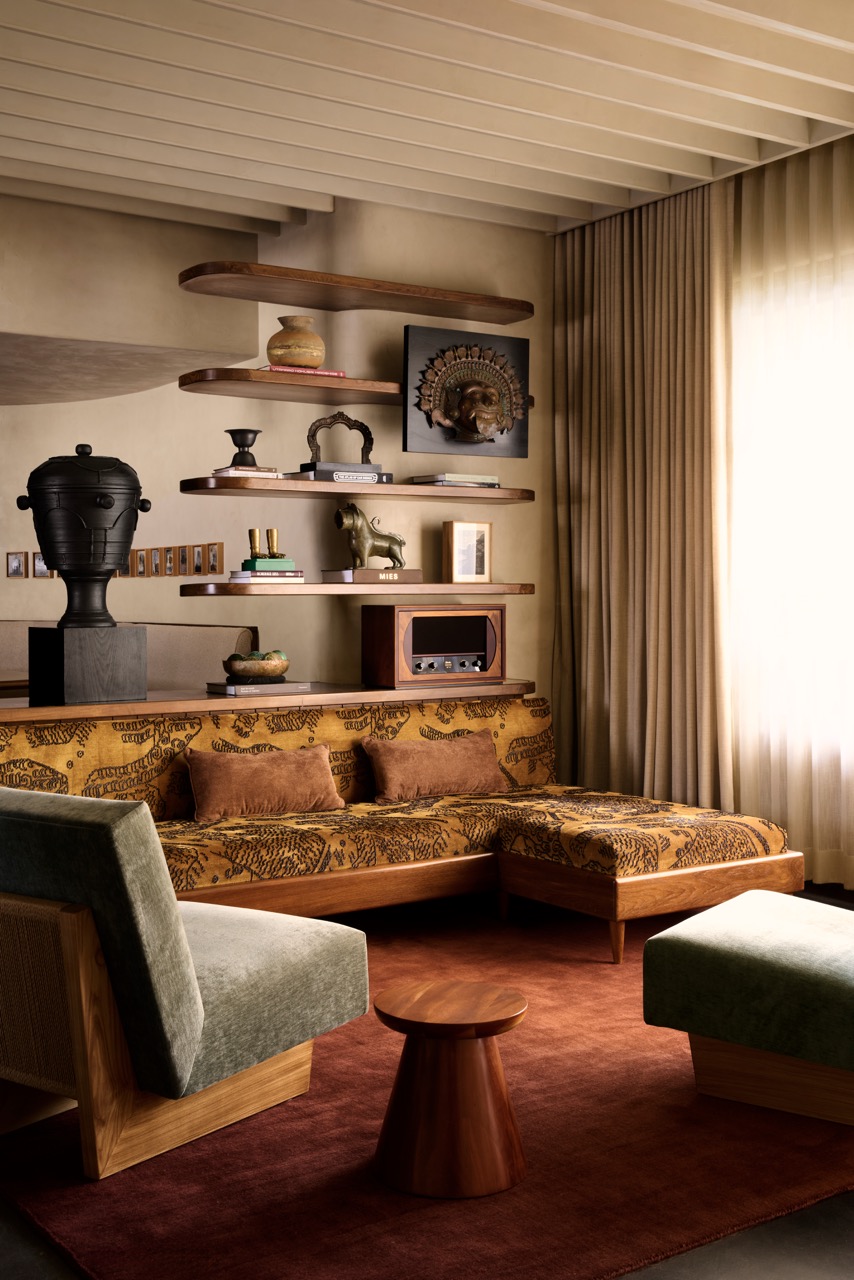
As the construction took shape, so did the art collection, assembling around the space as it emerged. “The pieces dictated the curves of the walls, the furniture placement, and even the textures around them,” Faisal explains. To support that, the material palette is deliberately neutral. Sand limewash walls and black concrete flooring slip into the background so that the artworks, objects, and furniture come forward. Bold colour shows up in strategic moments, like the red travertine bar counter, or the green and cherry armchairs, and customised terracotta rugs – things that can move and change over time. The result is a space in constant conversation with what fills it.
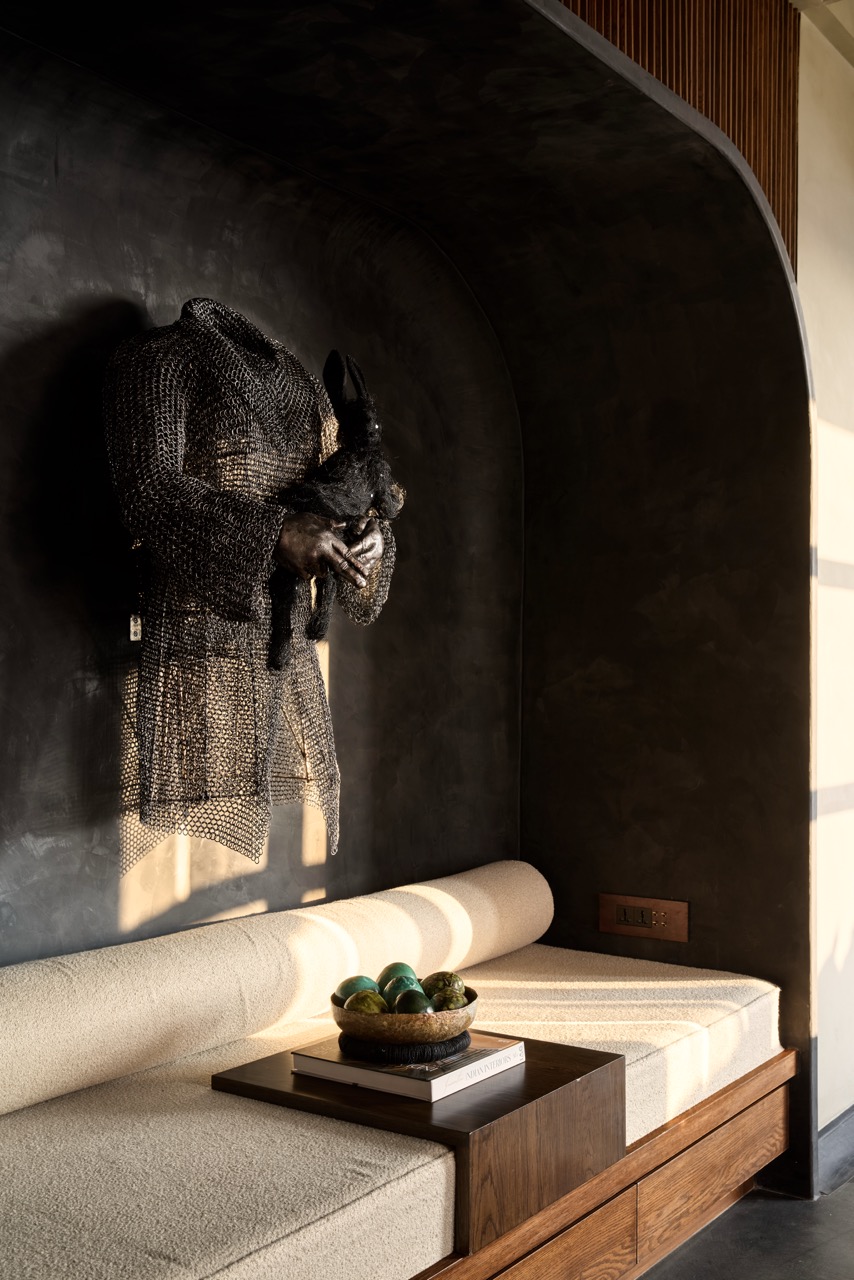
Among the artworks, a metal sculpture by Lakshmana Rao Kotturu (a favourite of Dr. Aathithya’s) carries a story of its own. The original featured a dead rabbit, which he found too unsettling to live with, and so it was changed to one that’s alive. While it was a small alteration, it speaks of a home where what you live with is meant to uplift.
The lighting was designed with the same intent. Working closely with consultant Anusha Muthusubramanian, Faisal developed a layered system of floor, table, and wall lamps, with each zone tuned to its own intensity to draw out the art and the details around it. Spotlights, used sparingly, are mainly trained on larger works like the expressive Wasantha Namaskara painting in the formal living room, while elsewhere, indirect light keeps things soft. In the master bedroom, pendants pick out Sibaprasad Karchaudhuri’s ‘River in the Sky III’ while bathing the room with a warm glow.
The effect shifts as the day turns. By night, the apartment settles into amber, and the works read in a new light than they did at noon. “The home looks completely different at dawn and at dusk,” says Dr. Aathithya, “but whatever the time, it always feels still.” Faisal sees the space the same way. “Every artwork has a fixed place, but is open to rotation as life evolves.” Some homes are considered complete when the last painting is hung. This one, however, is designed to never quite be done.