

Radhika Sanghvi Studio transforms raw materials into dynamic and luminous forms
Words
Manisha ARPhotos
(‘FAULT LINES’, FLOOR LAMP, SCULPTURE) RIDDHAM GAJJAR; (ILLUMINATED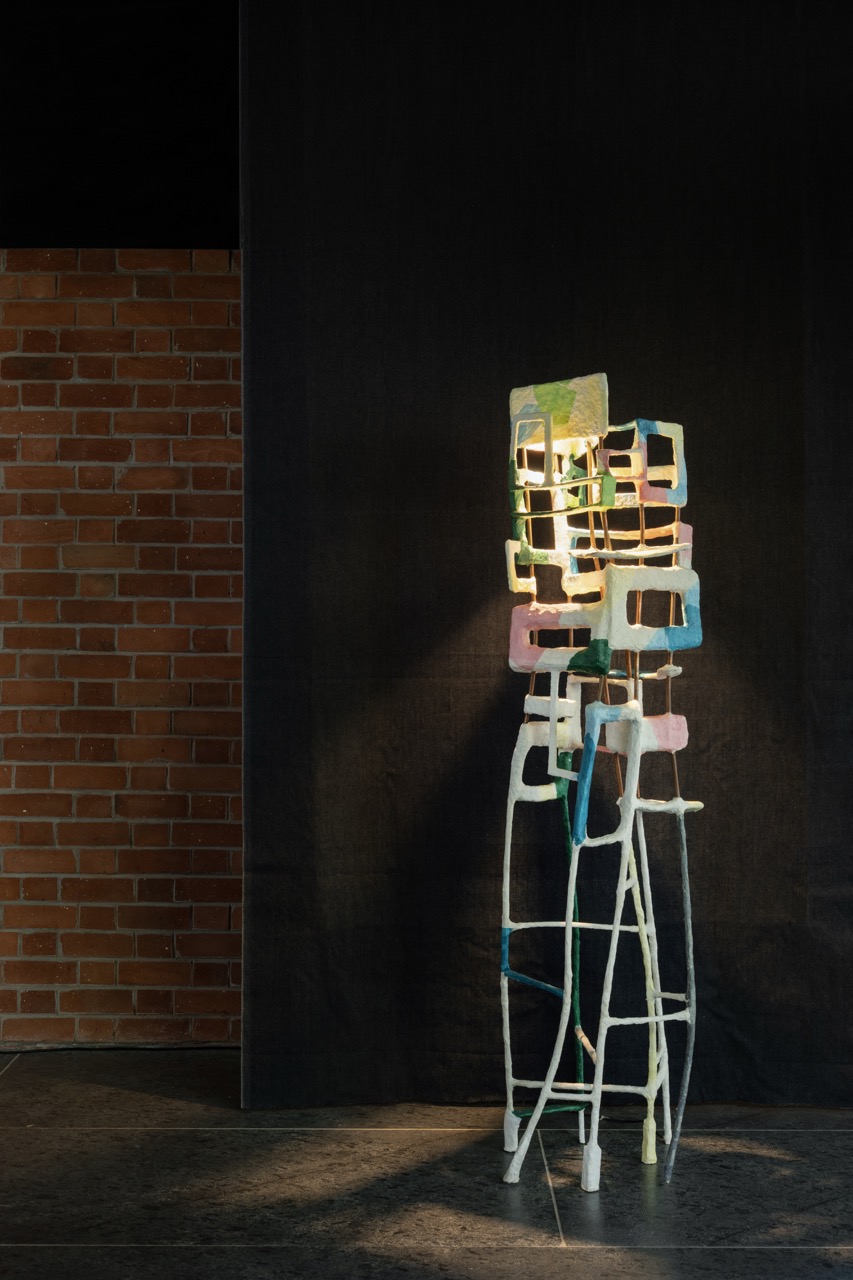
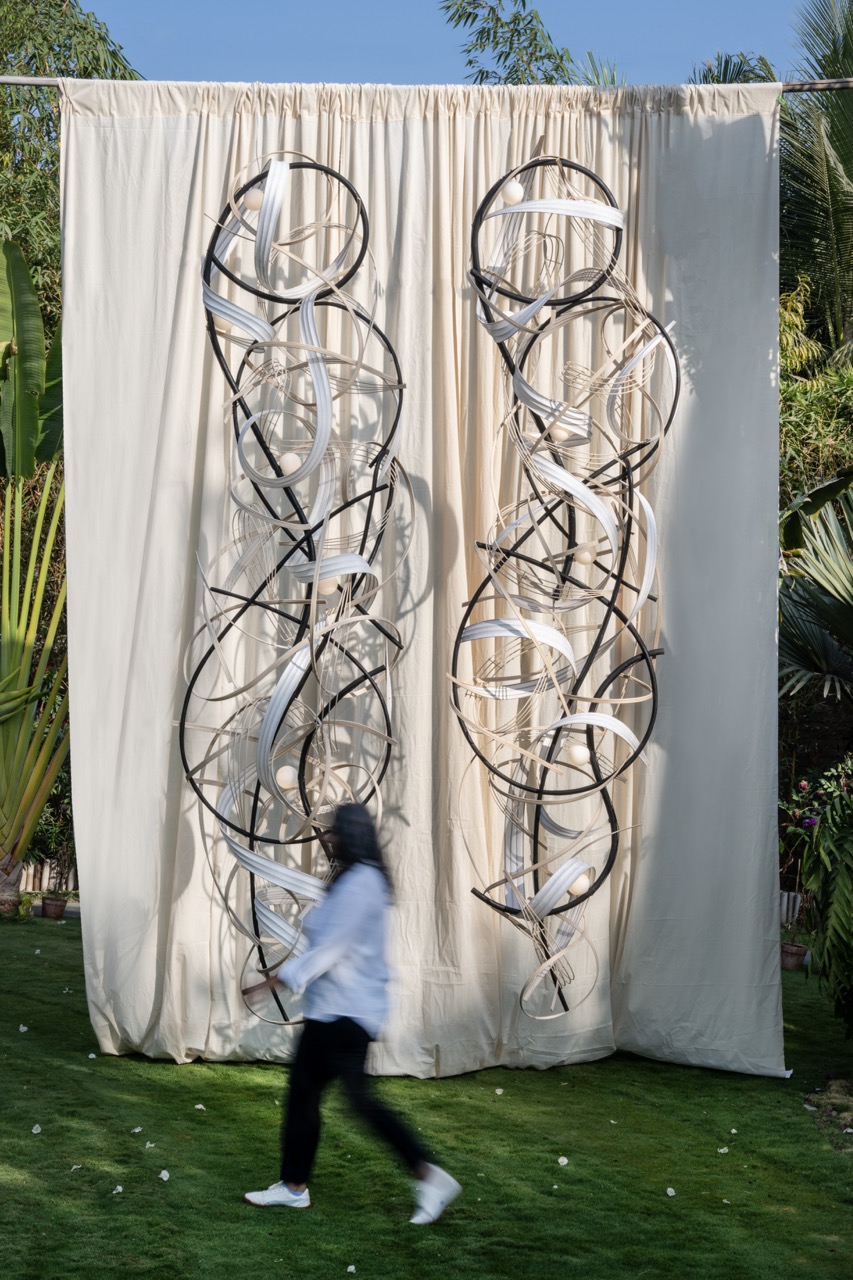
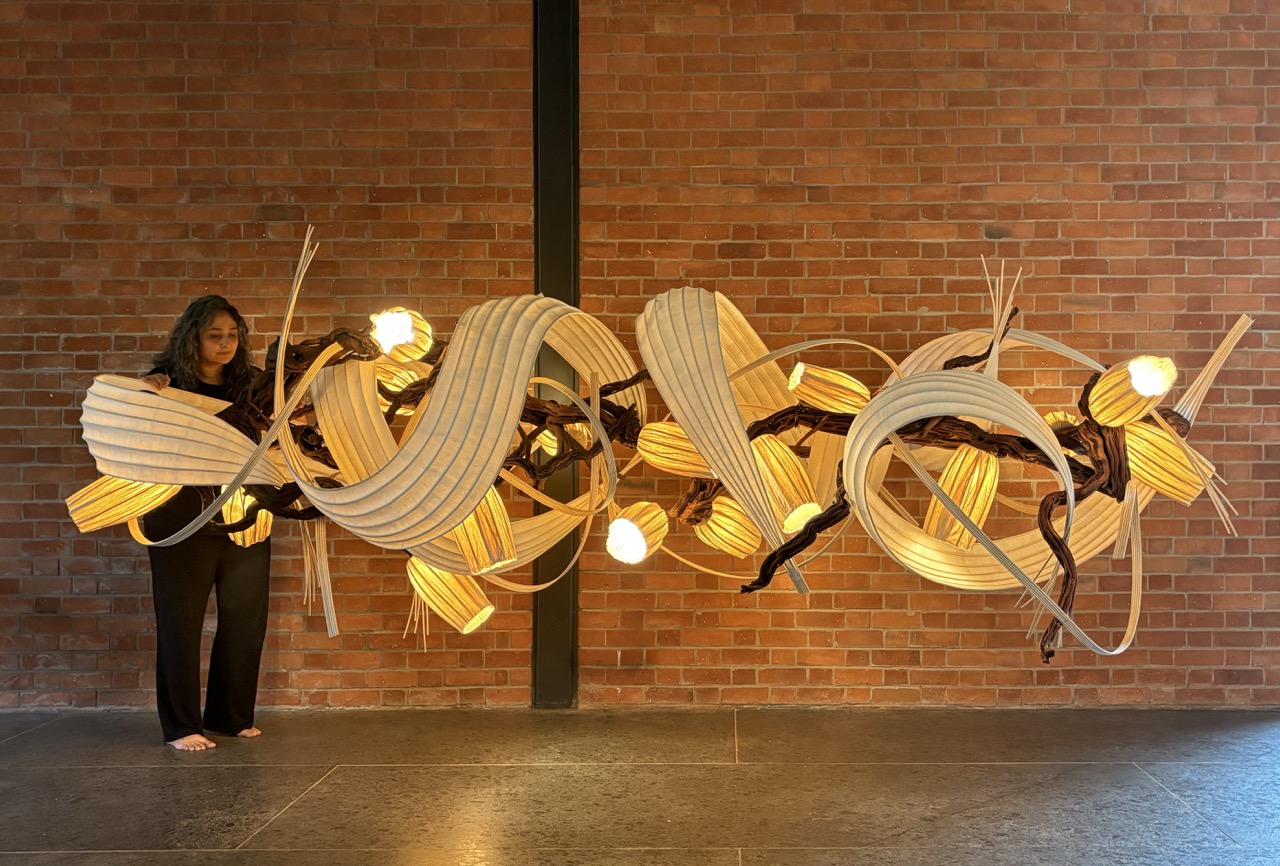
In her Ahmedabad-based studio, Radhika Sanghvi turns tree trimmings, branches, reed, cane, paper, and roots into one-of-a-kind sculptural lights. “I usually come across these materials while foraging or working with local suppliers, looking for forms that carry a certain structure or movement,” she says. “A root, for example, already has a direction and flow; my role is to respond to it, not reshape it completely.” This approach of hers blurs the line between sculpture and functional design. Each lamp emerges organically from the material itself, rather than from a pre-planned series, making every piece a singular dialogue between form, light, and texture. The studio operates as an ongoing exploration, spanning floor pieces to large-scale fixtures for residential and commercial spaces.
What are the influences that shape your work?
I am a sculptor by training, and my influences come from everyday observations, visits to galleries and museums, and the work of other sculptors. During my fine arts education, my focus was always on working with materials and understanding form in three dimensions.
My shift into lighting began with a personal experiment, creating a sculptural light for my own home. I’m drawn to things that hold a strong presence without being over-stylised – the way organic structures exist around us, often unnoticed, or how materials can be used in unexpected ways.
How does your location guide your material choices, particularly in relation to sustainability?
I tend to source materials in their most natural form, responding to what is available rather than seeking something out. My inclination towards organic materials wasn’t initially driven by sustainability as a defined goal, but something that felt instinctive. Over time, I’ve come to see how this approach naturally aligns with a more responsible way of working. Using natural and reclaimed materials keeps me closely connected to the process, while also being mindful of waste and the resources I’m using.
Has a specific material ever changed the direction of a project?
Yes! Sometimes a root may not sit the way I expect, or paper may behave differently when layered. Instead of forcing it, I adjust the design because they push the work into directions I wouldn’t have planned, and often lead to stronger outcomes.
Which work best encapsulates your practice?
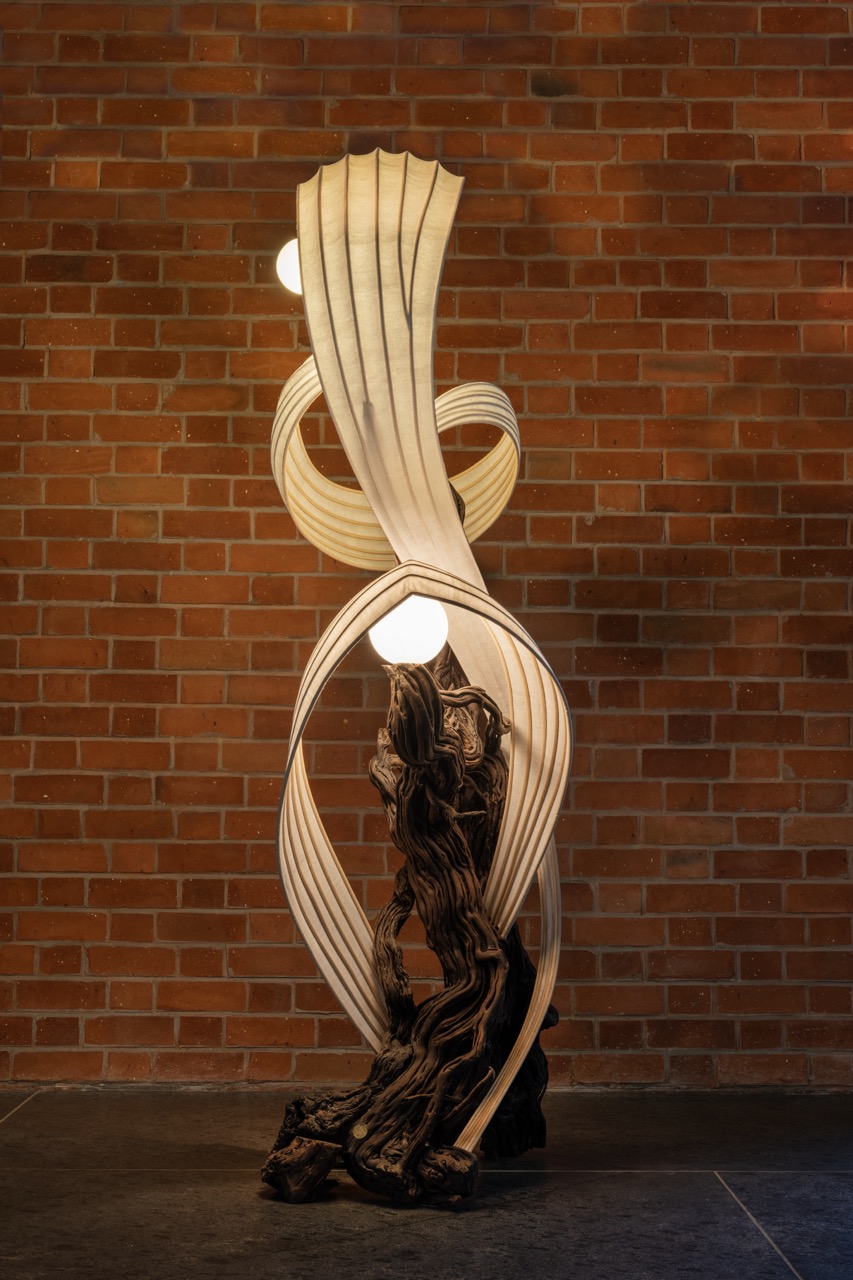
A sculptural floor lamp anchored by a root-like form, with reed and paper wrapped around to create a sense of movement and balance. What makes it central to my work is how it brings together key aspects from my observations: material, asymmetry, and light into a single, cohesive form.
What material innovations excite you right now?
I’m currently exploring the use of excess paper from the studio to create papier-mâché forms. This marks a shift from my existing work, which is more fluid and organic – these pieces are more structured and geometric. I’ve also begun experimenting with colour and with metals like copper to introduce a sense of structure. I’m interested in pushing simple existing materials further through technique and process, rather than relying on new ones, especially using natural, low-impact materials to create strong, contemporary forms.