


After the Cover Shot
Words
Prerna MakhijaPhotos
Maleeha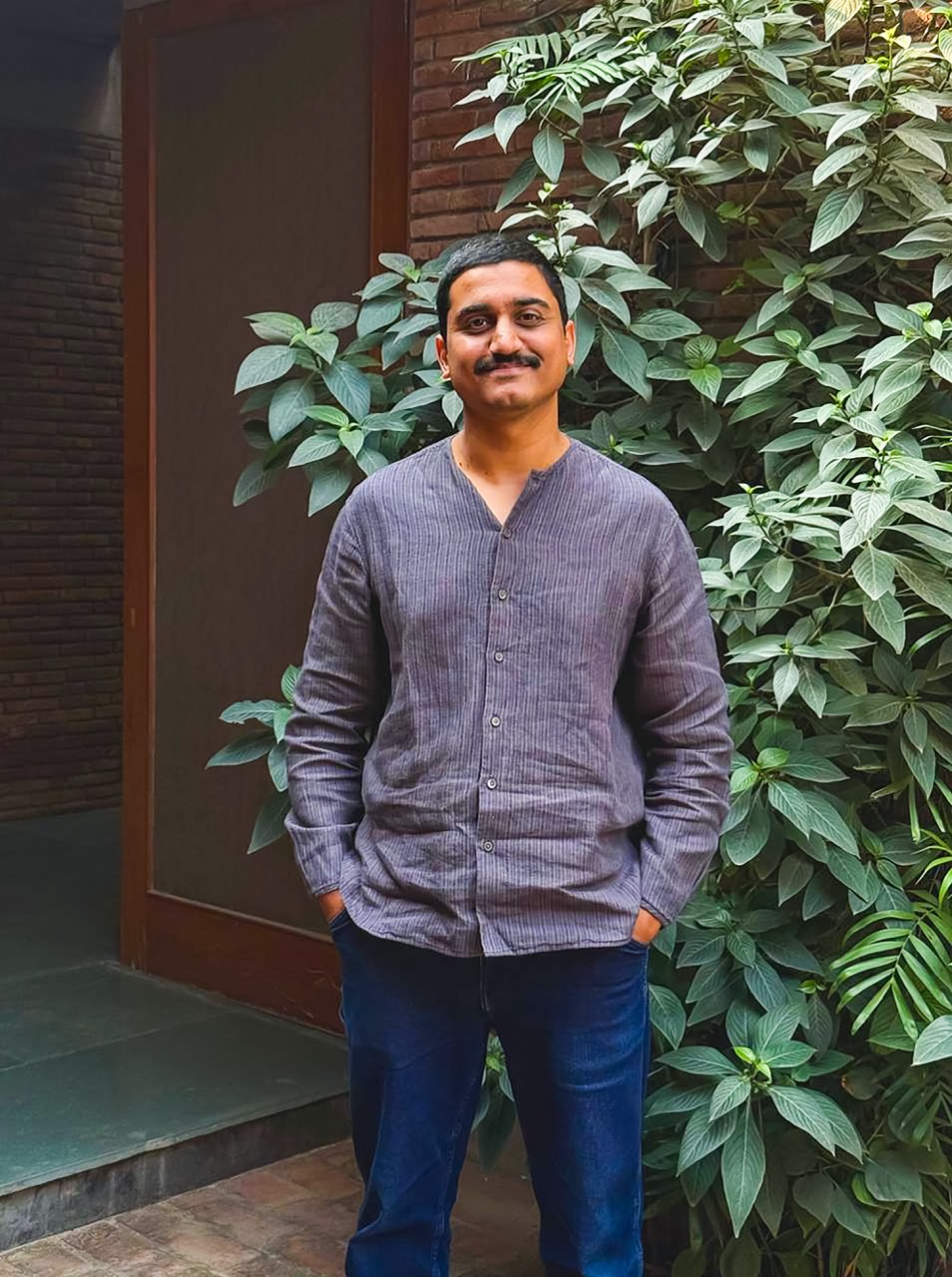
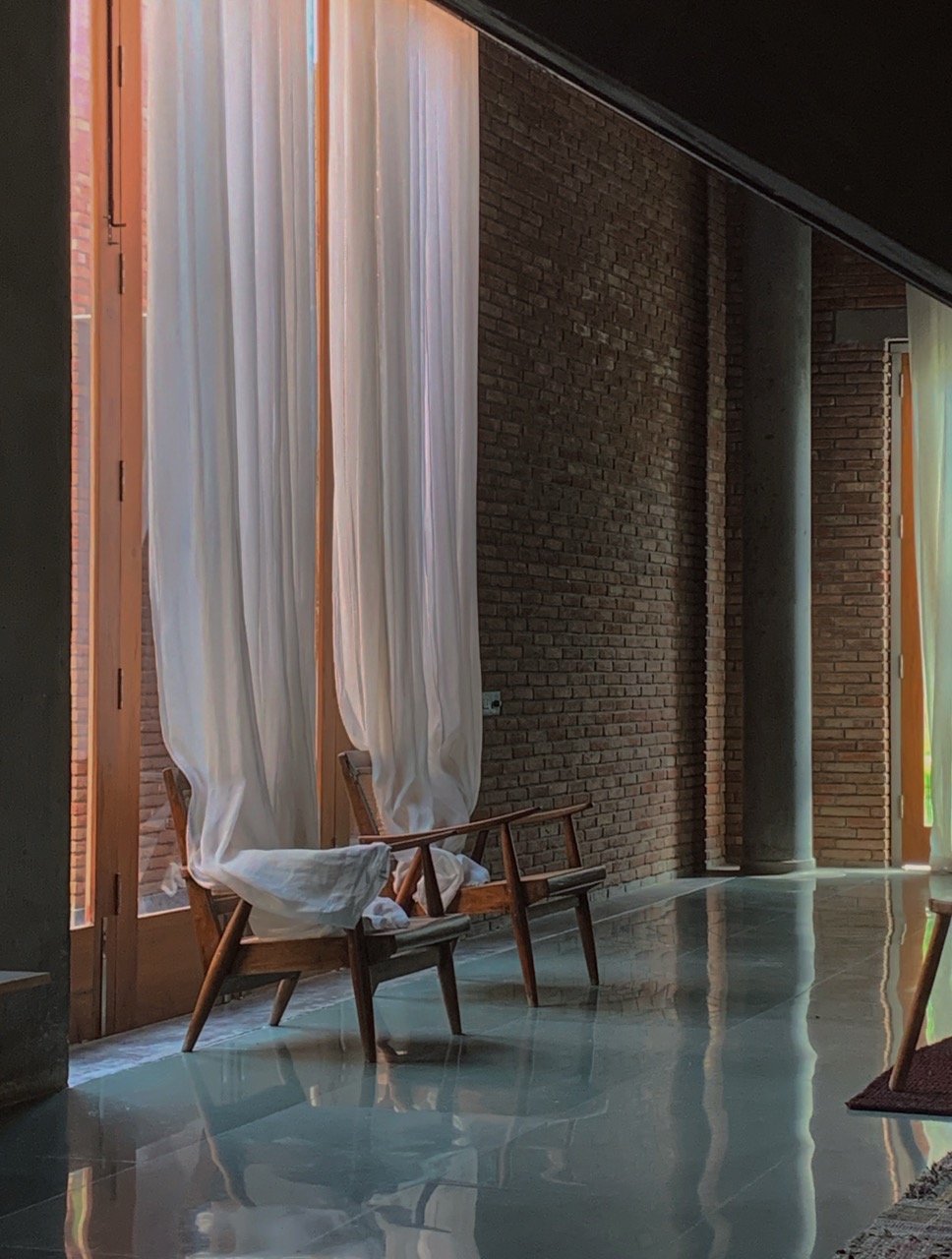
For architect-turned-photographer Saurabh Suryan, the moment after the picture is taken matters as much as the one before.
The first thing photographer Saurabh Suryan notices when he enters a space isn’t the architecture or the furniture. It’s the feeling – the way light and shadows dance, the way a material hums when someone touches it, the quiet rhythm as people move through it. Even when he’s not working, he admits he is always looking. “I think I’m always in two places,” he says. “Inside the building, feeling its weight. And outside it, watching how the world moves around it.”
A persistent duality runs through everything he makes today. Working independently from his brick-and-stone home in Gurgaon, he moves between architectural photography, films, creative direction and a slow, research-based art practice that looks at buildings not just as finished objects but as open-ended stories. “All of it,” he says, “is still about architecture. That’s the constant.”
The instinct and the need to observe first, then act is one he learned early. Saurabh grew up moving across India – attending eight or nine schools in as many cities – trailing behind his father’s Air Force postings. “You learn to watch before you speak,” he says. “You learn to understand a place through how people live in it.” Those years, especially a long stretch in Bengaluru in the 1990s, formed the foundation for how he sees today – patiently, without rushing and attuned to subtle cues.
Architecture school came next, almost naturally. “I was always building things as a child,” he says. “In college, I’d end up making architectural models for my entire class.” He moved to Mumbai after that, where he worked at Studio Mumbai under Bijoy Jain. It was Mitul Desai, the studio’s manager and photographer, who quietly bent his trajectory. One monsoon evening, noticing Saurabh’s fatigue after an endless run of all-nighters, Mitul suggested he might belong elsewhere in the design ecosystem – still close to buildings but not bound to them. The thought opened a door.
Saurabh tried his hand at a few other practices, but realised he still didn’t know where he fit in the design world. He decided the only way forward was to test himself outside a studio’s walls. Early in his career, short on money and full of curiosity, he took a bus to Ahmedabad and found himself returning repeatedly to Le Corbusier’s Mill Owners’ Association Building. “I didn’t know if I was a photographer just yet,” he says. “I had an interest, but I didn’t know.” Instead of experimenting on a client’s project, he decided to test himself on an iconic Modernist landmark he already knew intimately as an architect. He photographed the building for days on end, trying to understand its temperament. The series became a quiet manifesto and a distinctive turning point for Saurabh. “It taught me the difference between photographing something and really seeing it,” he says.
Projects since then have deepened that understanding and helped him articulate the kind of collaborative practice he enjoys best – honest, slow, and rooted in trust. “I want to work with architects and interior designers for ten years, not ten days,” he says. If Saurabh’s path into photography was sideways, his way of doing it is firmly architectural. He doesn’t believe in turning up to a site and reacting on instinct alone. He needs drawings. He needs time. “I go back to what I know best,” he says. Before every project, he reads plans, marks sun paths, and plots the timings of shadows across seasons and geographies. Shoots are structured around narrow windows of light – a courtyard at the break of dawn, an interior frame before the sun tips over or a facade held for the golden edge of evening.
Senior architects, like Verendra Wakhloo and Gurjit Singh Matharoo, respond instantly because they see him reading a building the way they designed it, rather than through glossy walkthroughs. “If a photographer can think like them on a plan,” he says, “it’s a shared language.” For all that rigour though, the image only works when something unpredictable slips in – the sweep of a sari around a corner, a figure dissolving on a staircase or even the cows that once wandered onto a site he was shooting.
For all the recognition his architectural photography has received – the magazine covers, the widely circulated projects, the exhibitions, and the distinctive visual atmosphere – Saurabh is also increasingly drawn to what these pictures don’t reveal. His ongoing project “How to Make Love” examines the full life cycle of a building – the quarry years before it becomes a home, the glossy months when it is published in a magazine and the moment it is demolished, perhaps thirty years later, for something taller and shinier.
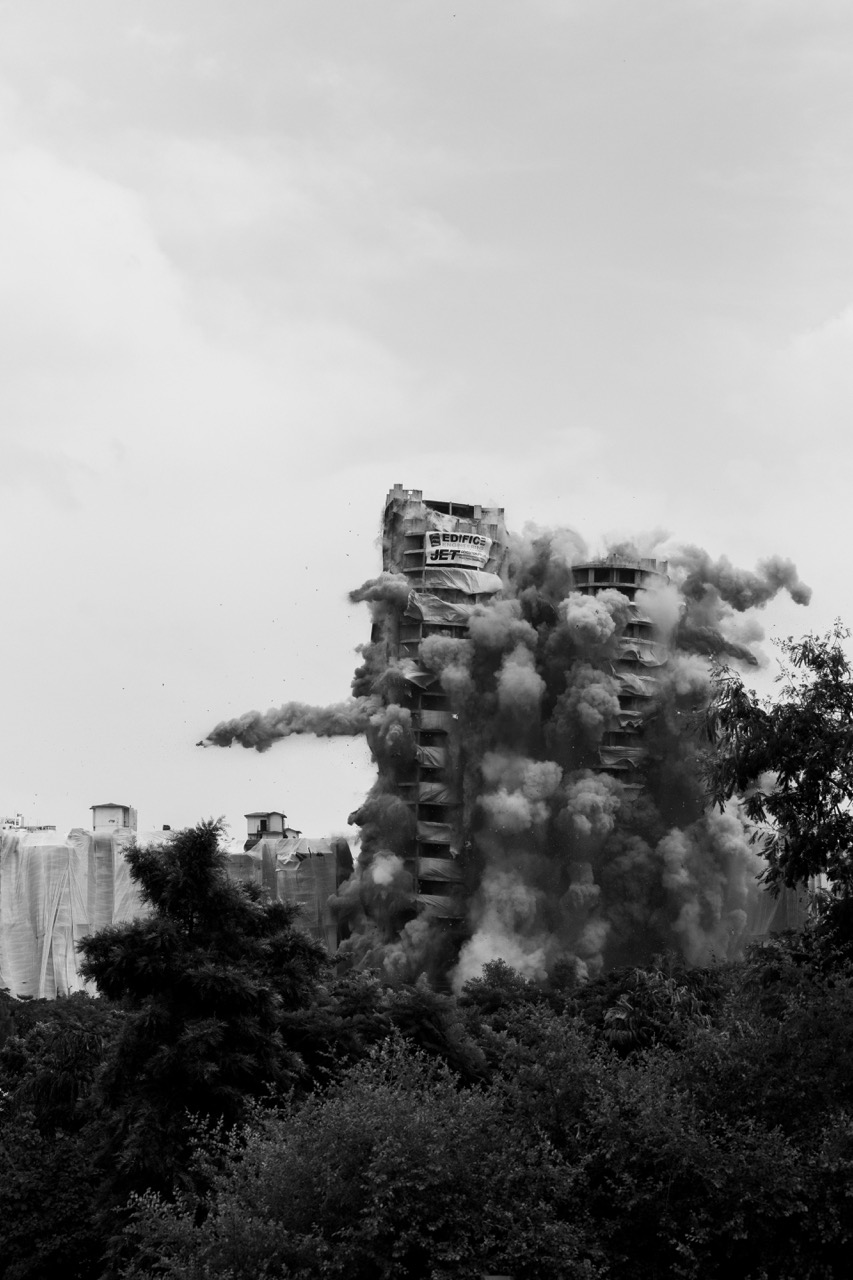
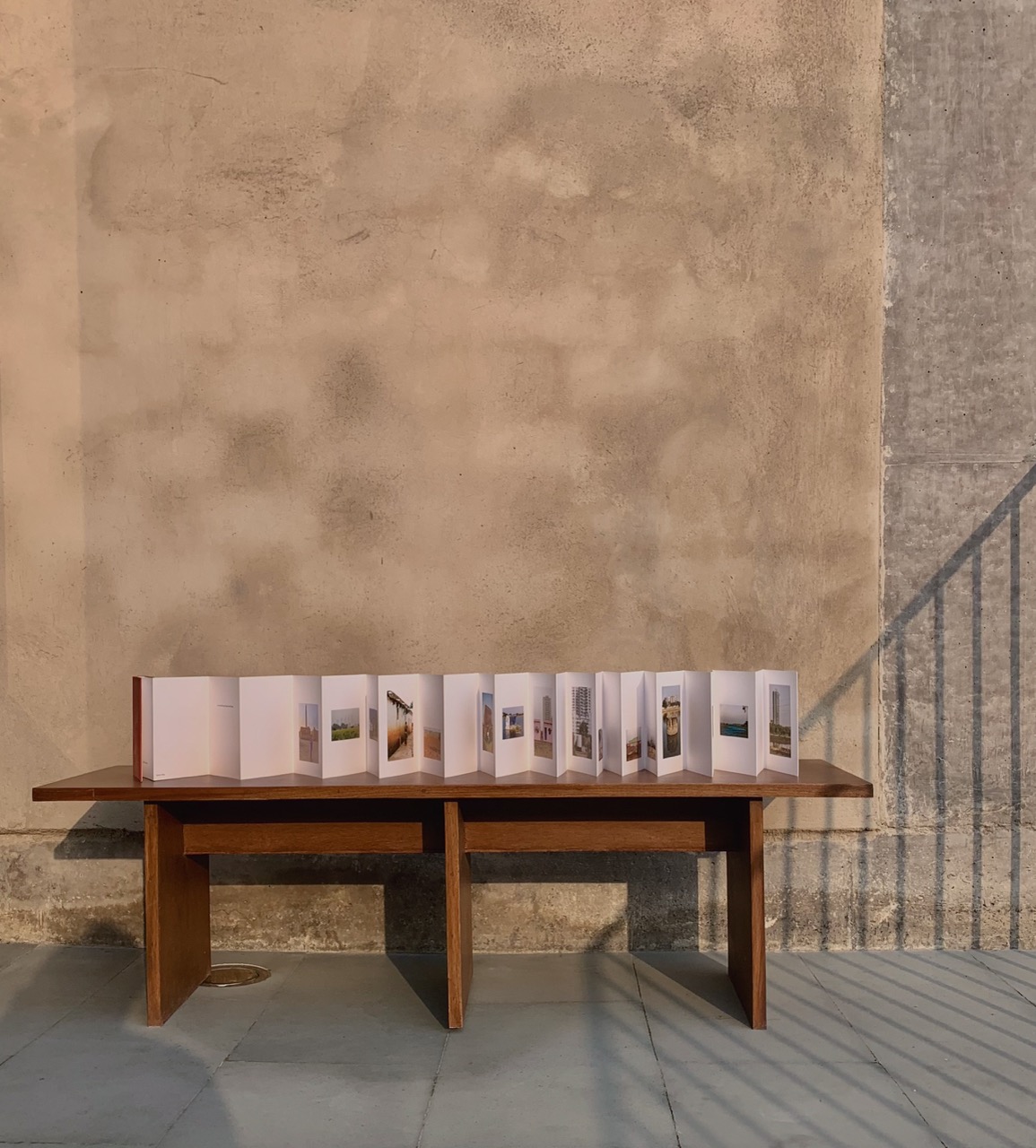
As part of his art practice, he documented New Delhi’s Hall of Nations in its last hours. He photographed the staged demolition of a set of residential towers in Noida, later turning nine frames into a matchbook-sized publication – the buildings intact in the first slide, dust by the last. These aren’t nostalgic images. They ask a harder question: What does it mean to love a space? And what do we owe it once it stops fitting our desires?
“We always celebrate the rising story – the cover,” he says. “But what happens before that moment and what happens decades after it, is the part I can’t stop thinking about.” And so, even as one of his images is being finalised as a magazine’s cover shot, Saurabh is already somewhere else – watching another wall, another shadow, another moment on the verge of becoming an image. @suryansaurabh