


Drawing from street tradition, Tiny Cane Collective’s Bombay Bhel collection adapts a utilitarian form for modern homes without losing its original logic
Words
Geetika SachdevPhotos
Rohit Bijoy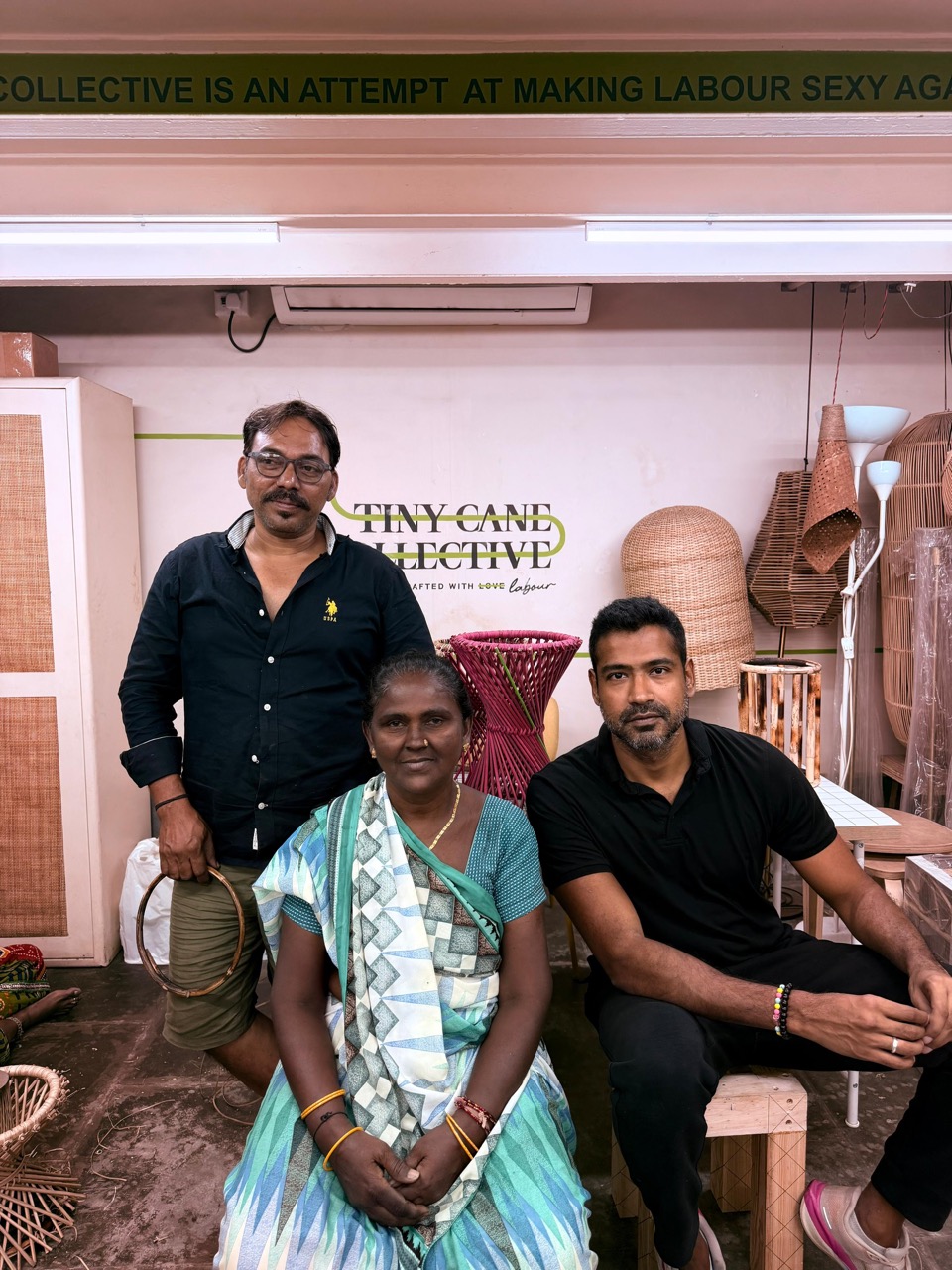
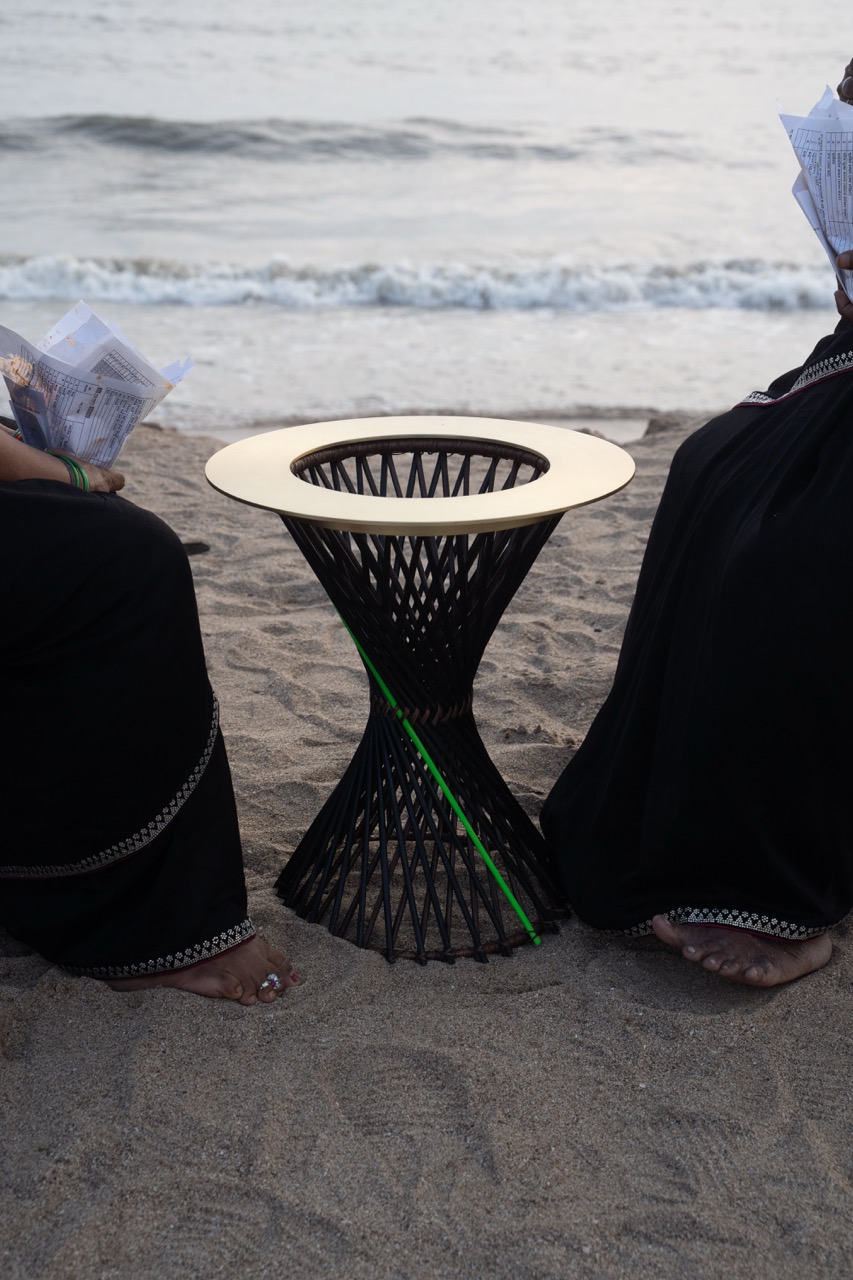
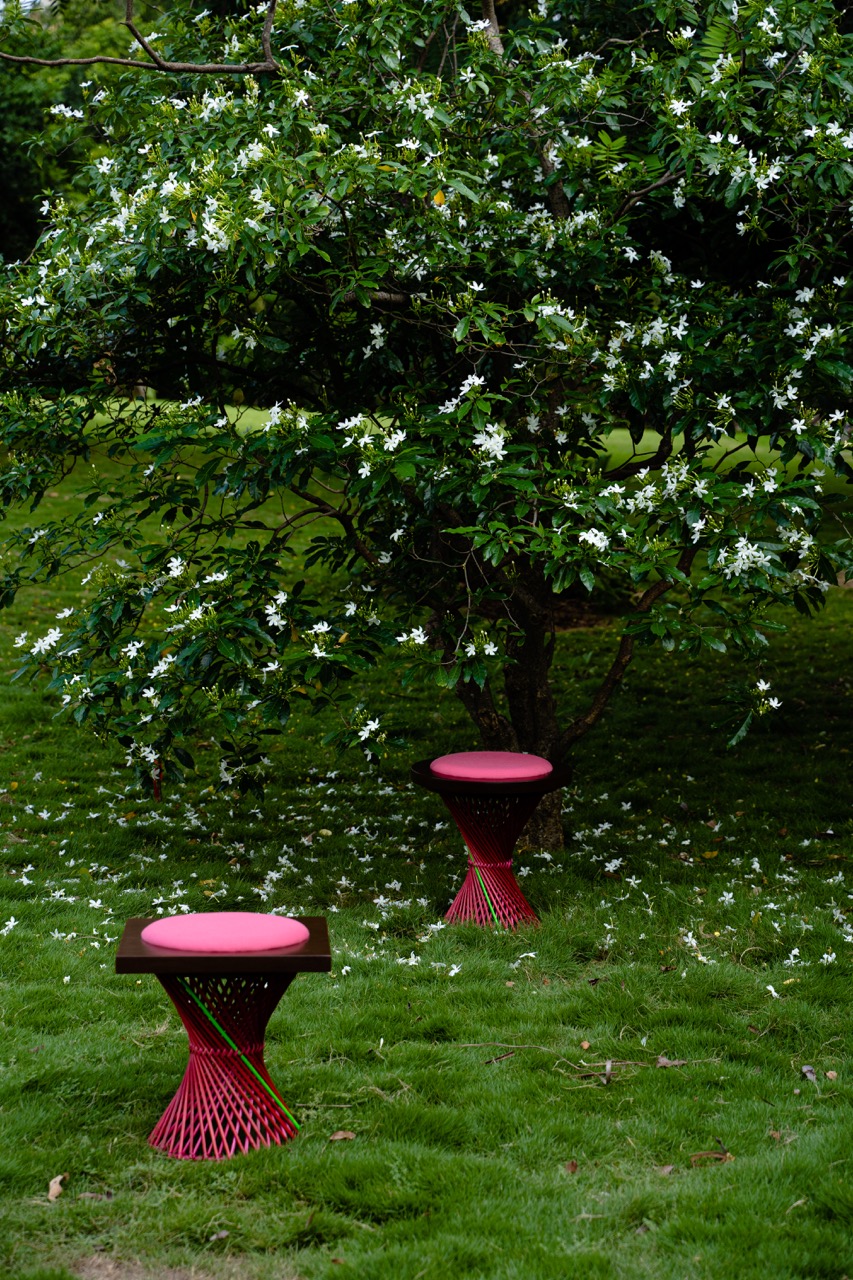
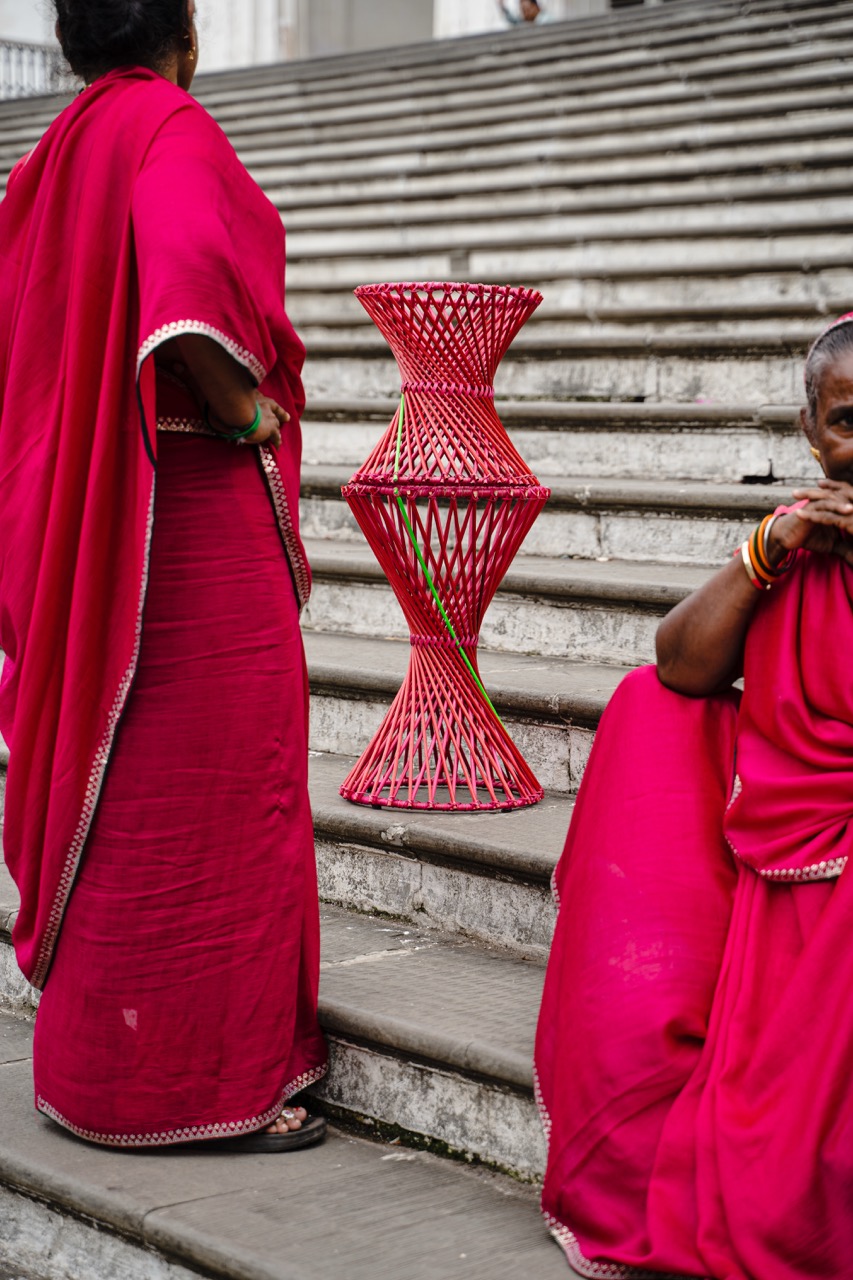
In Mumbai, the bhelpuri stand is a familiar sight – functional, lightweight, and built to be assembled and dismantled in minutes. For decades, these cane-and-bamboo structures have been made by women from the Pardeshi community, their knowledge passed down generationally and refined on the street. At Tiny Cane Collective (TCC), this everyday object became the starting point for a larger inquiry: what happens when a craft designed for survival is reimagined for permanence? “It’s strong, efficient, and has existed in the city for decades without ever being called ‘design’,” observes Siddhartha Menon, head of mission at Tiny Cane Collective, a social design endeavour by Mumbai-and Amsterdam-based Tiny Miracles.
Their debut Bombay Bhel collection takes this anonymous iconography and translates it into premium furniture that retains the original construction logic, but is finished with an exactness required for contemporary interiors. The roots of the collection stretch back over a decade. Laurien Meuter, founder of Tiny Miracles, has been visiting Mumbai since 2010 and working closely with women from the community. Over the years, she watched them continue to make bhelpuri stands even as their craft, and earnings, gradually declined. “When we began thinking about giving their generational skill a sustainable business platform, the bhelpuri stand was what we returned to,” says Siddhartha. “It is Tiny Cane Collective’s raison d’être: to take an existing skill and build the design and market linkages around it.”
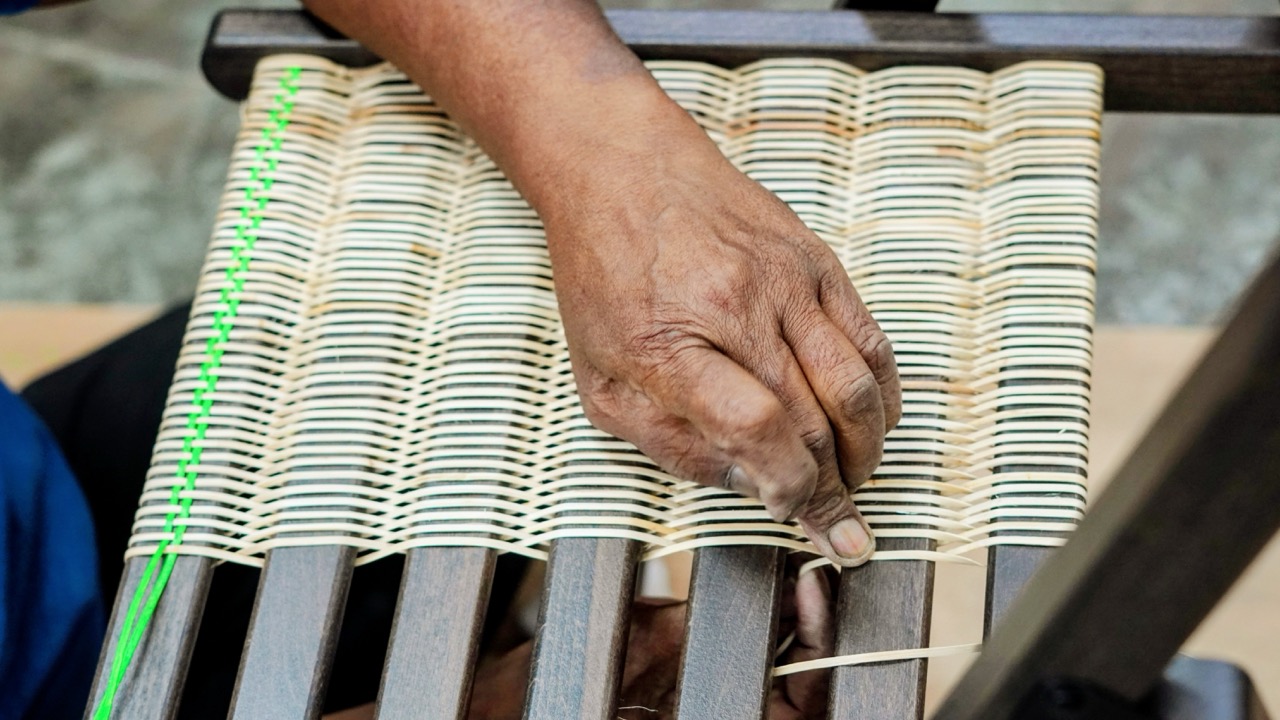
Thus, TCC was set up to build a social business around craft. Under Siddhartha’s guidance, the focus is on developing a cohort of makers who are not only skilled in cane and bamboo, but who are also learning to navigate design thinking, costing, quality control, and market access. Inside the TCC workshop, familiar tools sit alongside new interventions. Bamboo stems are cut using a chop saw, a task that once took hours by hand. The baka, a heavy knife, splits the bamboo into sticks, while the chaku smoothens them, and a hammer nudges each piece into place. “At first, the artisans were hesitant to operate such a large machine,” recalls Siddhartha. “Today, they’ve adapted it to their needs, even making their own jigs and rigs. The workshop has evolved around them.”
What proved most challenging was not learning new tools, but letting go of old ways of doing things. Street-side bhelpuri stands can vary in proportion and still sell; furniture cannot. “Making one bhelpuri stand was never the challenge,” Siddhartha admits. “Making twenty exactly the same way was.” Precision, repetition, and rework became integral to the process. Simple tools like spirit levels, used to check if a surface is straight and even, were introduced so artisans could assess their own work, reducing dependence on constant feedback.
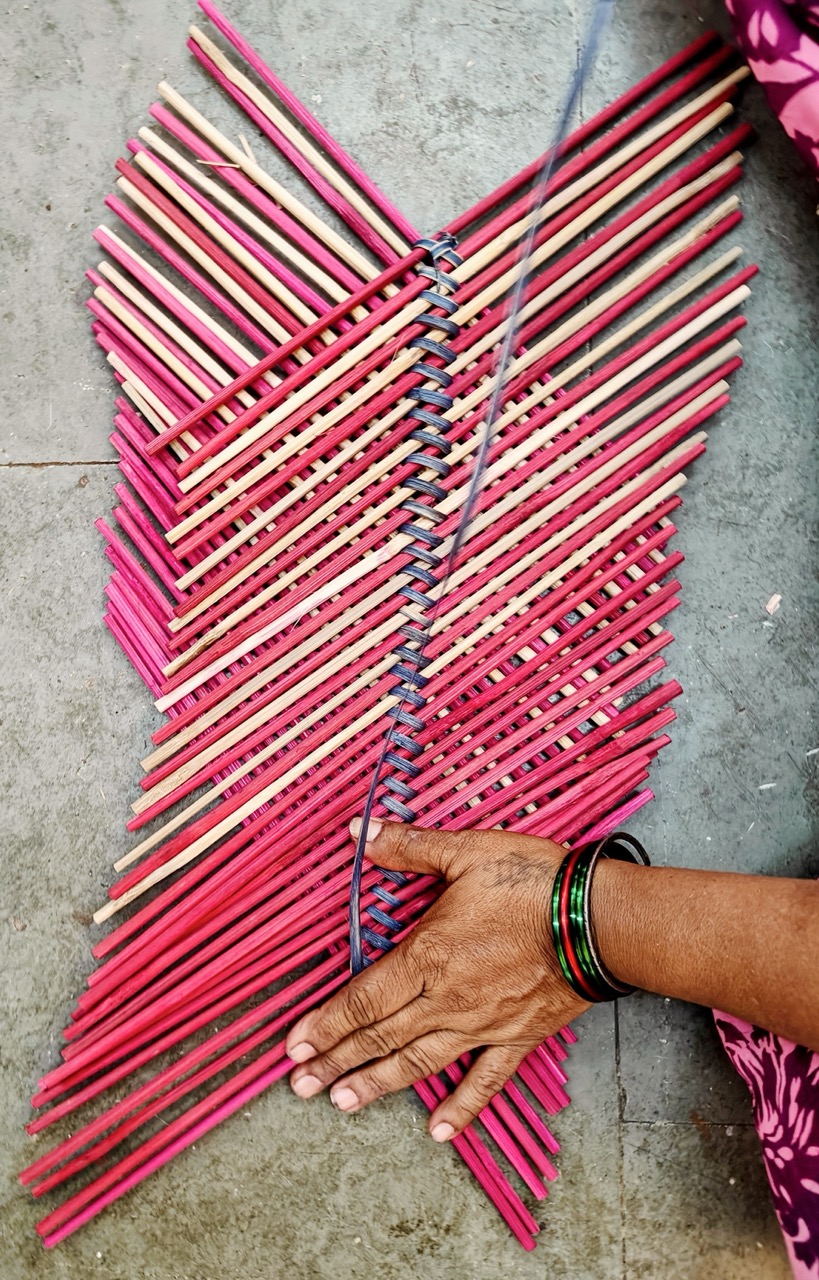
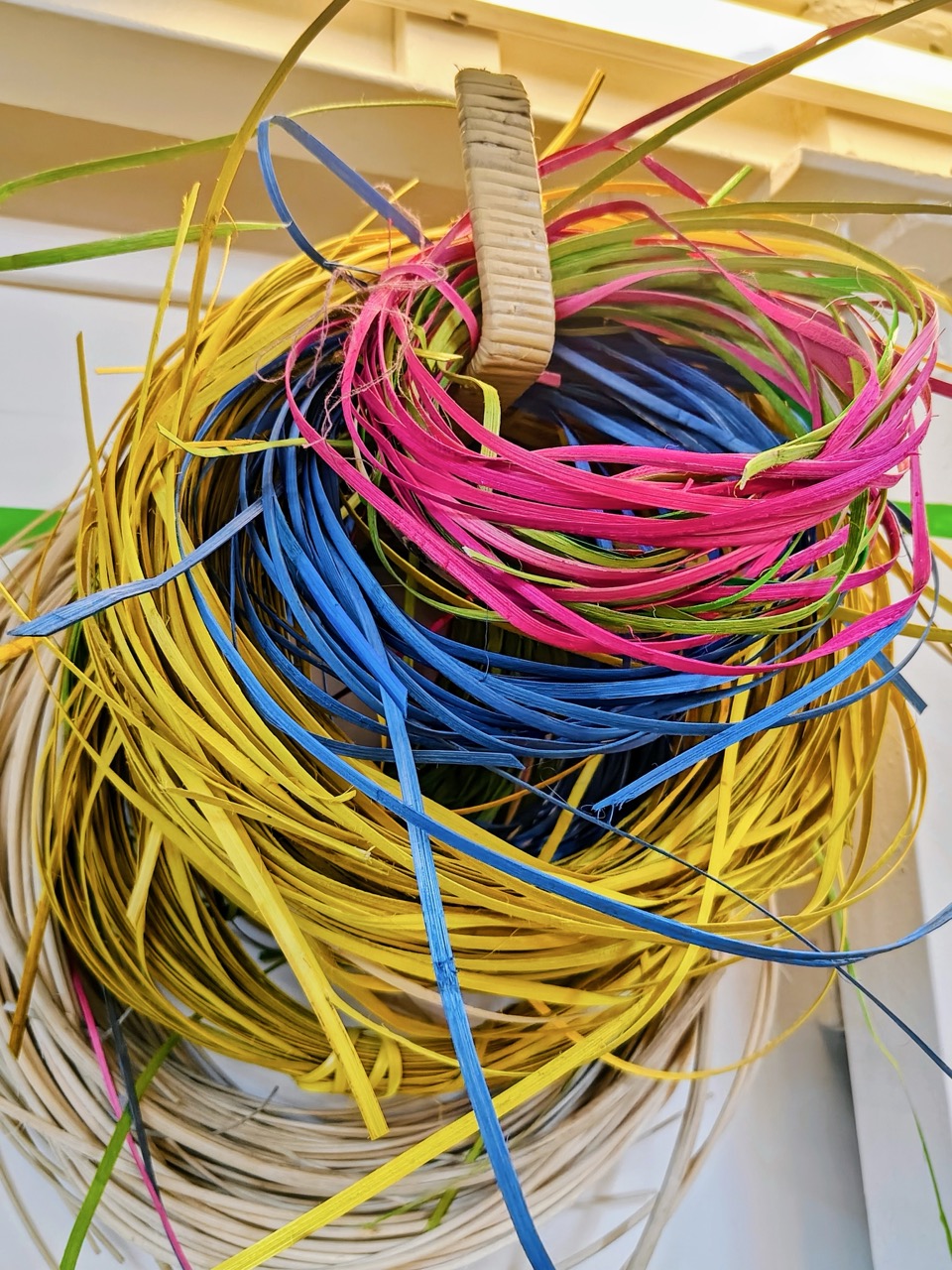
Colour, too, was approached with intent. By closely observing how the bhelpuri stand is woven, its vertical and horizontal sticks crossing to form the structure, TCC used colour to highlight how it is built rather than hide it. This resulted in two palettes: red and pink, playful and expressive, and black and brown, quieter and more elegant.
Beneath the collection lies a clear critique of how value is distributed in design. “The people who shape the products we buy are often paid the least,” says Siddhartha, “while those who control capital, branding, and market access profit the most.” TCC sets out to challenge this imbalance through its transparent approach. Every product clearly lists the cost of materials, artisan wages, packaging, and margins. Even the catalogue envelope carries the brand’s profit and loss statement. “When design meets transparency, skills finally get the value they deserve, if the business succeeds,” says Siddhartha. Each piece arrives with a shocking green cane stick, a reminder that the premise is not high-end design for its own sake, but an honest rethinking of how handcrafted objects enter the world.
The story doesn’t end with the Bombay Bhel collection. TCC is already expanding the language of the bhelpuri stand through a forthcoming collaboration with Dutch designer Lex Pott, marked by bold neon colourways and set to be exhibited at aqueo Gallery in the coming months. Alongside this, the collective is developing new bodies of work, including Upcane – a collection that reimagines pre-manufactured and pre-owned furniture by wrapping it in cane, extending both its life and its story. tinycanecollective.com