

From ephemeral tablescapes to immersive installations, Lalima Chhabra creates environments that pull you in and linger just long enough to be felt
Words
Shriya GoyalPhotos
AYUSH SINGH; SIDDHANT MALHOTRA; DOPDEEP; NISHI DUGAR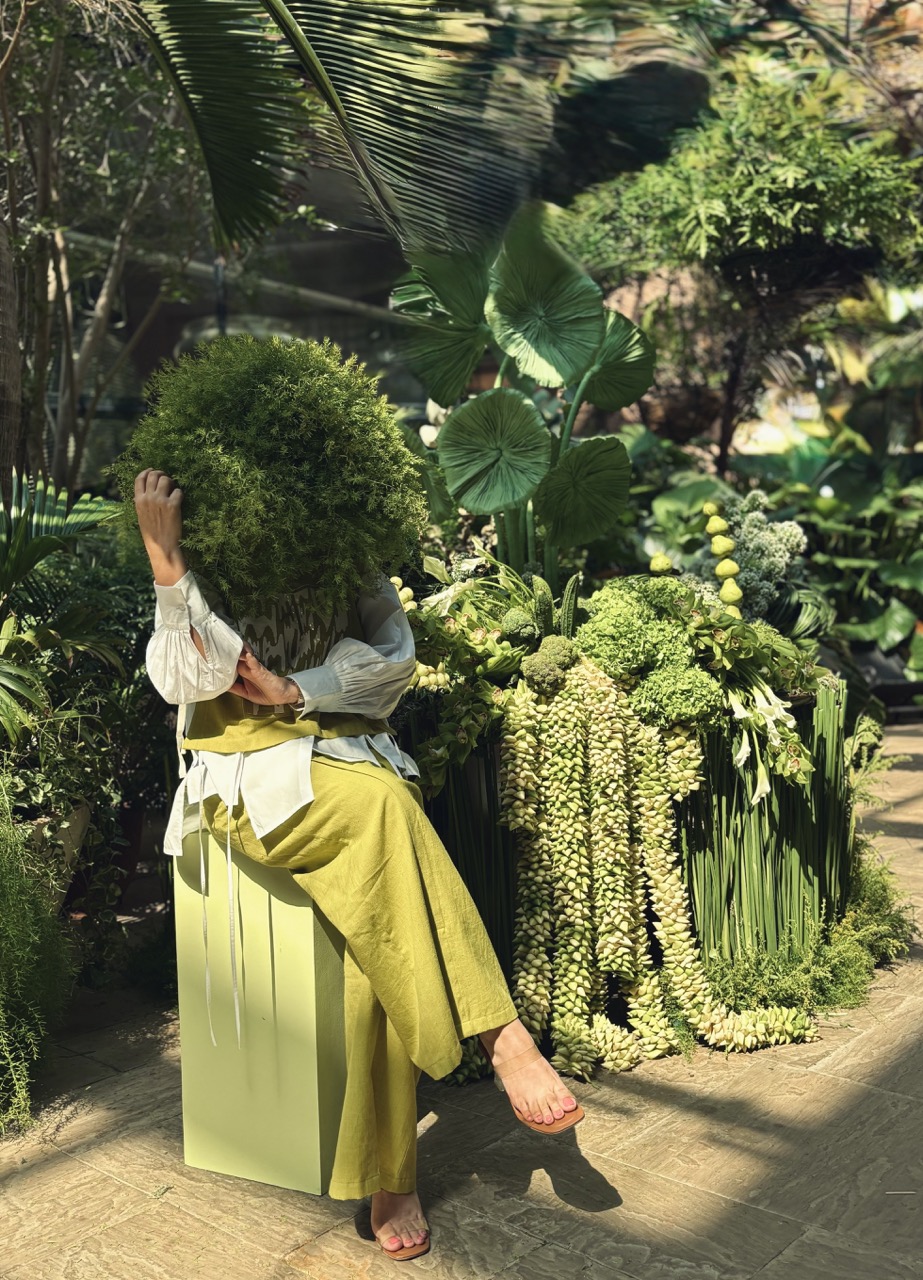
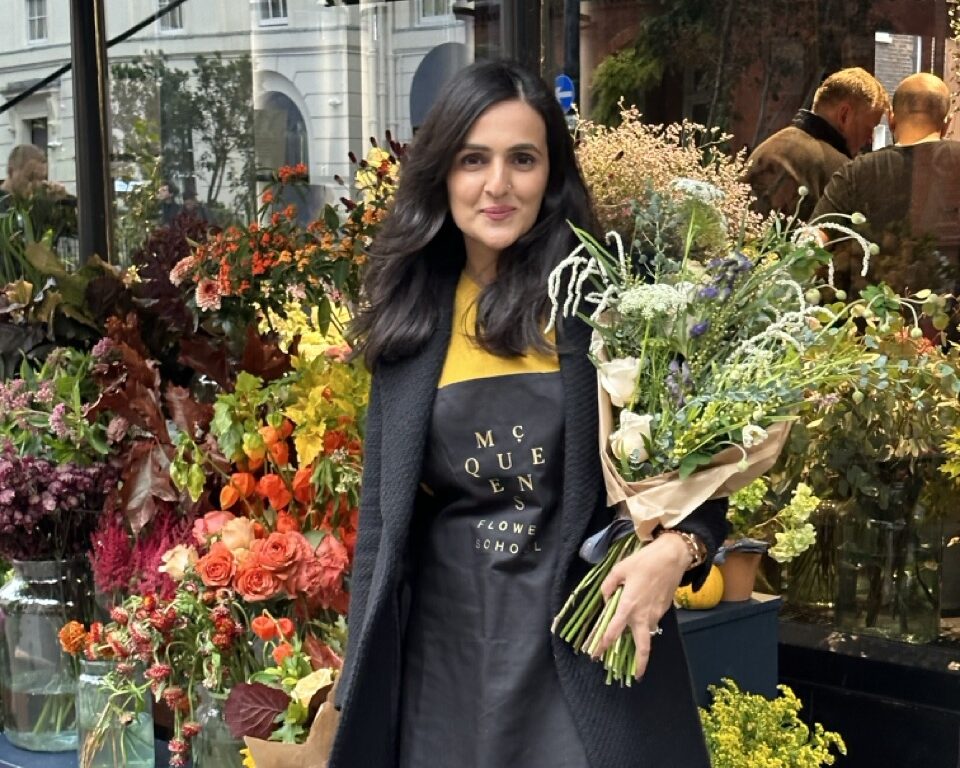
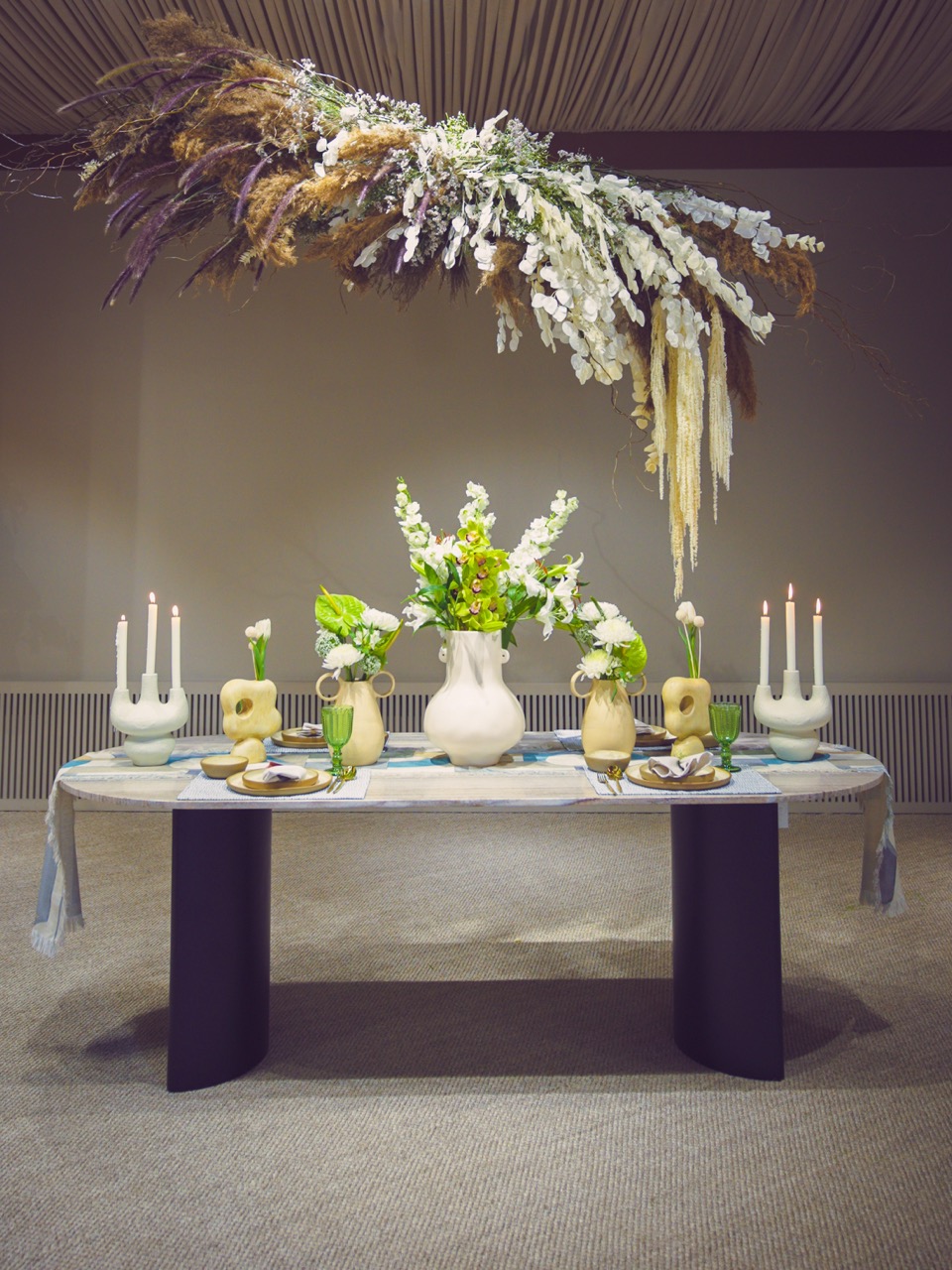
There’s a certain immediacy to Lalima Chhabra’s work – the kind that draws you in before you’ve figured out why. “I always want a moment that compels the viewer to come closer,” she says. “Something in the design should feel so tactile that you almost want to touch it, explore it.” It’s a way of thinking that sits at the heart of Figment by Lalima, her multidisciplinary studio that moves between floral installations, interior styling, and brand-led spatial experiences, all built around a single idea that design is something to be experienced, not just seen.
That instinct wasn’t shaped in design school, but over time – and somewhat unexpectedly. After nearly a decade with Harvard Business Publishing, Lalima stepped away from the corporate world, drawn instead to colour, materials, and the pull of spatial storytelling. What began as an experimentation with set design soon expanded into a broader practice. “It all falls under the umbrella of space,” she says. “Whether it’s a flower arrangement or a room, it’s about how you build a visual and how that visual tells a story.”
Today, that story has a distinctly modern Indian context, one that draws from craft, seasonality, and a growing cultural sensitivity. “We have so much talent and so many art forms,” Lalima says. “For me, it’s about reflecting that in a way that feels current.” Her approach has evolved alongside this thinking. Once drawn to maximalism, she now describes her work as something more balanced. “I think I’m a ‘midimalist,’” she adds. “Some projects need restraint, others need abundance, it really depends on the brief.”
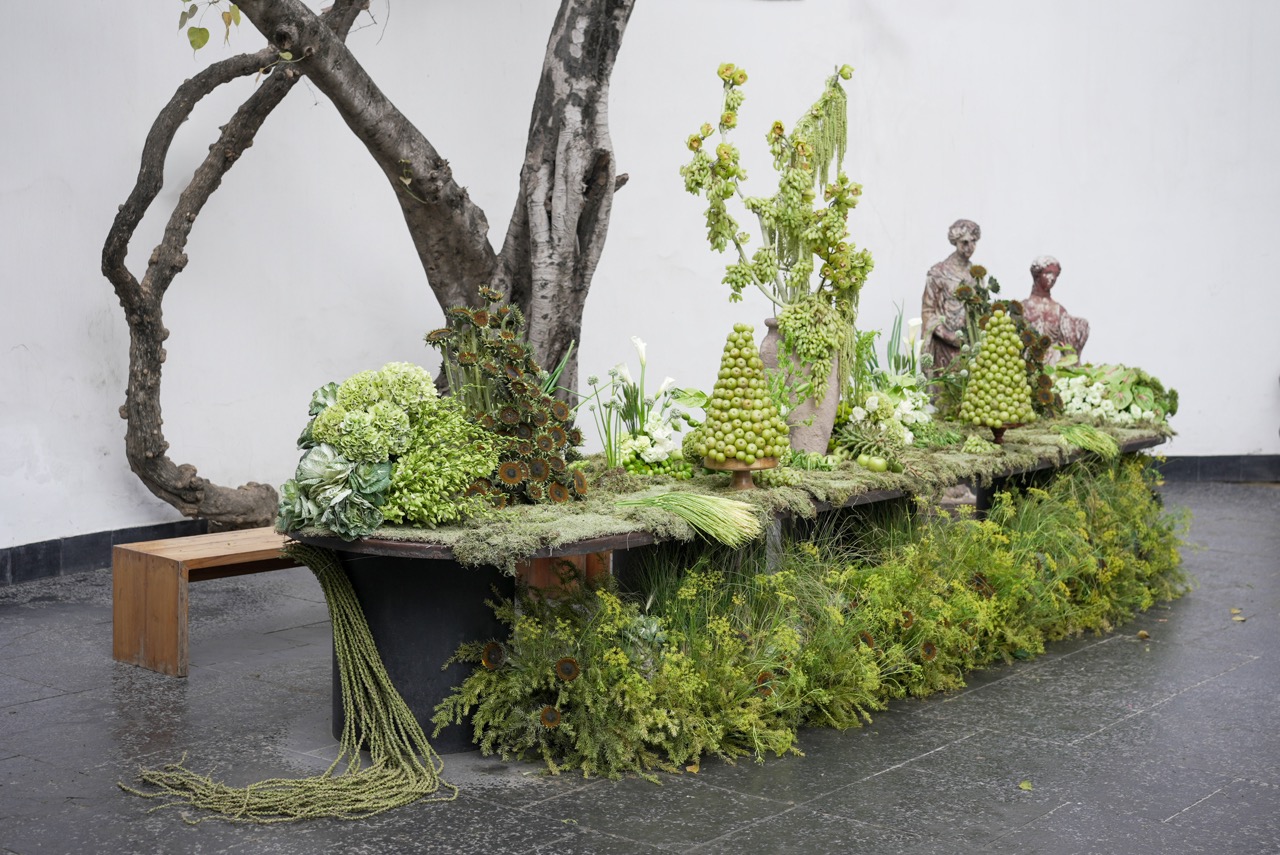
She often begins her process with material – seasonal produce, flowers, textiles, even unexpected hardware elements find their way into her work. For this year’s Asian Paints’ Colour of the Year ‘Moonlit Silk’ reveal, she built a tablescape layered with amla garlands, brinjals, snow peas, and stripped sunflowers: elements arranged in ways that felt both unfamiliar and instinctively inviting. “People actually wanted to pick things off the table,” she says, laughing. “That’s when you know they’re engaged.”
Perhaps not surprising given her early years in set design and direction, a theatrical undercurrent runs through all her work. That influence reflects in how she builds environments today. Each space carries cues of narrative and place: a floral arrangement that evokes springtime in Delhi, an installation for Ekaya Banaras that draws from the texture and rhythm of woven fabric, or a room that subtly reflects the people who inhabit it. Over the years, Lalima has collaborated with more than seventy luxury and global brands, including Baccarat, Gauri Khan Designs, Google, and Villeroy & Boch.
Most of her projects exist in a state of impermanence – a quality she doesn’t resist, but leans into. “Flowers don’t last,” she says simply. “You have a small window to work with them, and that’s what makes them special.” It’s an idea that extends beyond florals into how she thinks about design more broadly, as something to be experienced fully, in the moment.
As her work continues to evolve, Lalima finds herself drawn deeper into materials, and the possibility of creating objects that don’t yet exist in the way she imagines them. “If I can’t find something, I’d rather make it,” she says. It’s a natural extension of her instinct: to keep building, questioning, and refining. Because for Lalima, design is about creating a moment – one that holds your attention, invites you in, and leaves an impression without trying to.