


No Solo Acts
Words
Tanvee AbhyankarPhotos
Hansoga Photography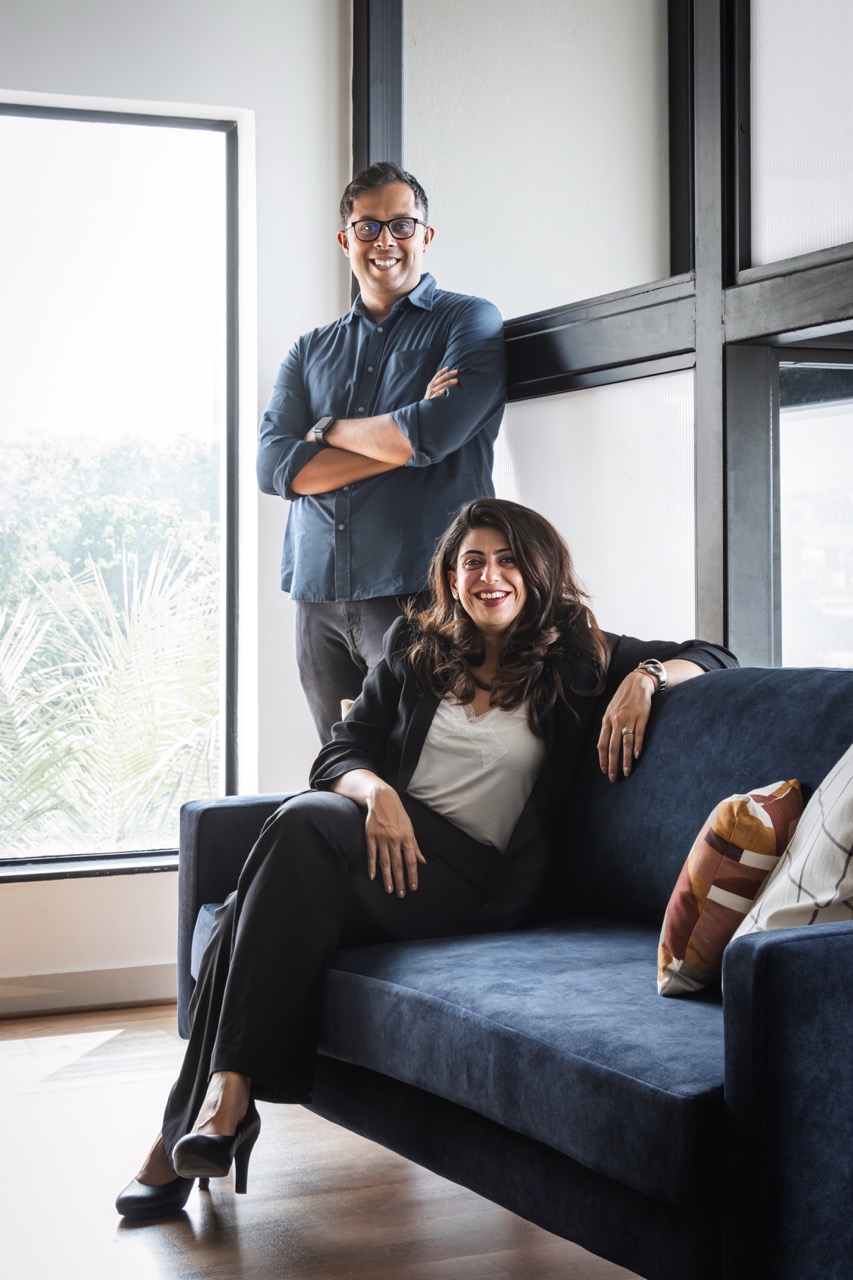
Most architecture studios spend years trying to balance good design with good business. Tall Storeys Collaborative began with both – it just took time for them to meet
Apoorva Nayak studied business in Pune, and she means business, till date. Her partner Kiran Nayak trained as an architect in Mysuru, and continues to practise as one. They grew up in different cities: Mangaluru and Bengaluru respectively, and for a while, built their careers along parallel tracks. When they met in 2011 and married, their shared practice – Tall Storeys Collaborative – wasn’t part of the plan.
In August 2015, the couple moved together to the US as Kiran began his master’s degree. Apoorva was closely involved from the outset – at the college with him, helping fabricate 3D-printed models, assisting with his thesis, and immersing herself in studio culture alongside his architectural peers. Without formal training, she learned by proximity and practice: observing critiques, joining design discussions, and absorbing the nuances of clients, conversations, and intent. “I always knew I wanted to get into design,” she now says. “It felt instinctive.”
Their years in the US, specifically Los Angeles, sharpened both their ambition and perspective. When the pandemic brought them back to India, they returned not just to family, but to a slower rhythm of life and their former home facing a lively park in Bengaluru. Kiran continued working remotely with his California-based firm BAR Architects & Interiors, while Apoorva began thinking about how to give structure to an interest that had been quietly growing.
The nudge came in 2021, when an old client reached out for a renovation project, and Kiran entrusted Apoorva with it. Where she had once been the steady force behind his leap, he now became hers: answering questions, offering guidance, and, importantly, letting her figure things out on her own. That confidence carried into the renovation of Kiran’s family home in Koramangala, where his parents had lived for years. Apoorva took charge of the design and styling, while Kiran focused on space planning “like a magician,” as Apoorva likes to say. The project travelled through publications, word of mouth, and prospective clients, but more importantly, it clarified something essential: the way they wanted to expand their horizons.
Apoorva’s business acumen now guides decisions: what to take on, what to turn down, and how to grow without losing control. “We both take our practice emotionally,” says Kiran. “So even today, we only work with clients we feel comfortable with. Over time, that’s created a very niche clientele, curated one instinct at a time.” And as Apoorva leaned deeper into design, Kiran found himself learning the language of business. “Early in my career, I genuinely believed it was my job alone to do everything,” he reflects. “I admired the idea of the “sole genius” architect and badly wanted to leave my mark. It was humbling to realise how far that is from the truth. Apoorva taught me that good business isn’t just about talent, it’s about trust, systems, shared responsibility, and long-term thinking. Without her, I wouldn’t be able to do what I do today.”
Today, Apoorva oversees operations and strategy, while Kiran retreats happily into design, uninterrupted. That clarity of roles has given the practice room to evolve without being boxed in by a definitive style. “The moment a project starts being performed rather than discovered, it begins to lose its appeal,” says Kiran. “I want buildings to surprise you, to reveal themselves gradually.” If there’s a common thread, it lies in their process, and occasionally in their project names: ‘Order in the House’, ‘A Home for a Busy Doctor’, ‘A Box of Chocolates’, which are literal and playful rather than abstract or poetic.
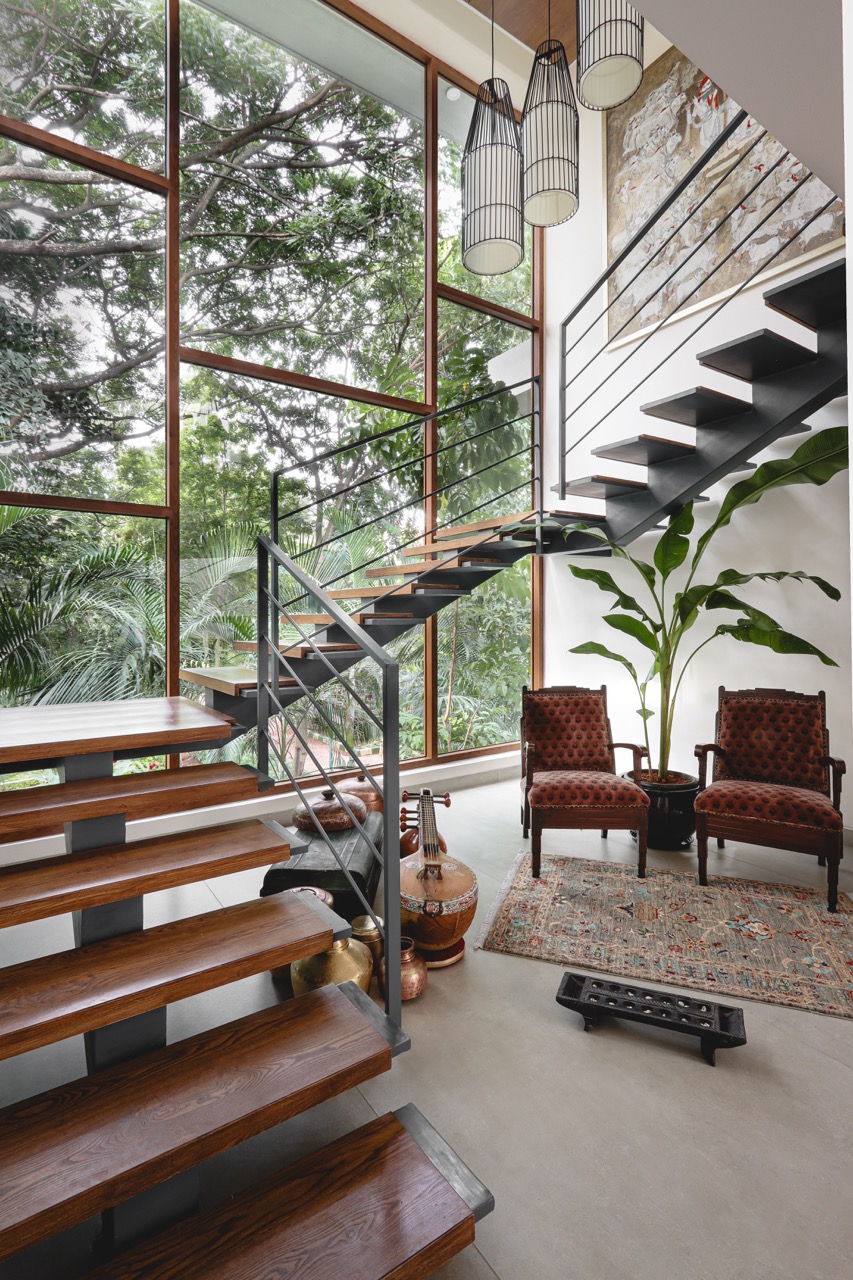
Looking ahead, the energy is unmistakable. Apoorva hints at a packed 2026, while also speaking proudly about projects already realised – an extensively reworked villa in Adarsh Palm Retreat, Bengaluru, where structural changes unlocked extra rooms, bathrooms, and a completely reimagined layout, and a century-old villa in Mysuru, approached with equal parts care and ambition. Beyond the momentum of a growing studio lies the candid relationship that sustains it. The two are quick to admit they’re nothing alike. “That’s probably the secret to a long, happy marriage,” Apoorva says, teasing. She never imagined being in business with her spouse, but the rule-breaking worked in her favour. Both are deeply opinionated, but knowing each other well has taught them where to draw the line. They do share a few traits: convent-school discipline, an all-or-nothing approach to work, and a tendency to care a little too much about good design. Disagreements, naturally, come with the territory. “We’re both invested,” says Kiran. “But the argument is rarely about ego; it’s usually about protecting the project. Once the heat dies down, we land somewhere better than where we started.”
That shared instinct – to protect the work rather than impose themselves on it – also shapes how they choose projects and clients. Apoorva measures a dream commission by trust, respect, and the quality of the relationship. “We’ve been fortunate with clients who treat us well,” she says. “When that mutual respect is there, everything else gets better.” Kiran, for his part, has little interest in building houses that simply repeat what already exists. He’s drawn instead to projects with purpose: sites that pose questions, and clients willing to discover the project rather than control it too early. For him, the ideal commission resists a fixed definition altogether. “The best projects are the ones that continue to tell a story even after we’ve finished them – when the building takes on a life of its own, almost like a protagonist that escapes the page and writes a new chapter without you.” When that happens, he says, you know you’ve designed something interesting. One suspects he means in life too. tallstoreys.in