

For Tejal Mathur, design is an act of rediscovery, where vintage objects, raw concrete, and personal memory meld to shape spaces brimming with story
Words
Tanvee AbhyankarPhotos
TEJAL MATHUR DESIGN, YADNYESH JOSHI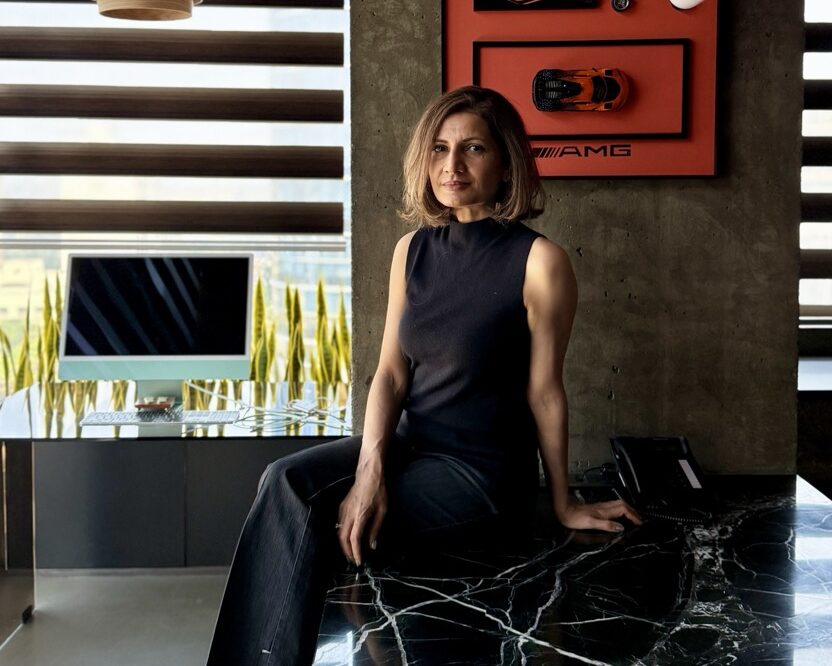
Much of life unfolds as a curious cycle of losing and finding. Interior designer Tejal Mathur, of her eponymous studio, sees design in much the same way. Meanings buried within a dense client brief eventually reveal themselves in the making of a project; cultural markers stay at the core of life and design, and aesthetics once on the verge of disappearing quietly find their way back into the present. Tejal’s own story of rediscovery began early: as a child, she rescued a brass call bell, an old weighing scale and a miniature model of a printing press from her father’s office when it shut down. Decades later, these objects sit comfortably at Pali Village Cafe, a restaurant she designed in Mumbai’s Bandra neighbourhood. “I tend to put something that belongs to me in every project, almost like a strange way of signing off,” she smiles.
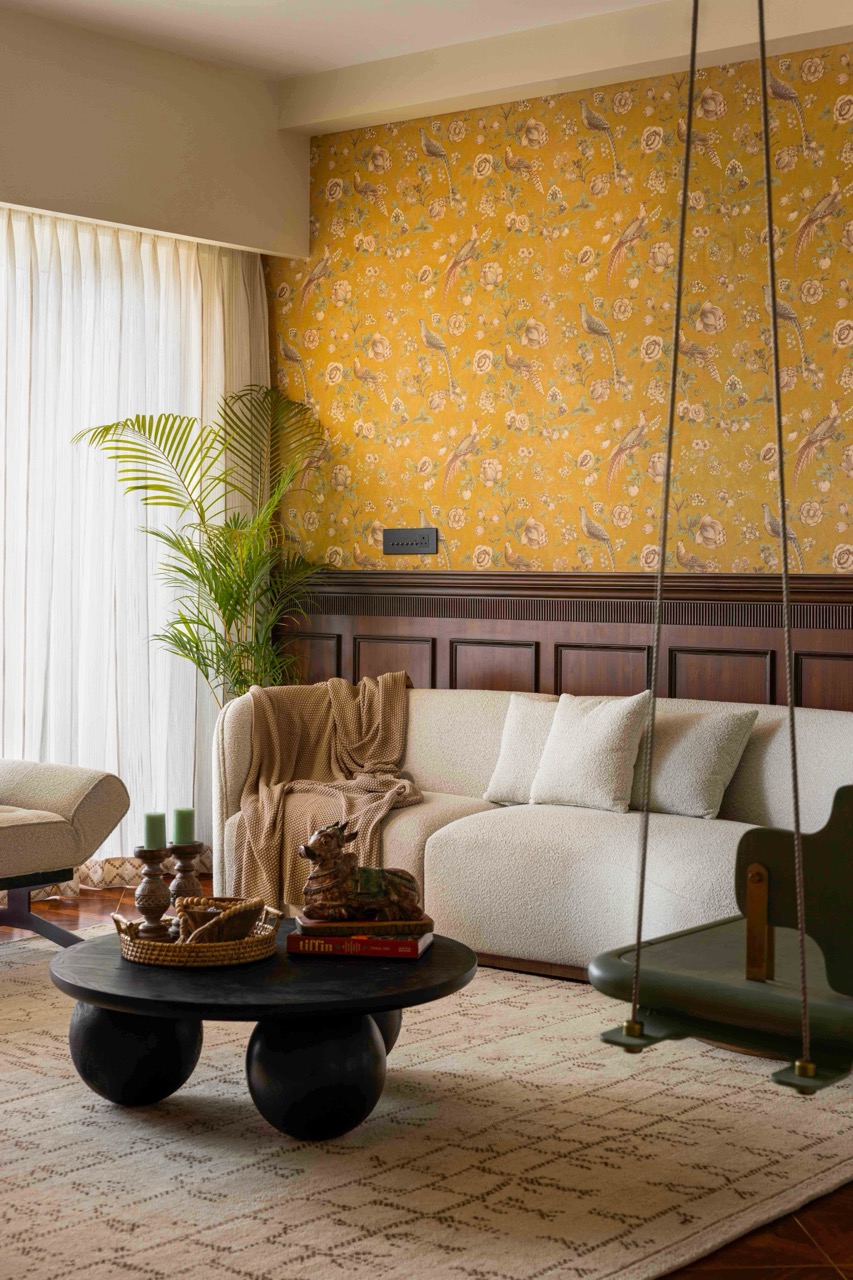
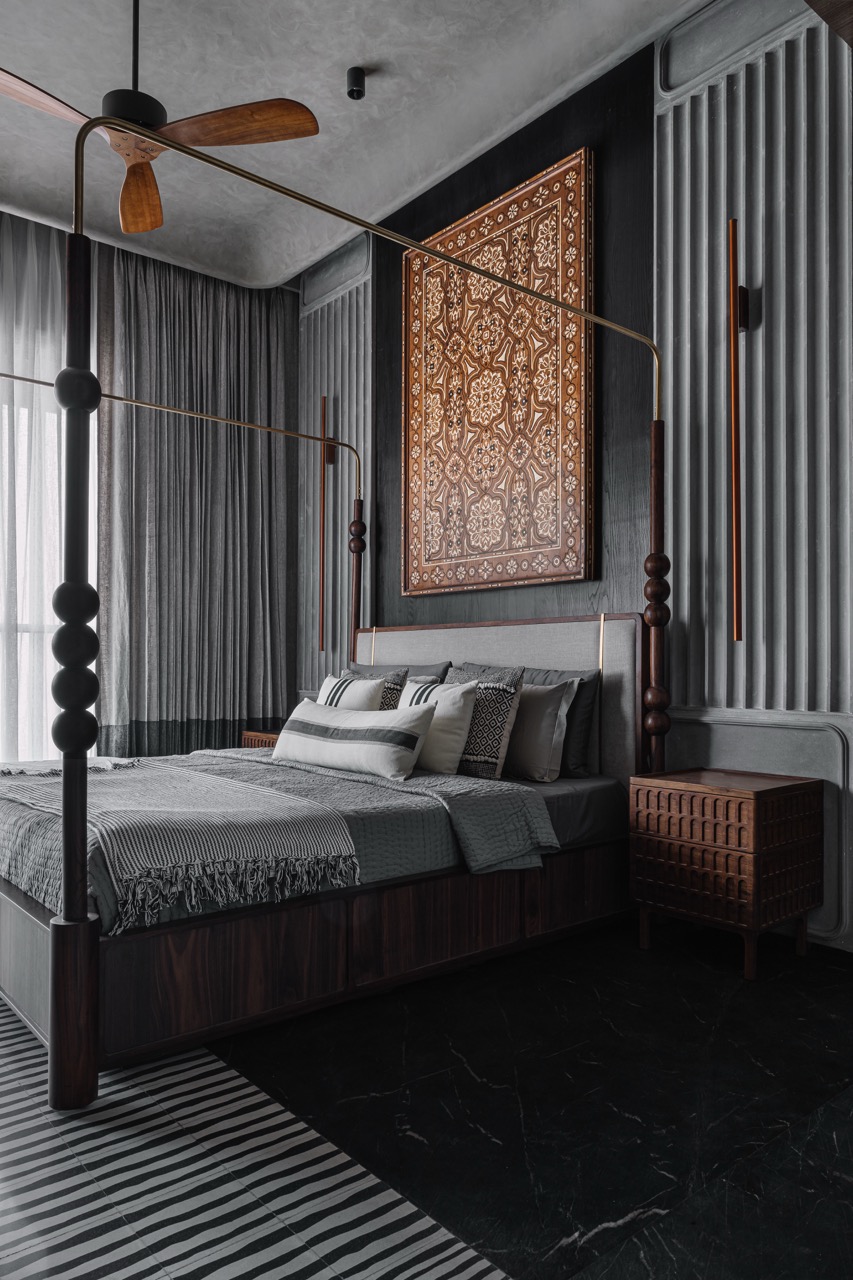
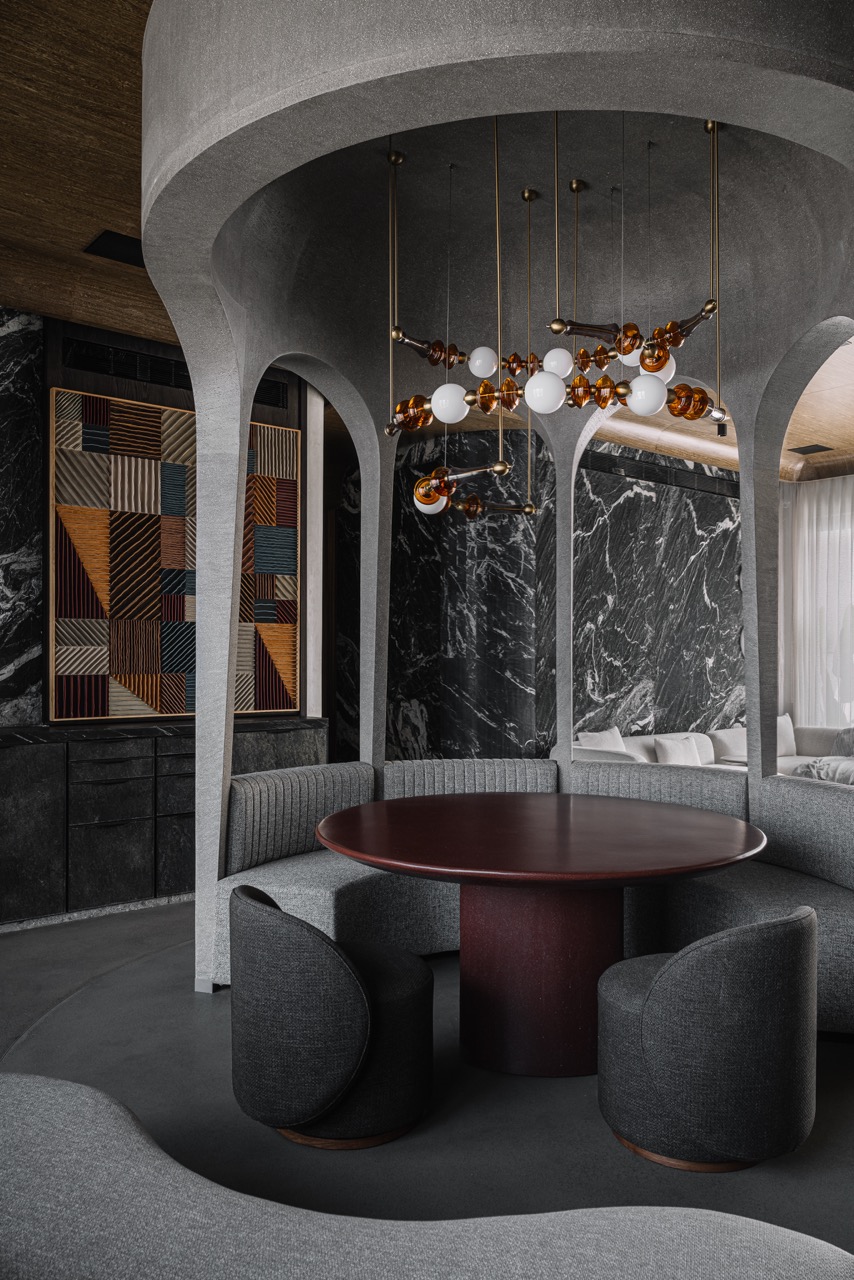
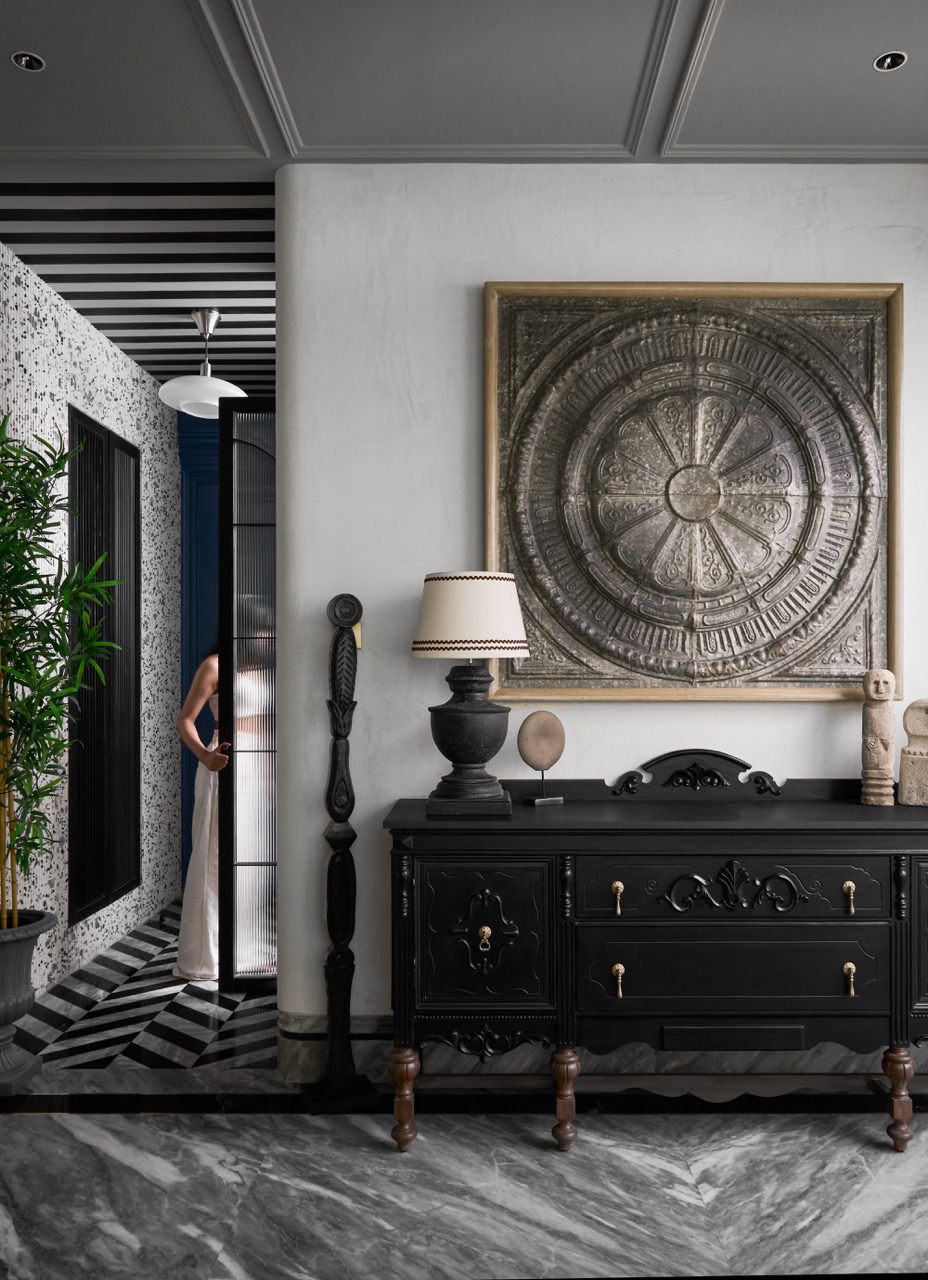
For Tejal, bringing a sense of story to objects began here. “Design became a medium for me to find myself and talk to myself more,” she reflects, “and that eventually shaped my instinct to build through conversations – both spoken and unspoken.” This early sensitivity extends into her practice today. While concrete has come to define much of her work – earning the studio the affectionate tag of ‘concrete dramatists’ – her residential projects are layered with carefully sourced Indian vintage pieces that lend each space a unique individuality. She approaches each project like a storyboard, imagining homeowners moving through their spaces as characters in a film. “In many ways, I think through the process like a filmmaker,” she explains. Even the names of her projects emerge from this narrative lens: Sthiir, an expansive Mumbai residence, reflects the calm solidity of a monochromatic space, while Ekara references the unifying material language of a multi-generational home.
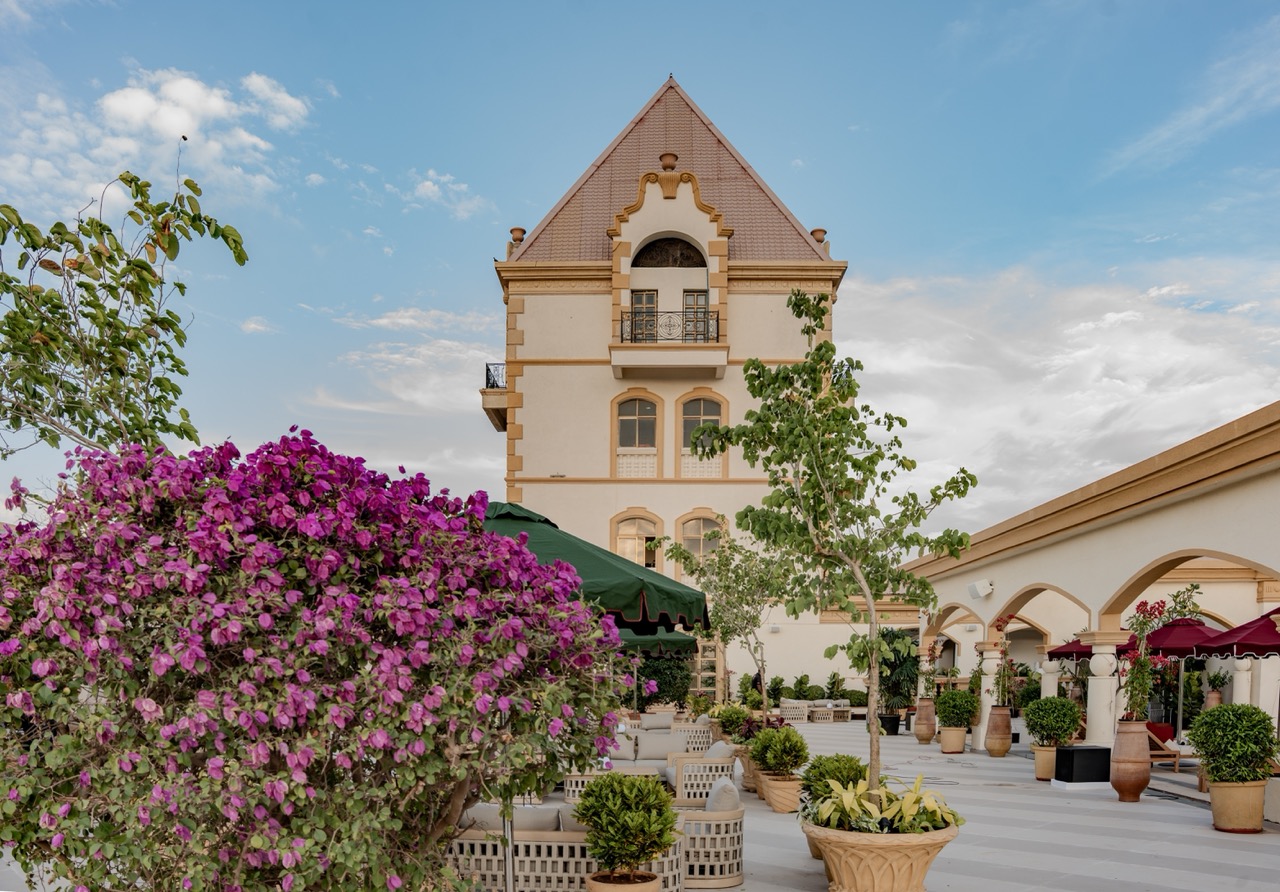
Restaurant design, meanwhile, brings a different kind of energy. Tejal describes it as something of a study in social behaviour, creating an experience for the thousands who may pass through the doors – the “clients you never meet.” She has also showcased her skills at reimagining the visual and cultural aesthetic of India through hospitality projects in Lagos and Dubai. Her parallel ventures like Too Much Drama and Ironworks – further extend this universe, offering distinctive decor sourced from India and across the globe. As part of this world, Tejal is preparing to introduce a narrative-driven furniture line that combines Indian handcrafted techniques with imagery inspired by Africa. Titled Bold in Black, it debuts as a collaboration with Cottons and Satins drawing from a month she spent on the continent. “The sculpted faces, the striking patterns on fabric, the street art, it all left me mesmerised,” she says.
For Tejal, design has never been about spectacle alone; it is about memory, material, and meaning slowly finding their place in the present. Whether through the quiet permanence of concrete or the character of a vintage object, her design process still echoes a childhood instinct – to recognise value, to notice what others might overlook, and to let it live again within a new story.