

Sona Reddy Studio designs Swapna Mehta’s jewellery boutique through retention, reuse, curation
Words
Netra MundadaPhotos
Pankaj Anand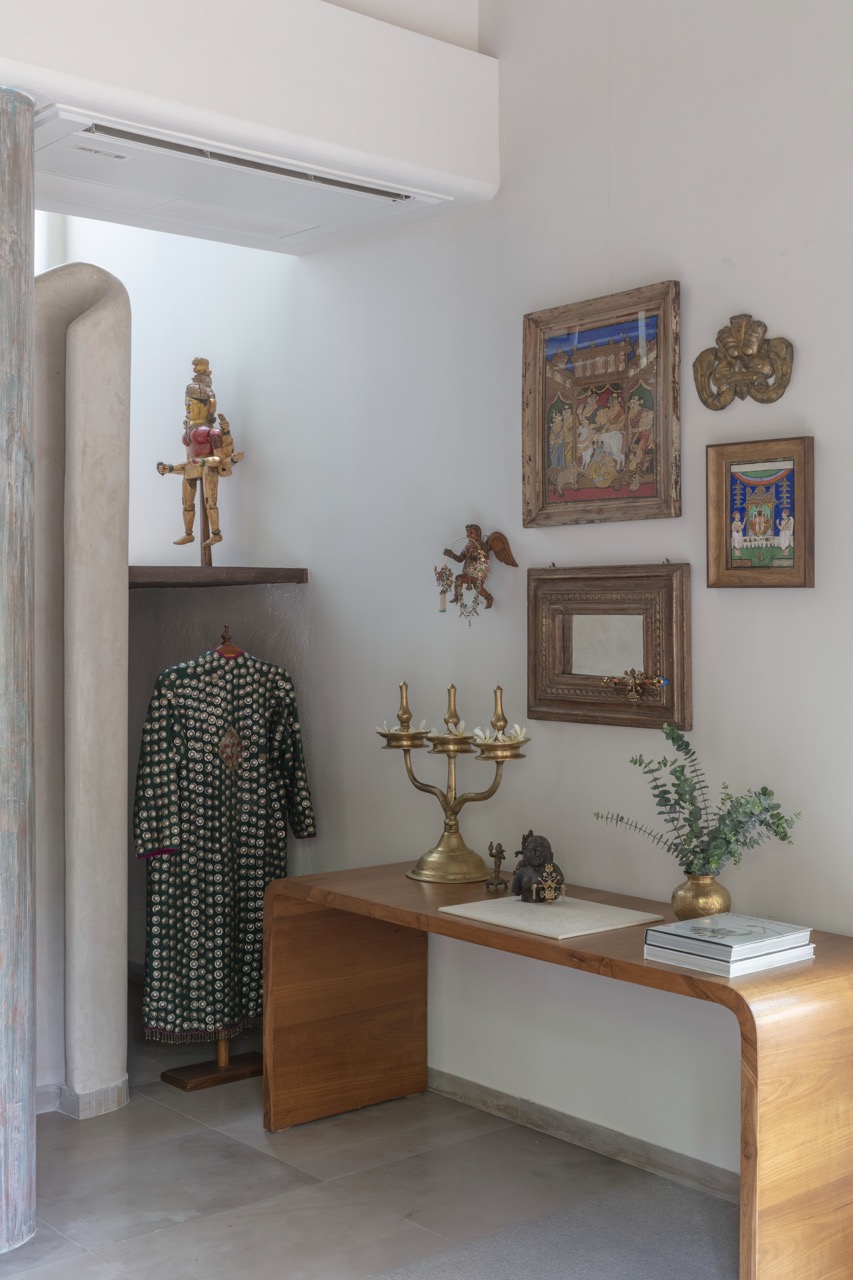
Design often begins from what already exists, materially, culturally, or spatially. Yet, there is a growing appetite for erasing and starting from scratch. At Swapna Mehta’s jewellery boutique in Hyderabad, Sona Reddy of her eponymous Sona Reddy Studio adopts an opposing stance – choosing to proceed from continuity rather than clearing.
The site was originally occupied by a small, dilapidated house, scattered boulders, and mature trees. Rather than treating these as challenges, Sona recognised them as resources. “We did not see the old house as something to remove,” explains Sona. “It felt more appropriate to transform it.” The house was retained and its debris was reused to construct a separate amenity block – an intent that resonates with Swapna’s jewellery practice, which assembles vintage fragments into contemporary heirlooms. Her brief was intimate: a store that is curated, filled with art, objects, and memory.
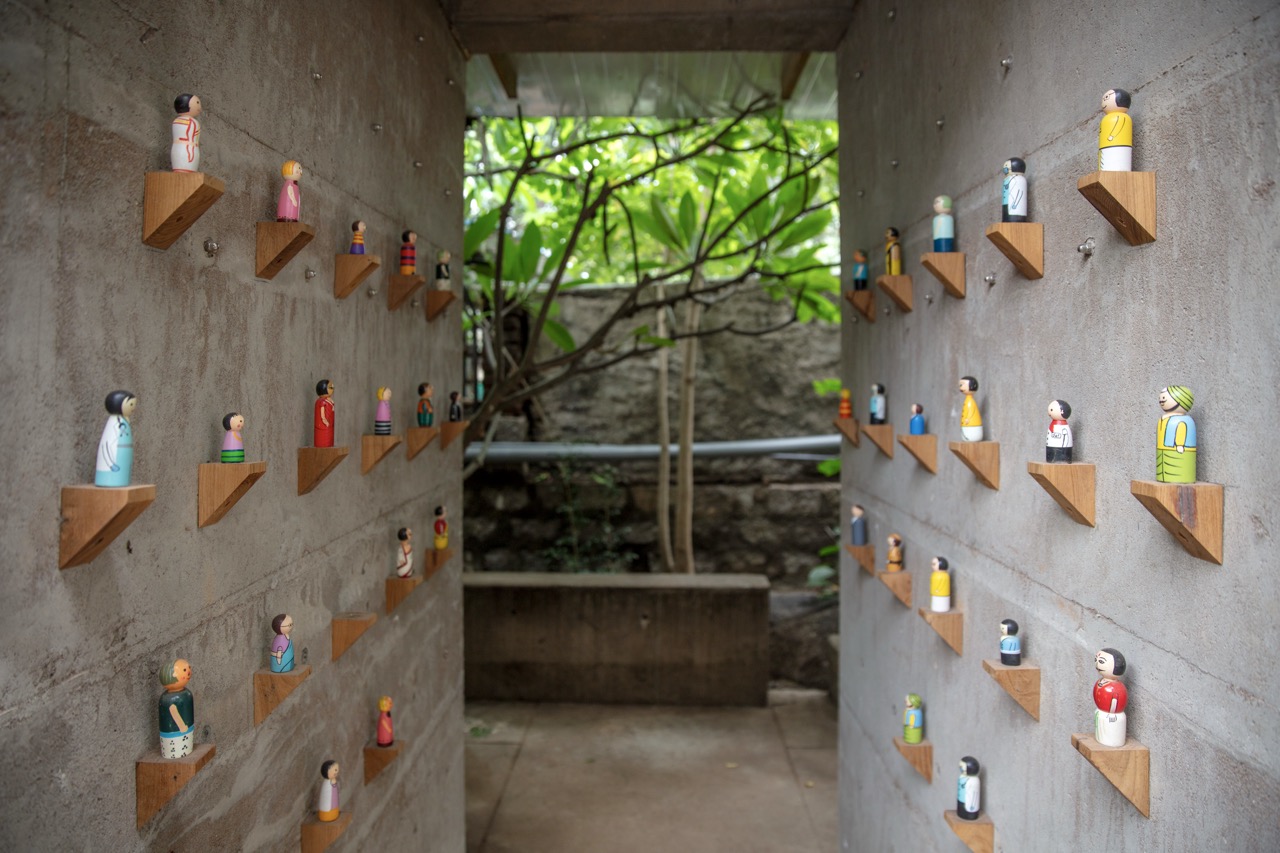
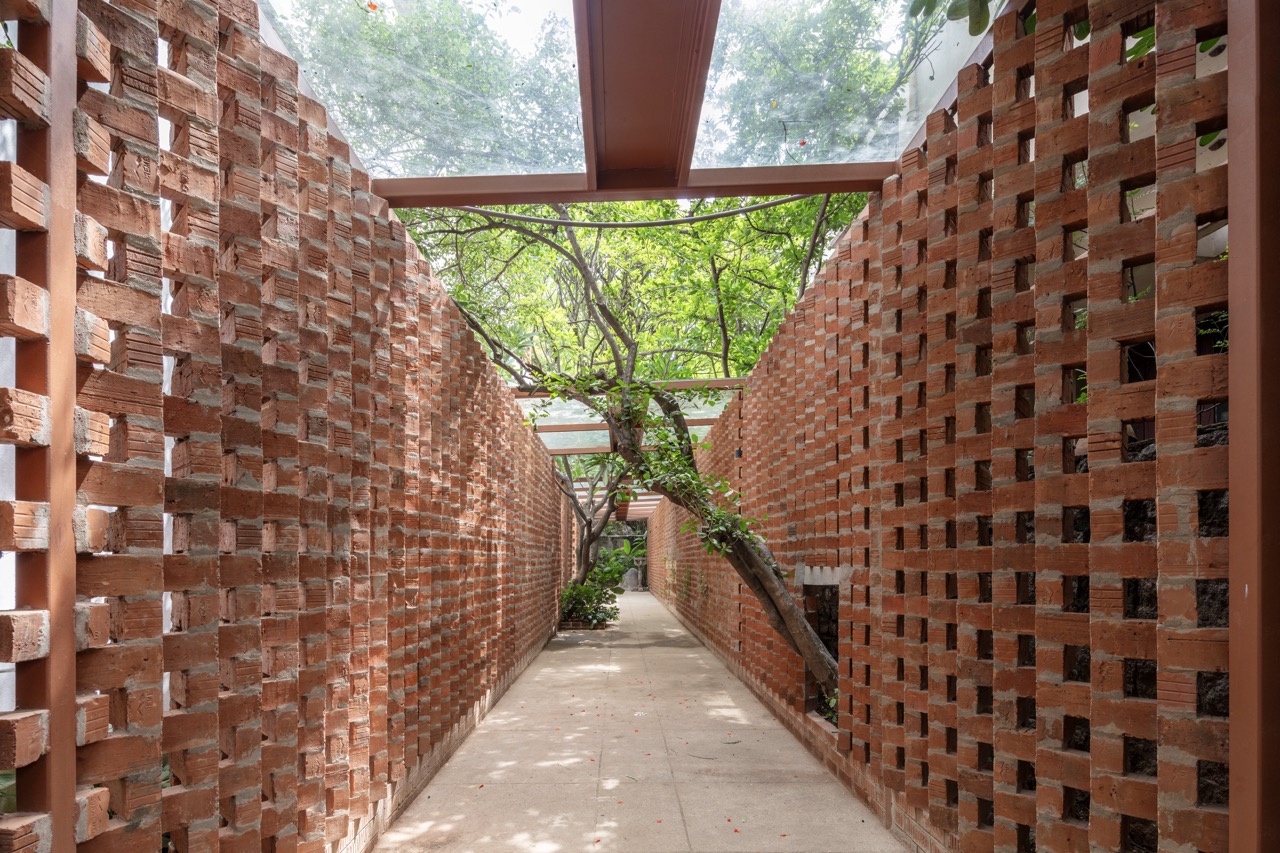
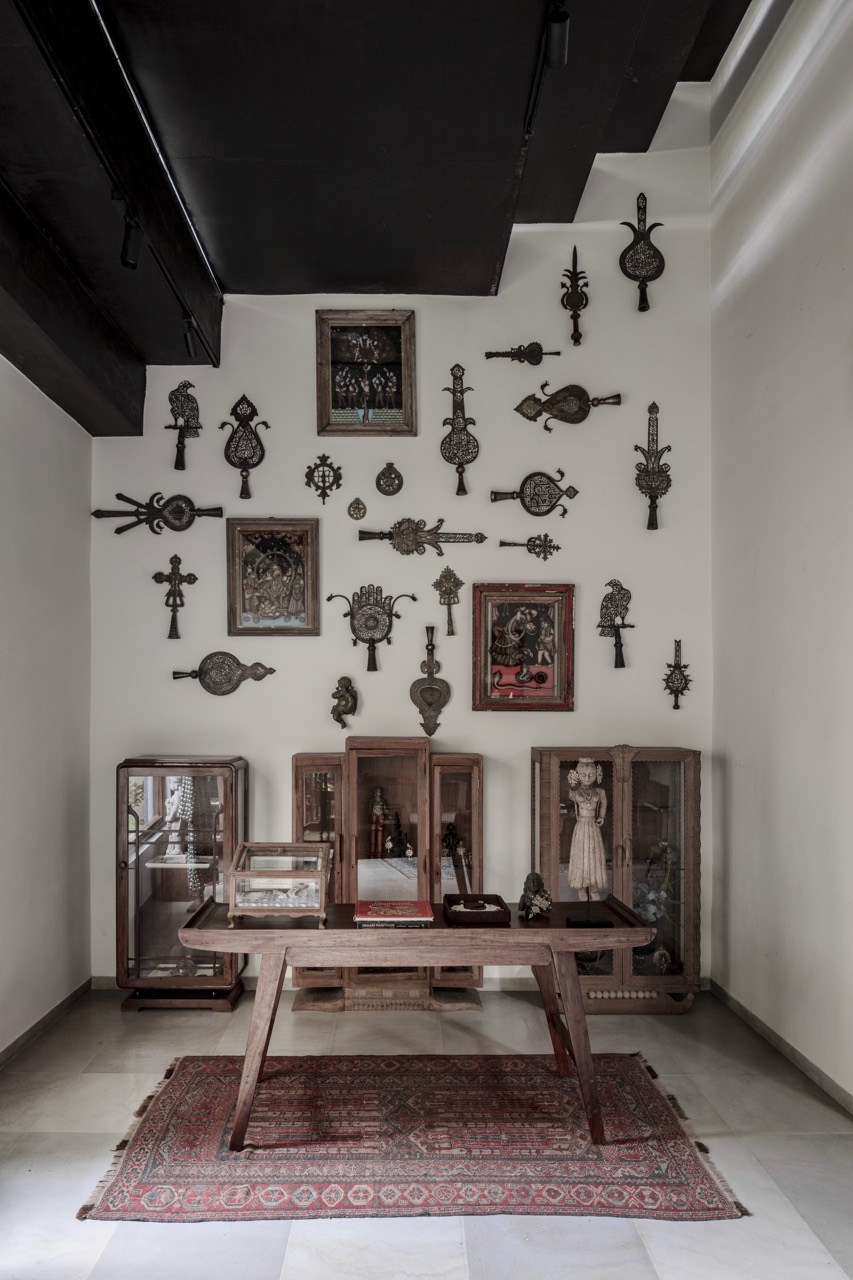
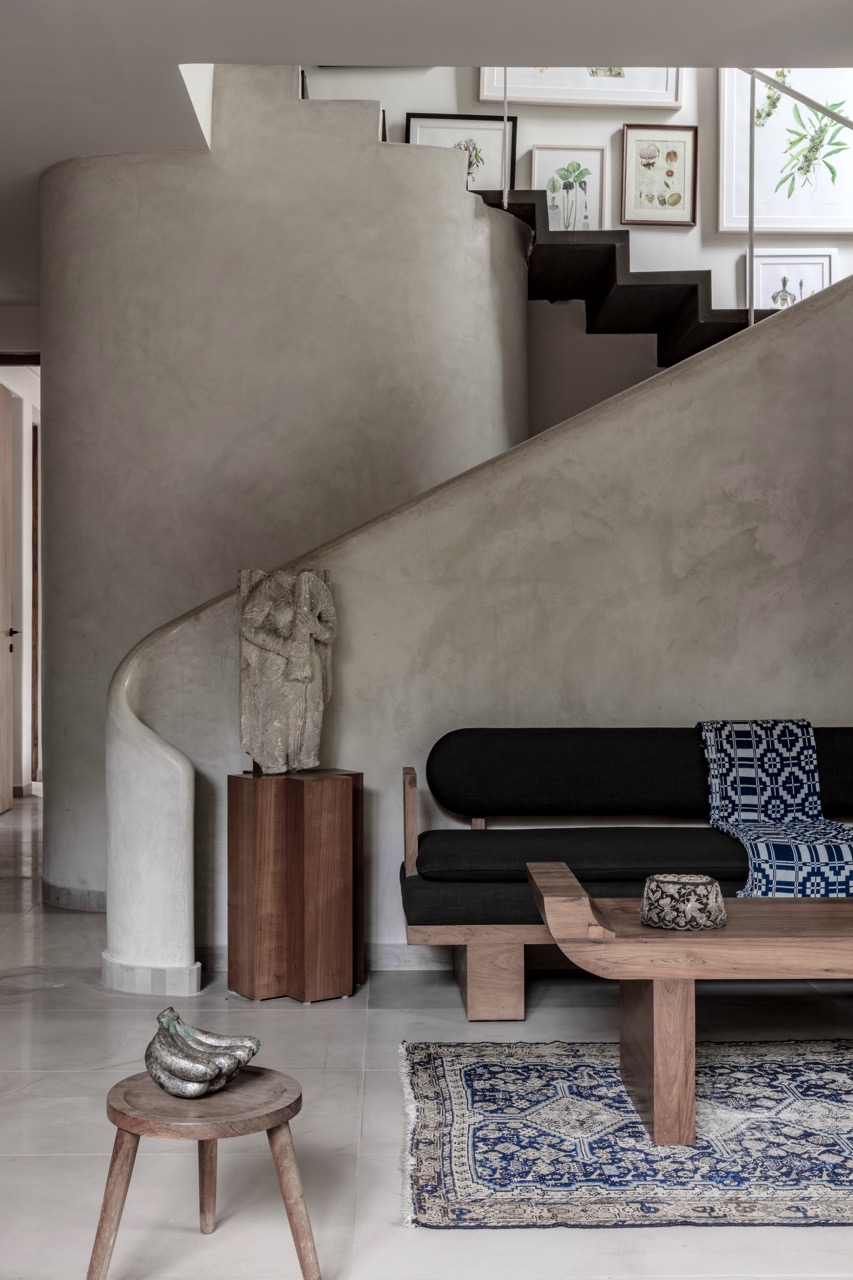
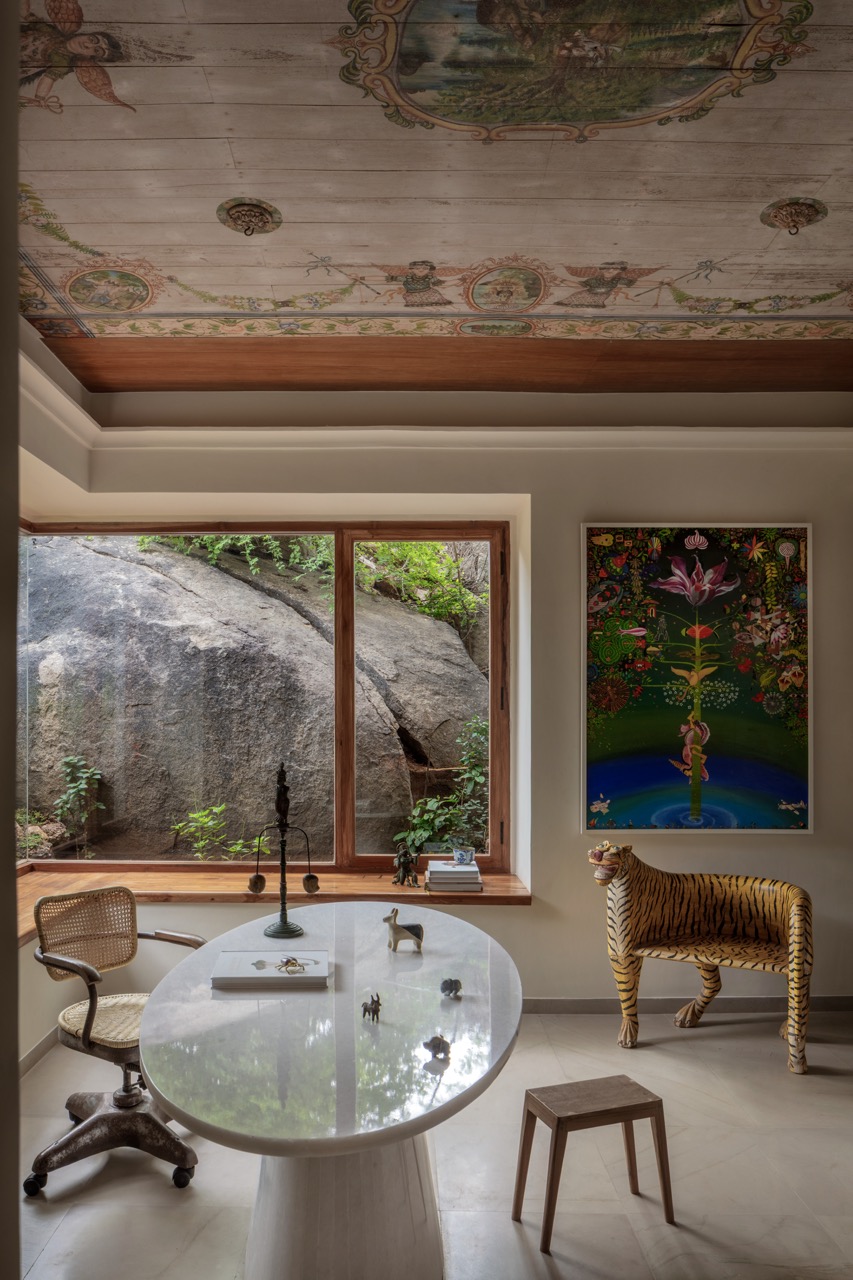
This guides the first encounter – toward the principal store volume. Brick paving and a jaali tunnel with native planting – Sona’s favourite element – leads visitors inside. “The entrance sequence immediately grounds the project in its context,” she describes. The structure, a lightweight metal framework, takes on a stepped form in response to the terrain. The roof shifts in levels, adapting to trees and stones left undisturbed, while narrow slits bring in light that changes through the day, adding movement inside. Beyond this threshold lies the display space, where a wall of religious symbols is realised in multiple art forms. From here, you choose: turn into Swapna’s private room where an early-1900s South Indian ceiling piece sits overhead; or climb to the workspace by a metal stair with a tadelakt-finished railing.
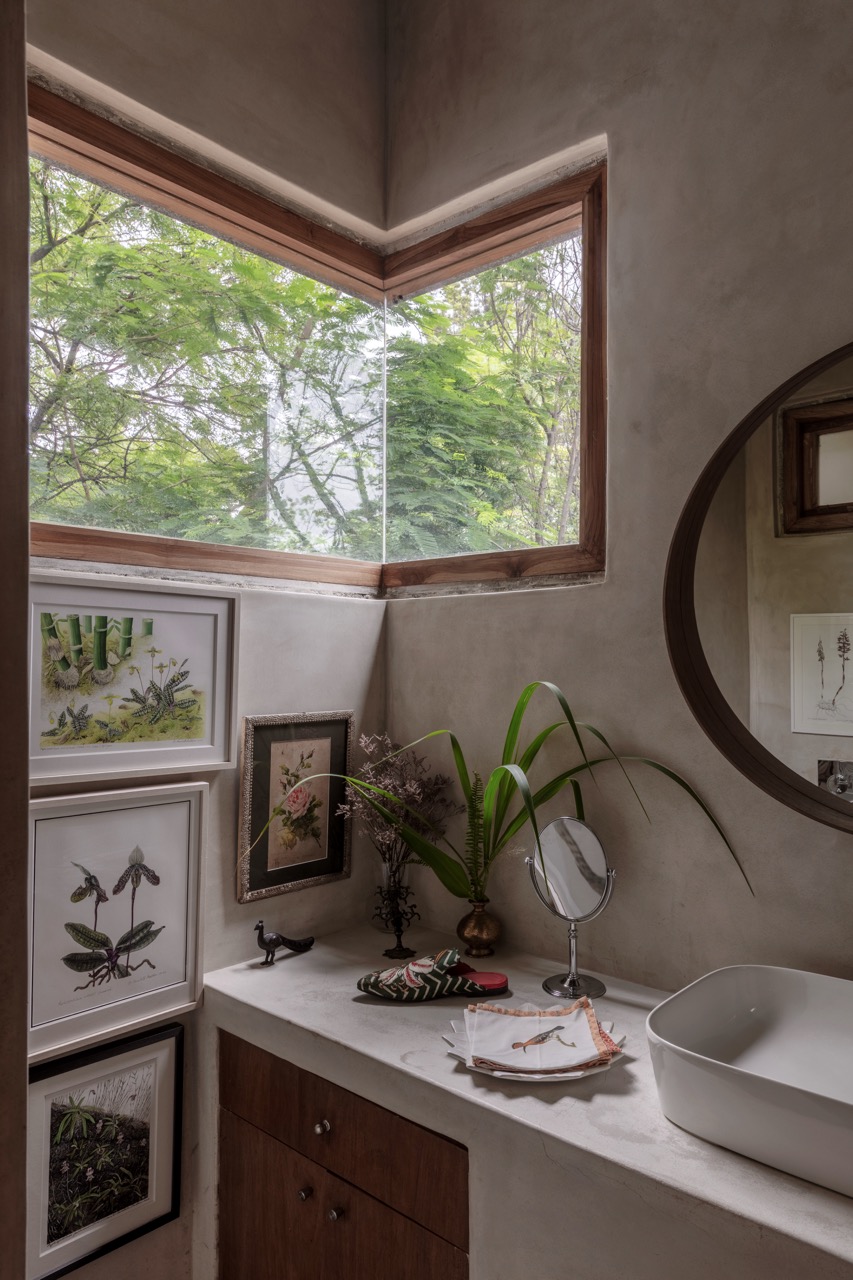
Inside, the space stays mostly off-white, as a controlled background amplifying light and spaciousness. It creates an atmosphere as if the room were holding its breath. Large windows frame the boulders and trees so the landscape becomes part of the interior composition. “The spatial planning and curation of antiques were developed together,” shares Sona. “Instead of adding objects later as decoration, they were treated as elements that shaped the space itself.”
Outside, muted terracotta colours the new interventions in the shade of the earth. The project’s understated ambition is to let the past and present share the same space and is built on small acts of care: keeping what could have been removed, reusing what could have been thrown away, stepping aside for what could not be moved. What emerges is not a store in the conventional sense. “It’s a personal archive,” Sona signs off. sonareddystudio.com