

Designed by Anagram Architects, this Delhi residence explores geometry, daylight, and inward planning on a compact site
Words
Varuni mohanPhotos
Lokesh Dang StudioStyling
Surbhi Chawla, Tanushree Gupta, Muskan Gupta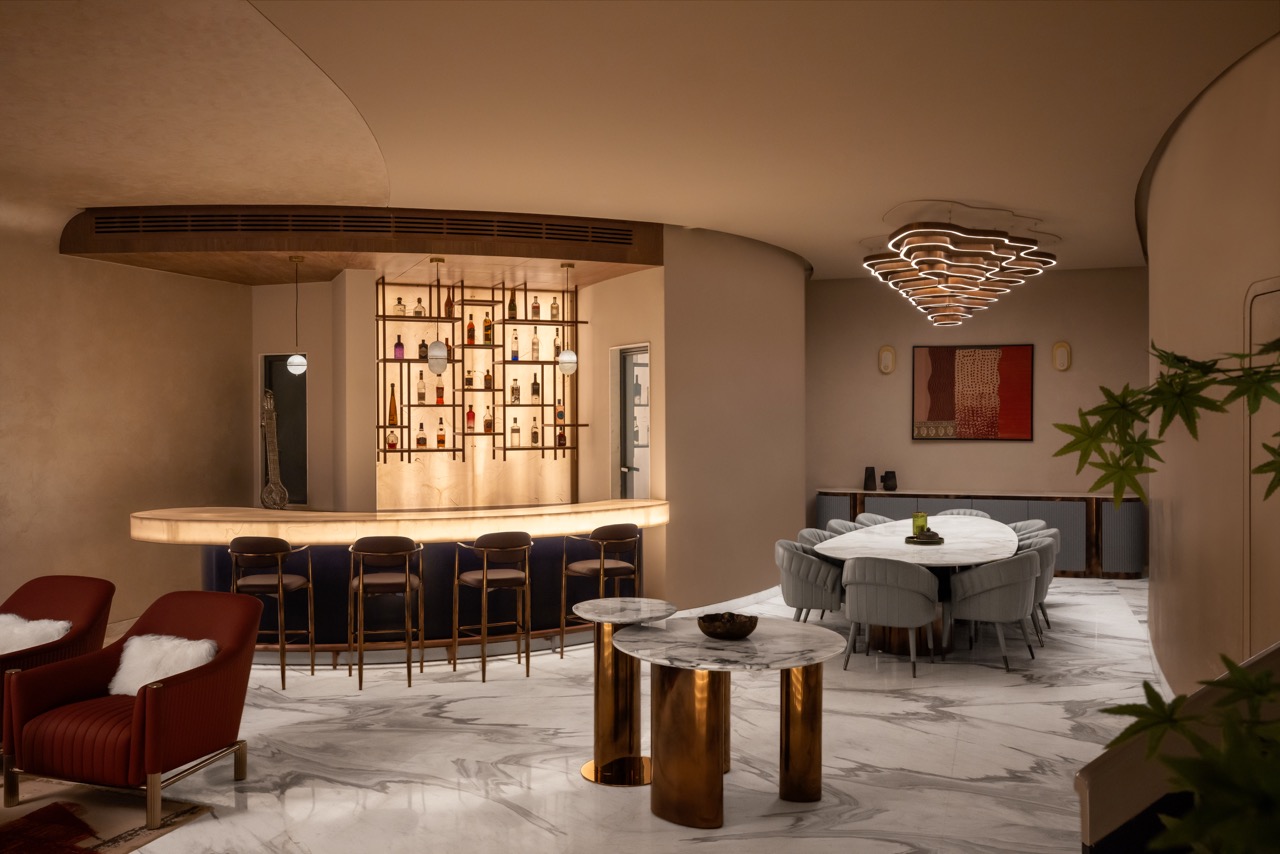
Designed by Anagram Architects, this Delhi residence explores geometry, daylight, and inward planning on a compact site.
In a tightly packed neighbourhood in New Delhi, where homes lean against one another and privacy is hard won, Crease House takes a deliberate turn away from convention. Designed by Anagram Architects, led by principal architects Vaibhav Dimri and Madhav Raman, the 2,530 sq ft residence was conceived for a three-generation family of six and is shaped not by straight lines, but by three sweeping curves that cut through its vertical volume.
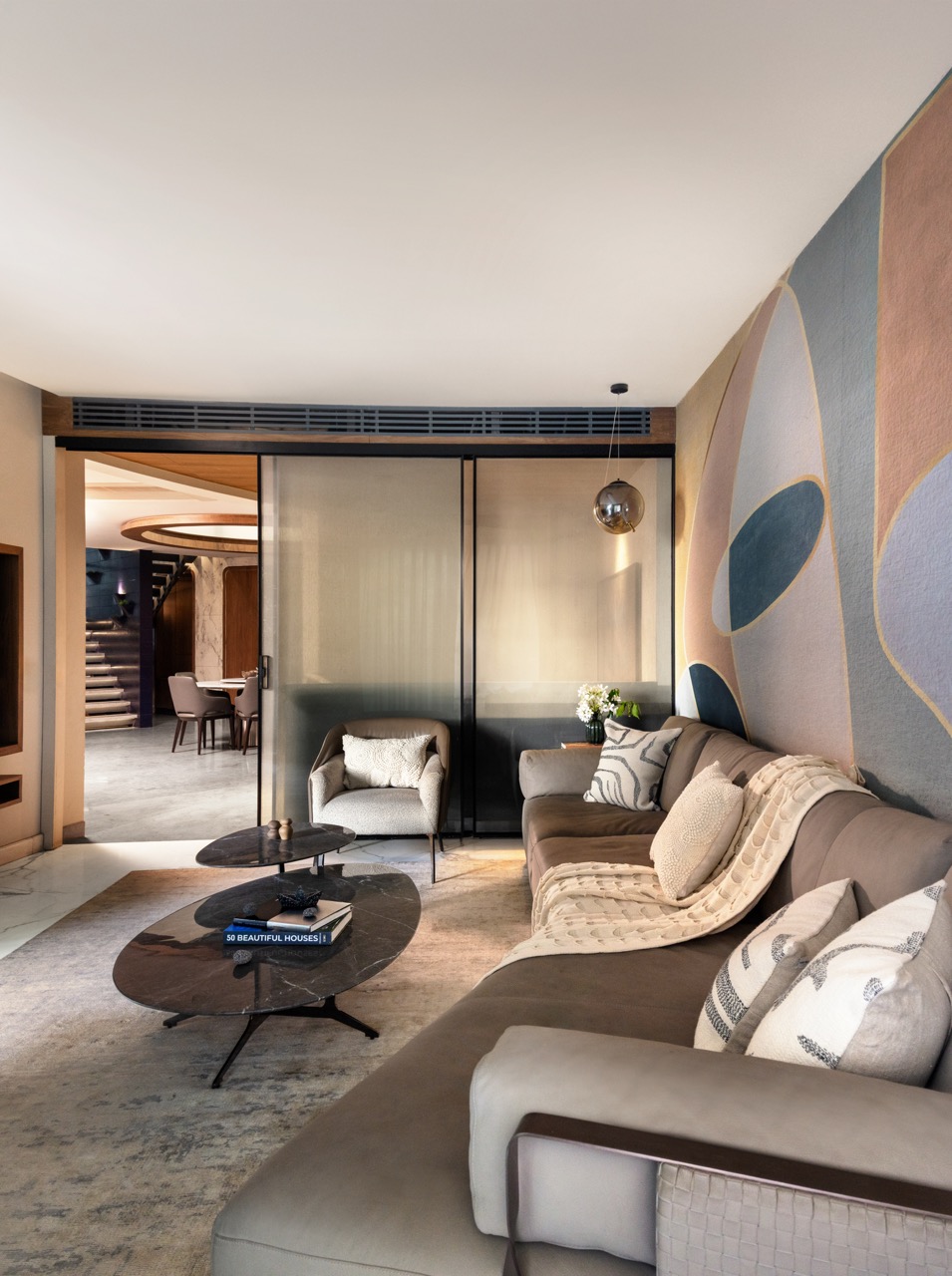
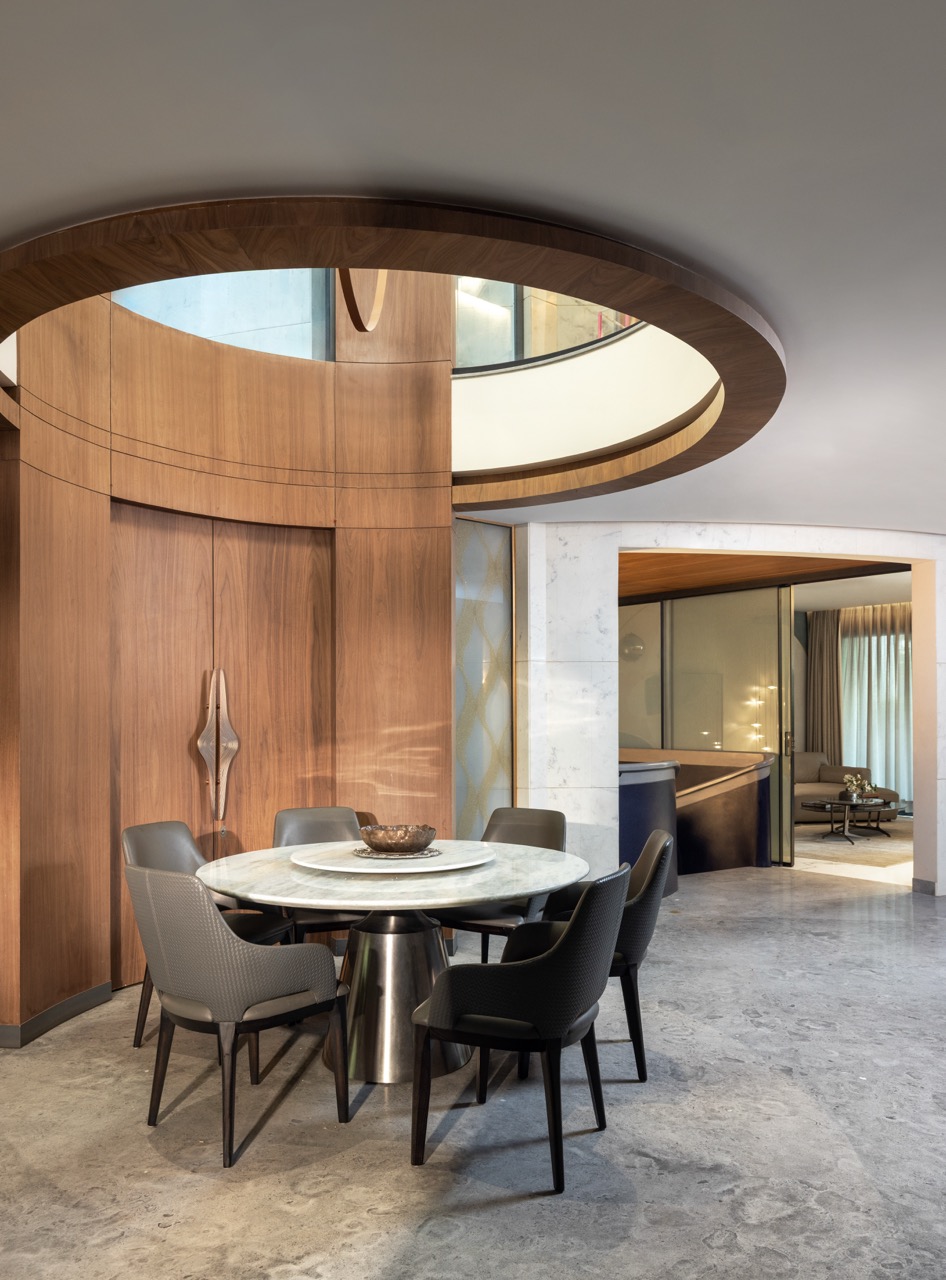
These curves are not decorative gestures. They organise the home floor by floor, dividing each of the four levels into three zones that wrap around a central void that draws daylight deep into the plan. On a site enclosed on three sides, this inward looking strategy becomes the project’s anchor, turning the limitations of an urban infill plot into its strongest asset. “The idea was to rethink how light and space could be brought into a site that was otherwise very constrained,” says Vaibhav. “The curves allowed us to pull daylight through the house vertically, while creating spatial continuity across floors.” At the heart of the home, the central volume rises through the storeys, with a skylight and spilling natural light into the home. These moments of openness connect the dining area on the upper ground floor with family spaces above and below, allowing visual links to replace corridors and closed partitions.
For homeowners Gaurav Gupta, managing director at Divya Alcobev, and Divya Gupta, director at Divya Alcobev, who live here with their parents and two young daughters, this sense of connection was essential. “We wanted a home where we could feel close to each other throughout the day, even when everyone was doing their own thing,” says Divya. “The way the spaces open into one another makes that happen naturally.”
Where the curved walls meet the edges of the plot, they create narrow interstitial spaces, described by the architects as creases. These become planted pockets, light wells, and balcony niches, softening corners that would otherwise remain residual. Toward the street, the curved façade pulls back to form recessed balconies that allow views out while shielding interiors from direct sightlines. “In a neighbourhood like this, privacy and light often work against each other,” explains Vaibhav. “The curved façade acts as a buffer. It filters views from the street while still allowing light to enter across all levels.”
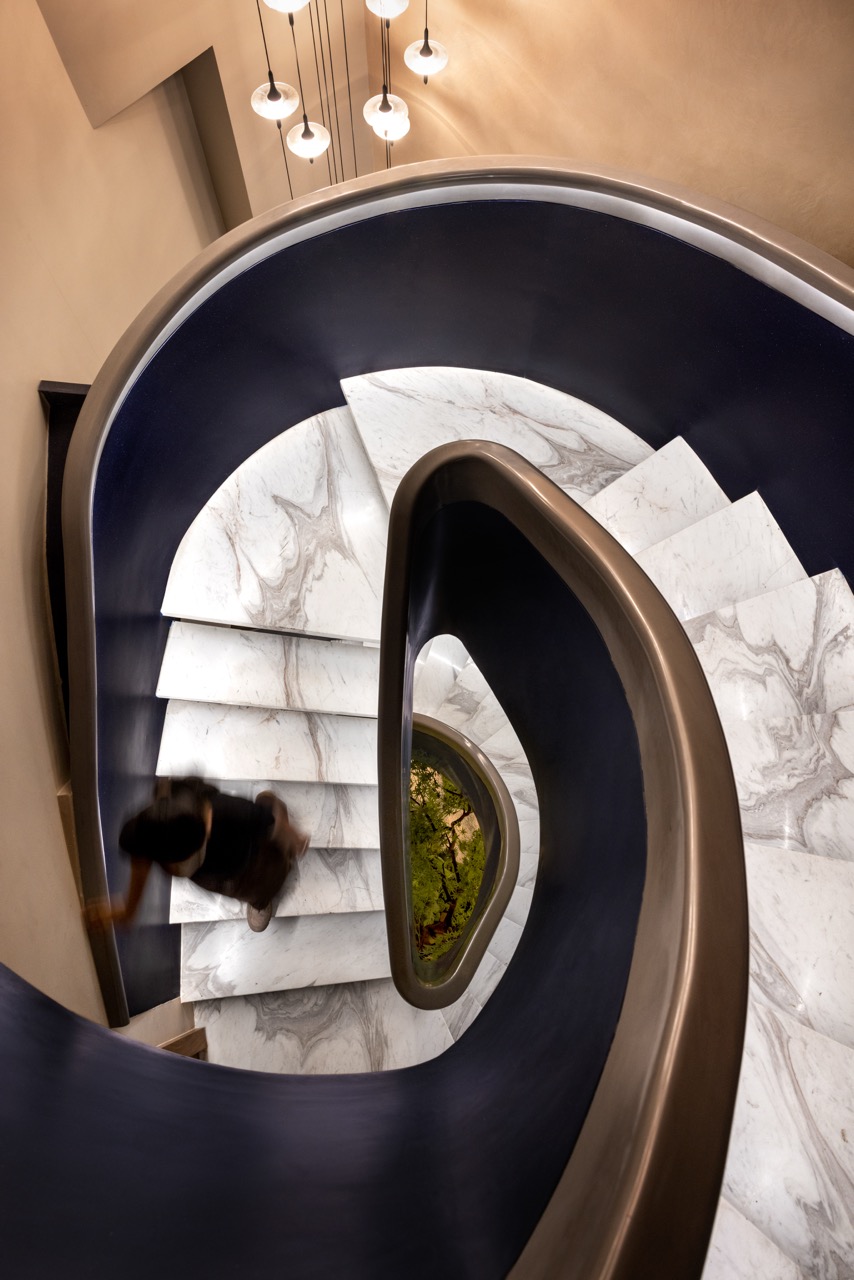
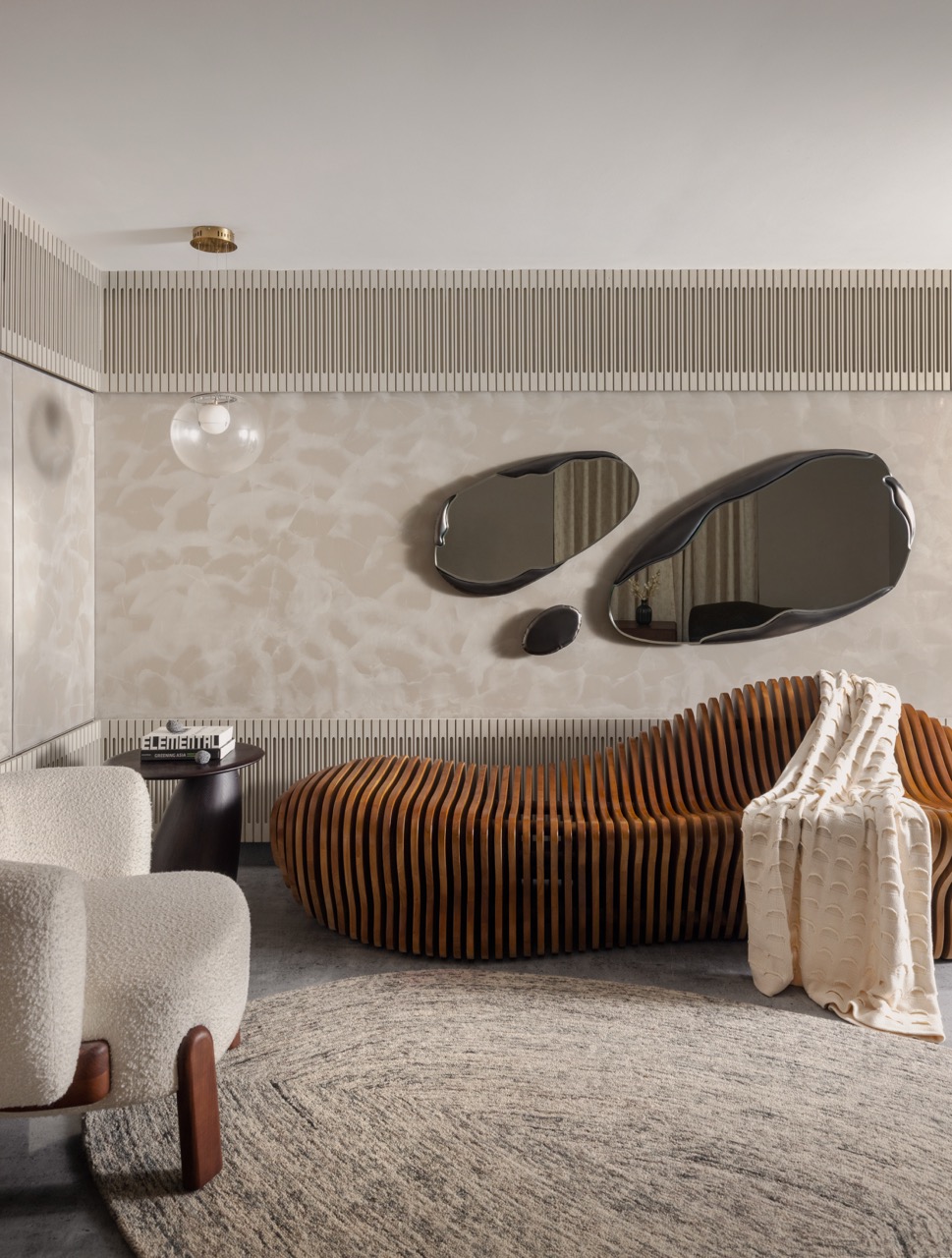
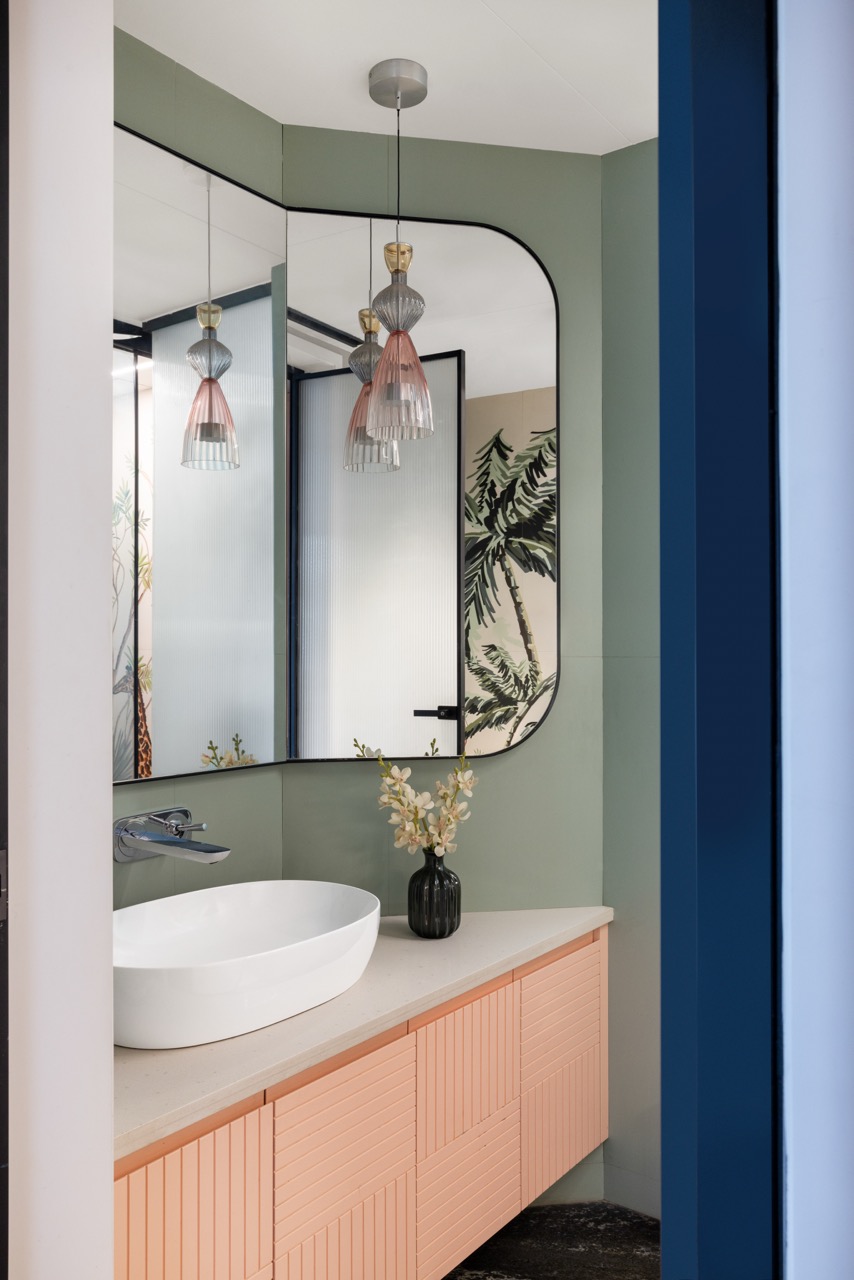
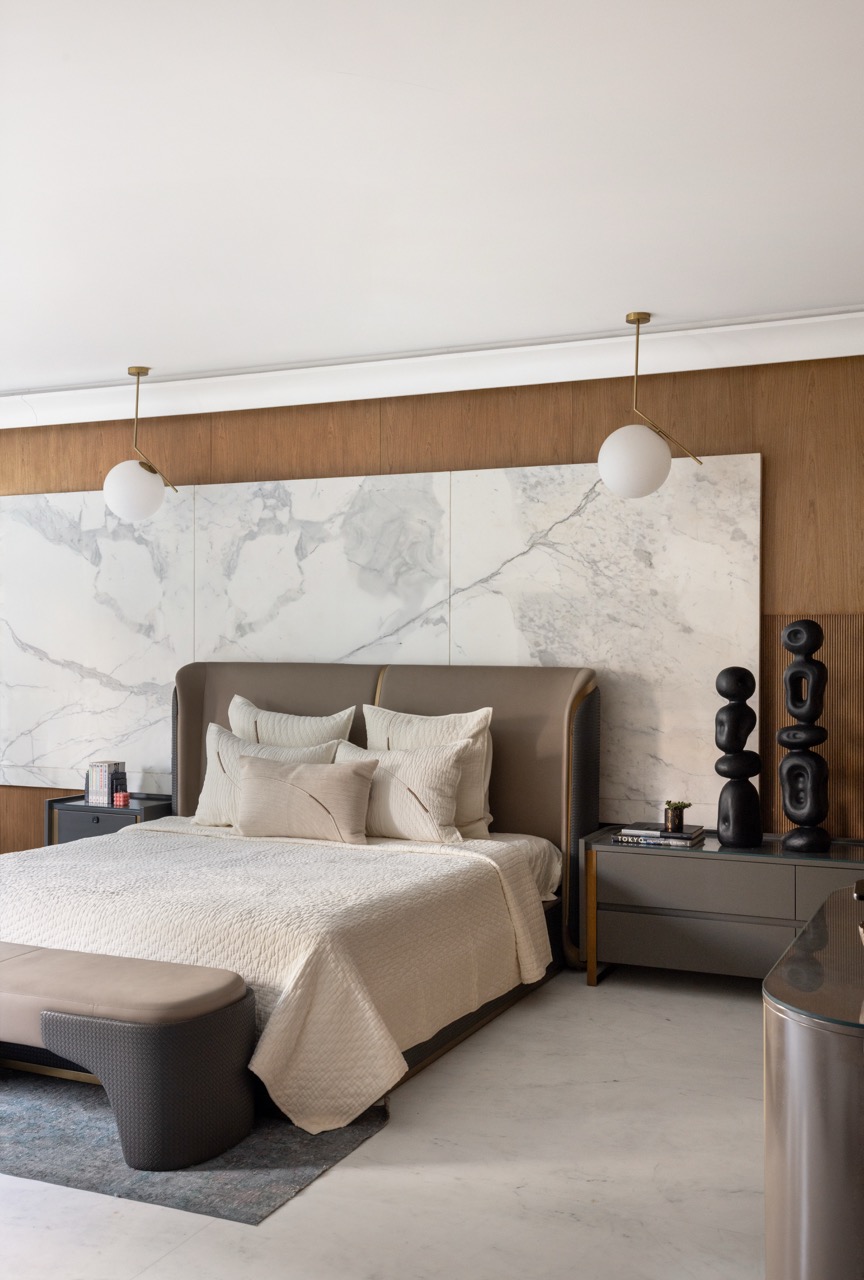
Material choices reinforce the clarity of form. The curves are clad in black Indian stone, setting them apart from the cemento and ossidare finishes of the exterior walls. Inside, Banswara white stone floors and surfaces reflect daylight and keep the interiors measured, allowing the architecture to lead without visual noise. Custom design plays a central role. From the cantilevered internal staircase punctuated with green pockets to the master bathroom vanity that mirrors the three curves of the house, standard solutions were rarely sufficient. “Once you commit to a geometry like this, everything has to respond to it,” says Vaibhav. “Custom detailing became necessary to maintain consistency between architecture and interior.”
Despite its sculptural quality, the home is firmly grounded in everyday life. The dining space, positioned at the base of the central void, functions as the emotional centre of the house. “This is where we come together every day,” says Gaurav. “Meals, conversations, celebrations – it all happens here. You can sense the whole house around you.” Crease House ultimately reads as a thoughtful negotiation between form, family life, and context. In a city defined by rectilinear plots and tight setbacks, it offers an alternative way of living inward, connected by light, movement, and shared space.