

Set within a dense Bengaluru neighbourhood, this home by Khosla + Anand turns toward light, air, and a sweep of trees
Words
Shriya GoyalPhotos
Ishita SitwalaStyling
Kunal Das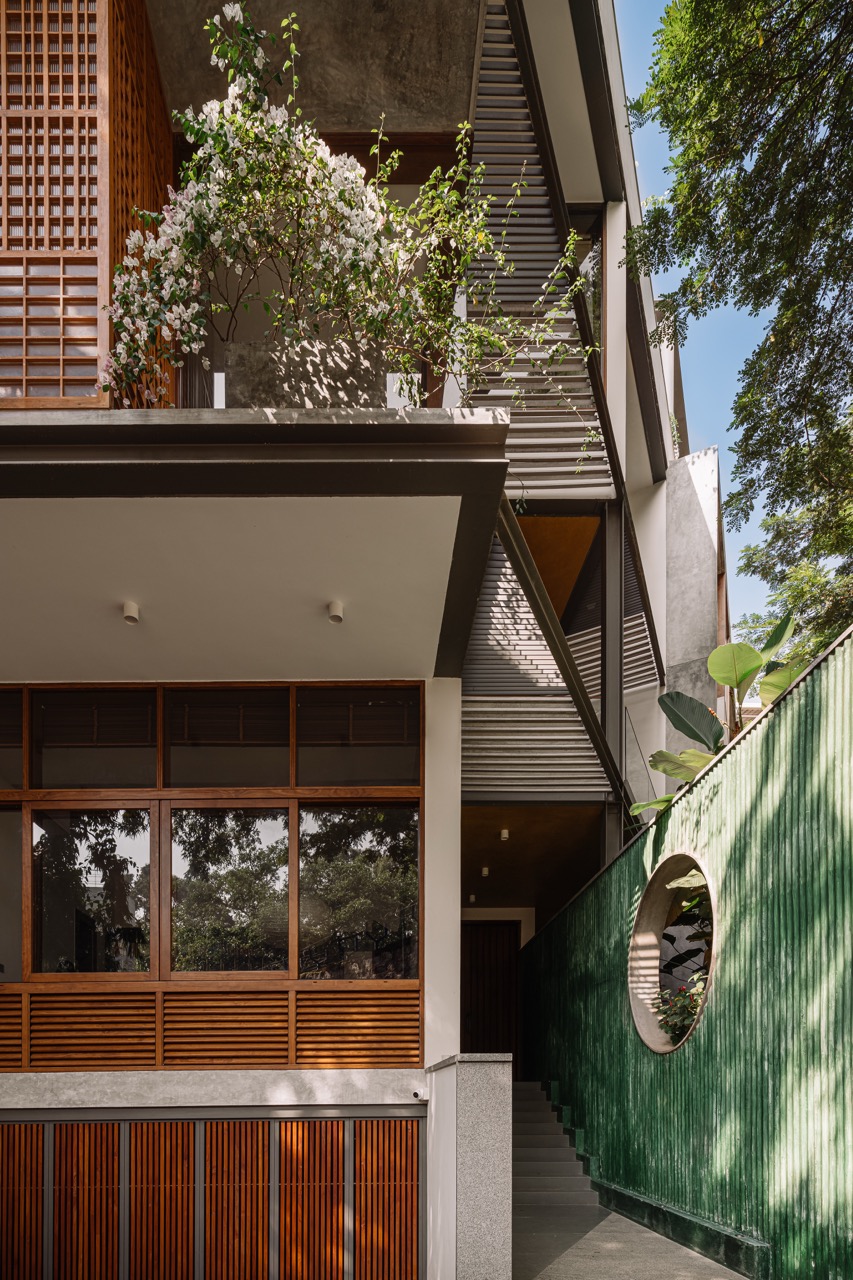
Some homes open outwards, and then there are others shaped entirely by what they open towards. It isn’t just about large windows or visual connections to the outdoors; it becomes a constant feeling you settle into. Light shifts through the day, trees remain within view, and air seems to move through the house without interruption. You are indoors, but it rarely feels contained.
Set on a 4,625 sq ft trapezoidal plot in Bengaluru’s Indiranagar neighbourhood, this home is designed for a family of four – a young couple and their two sons – with parents visiting throughout the year. From the street, the facade is minimal and geometric with clean lines, revealing little of what unfolds within. Inside, the house opens in a completely different way, oriented toward light, air, and a dense canopy of trees. “As we discussed the project with the homeowners, we realised we were speaking the same language,” says principal architect Amaresh Anand of Khosla + Anand, who designed this project along with his co-founder Sandeep Khosla. The design team included Nisarg Shah and Aishwarya Manikandan. The brief called for openness and ventilation, encouraging movement and interaction. The result is a home that feels expansive, with constant airflow and visual continuity.
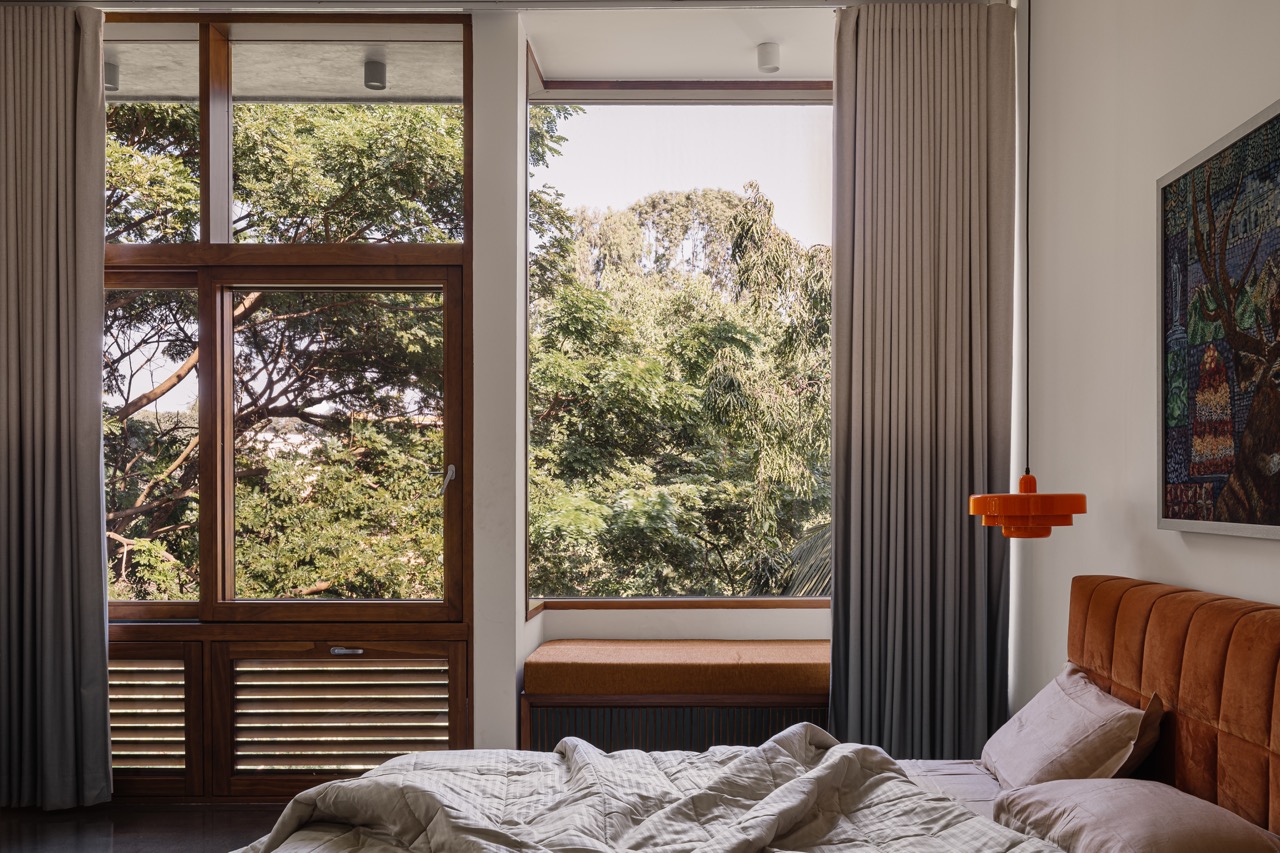
The layout is planned around an existing jackfruit tree. This decision anchors the home in its context, both physically and emotionally. It reflects the studio’s philosophy of building with the site, not over it, and gives the house its identity and name. The site came with certain constraints, including a narrow entrance, and neighbouring homes pressed close alongside one edge. To the north, however, it opened toward a stretch of designated army land lined with tall, lush trees. The design emerged as a direct response to this. “We oriented all the important living spaces toward the north, overlooking the greenery,” Sandeep explains.
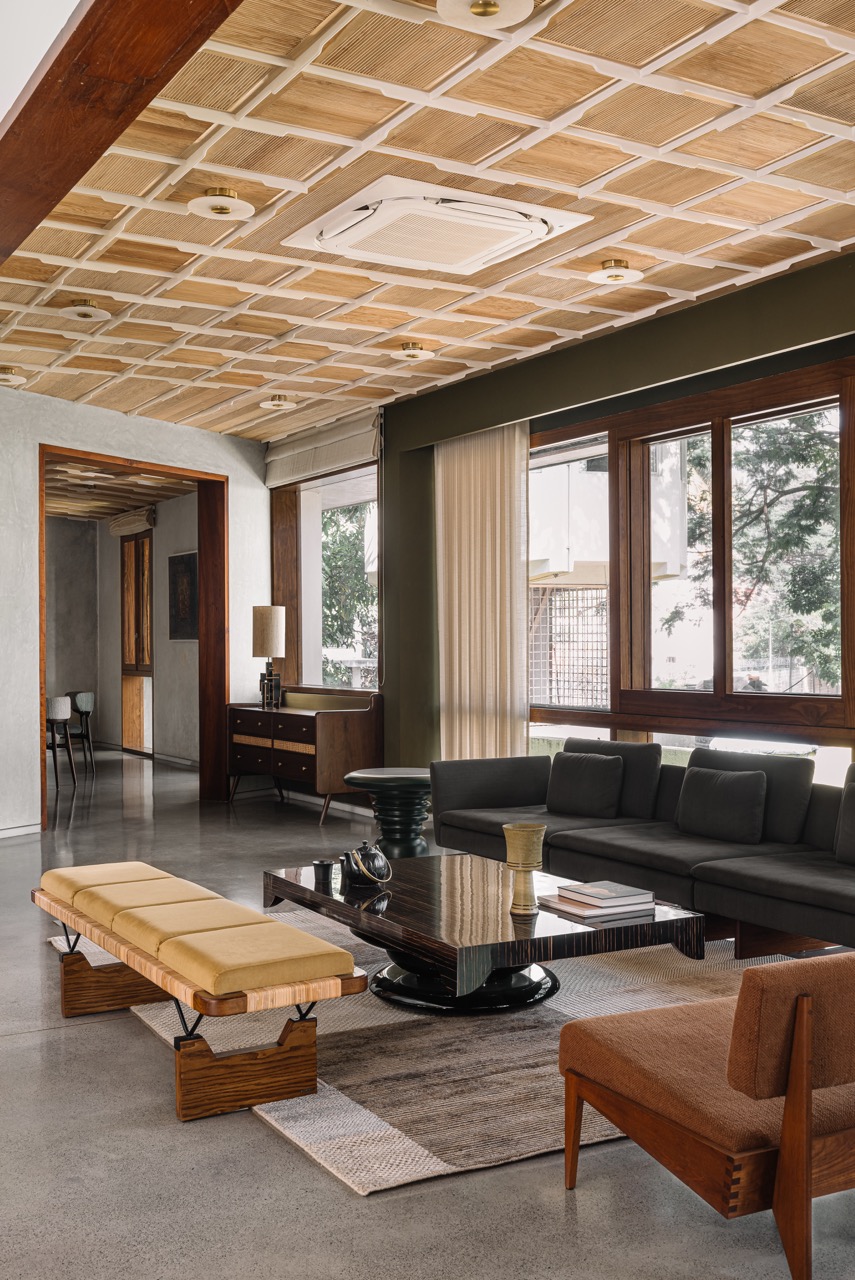
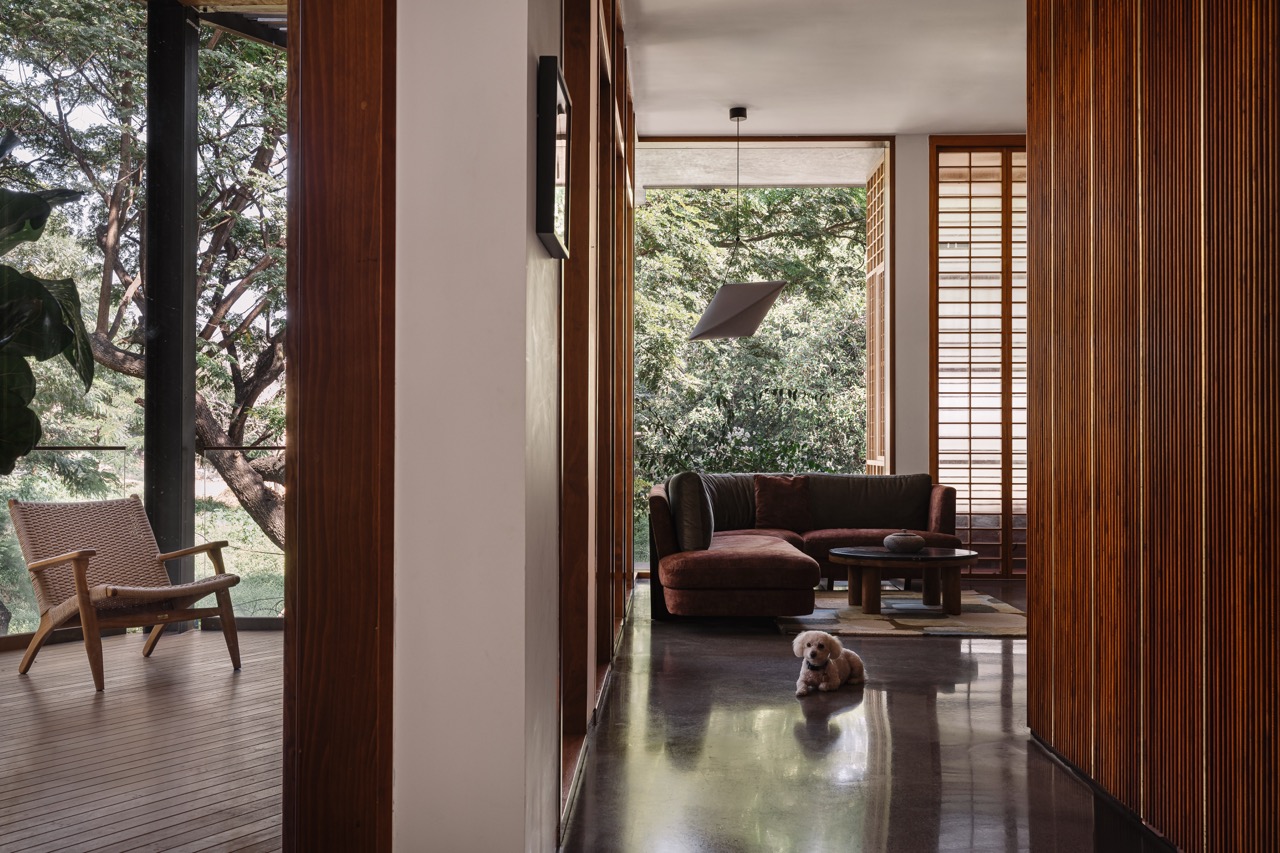
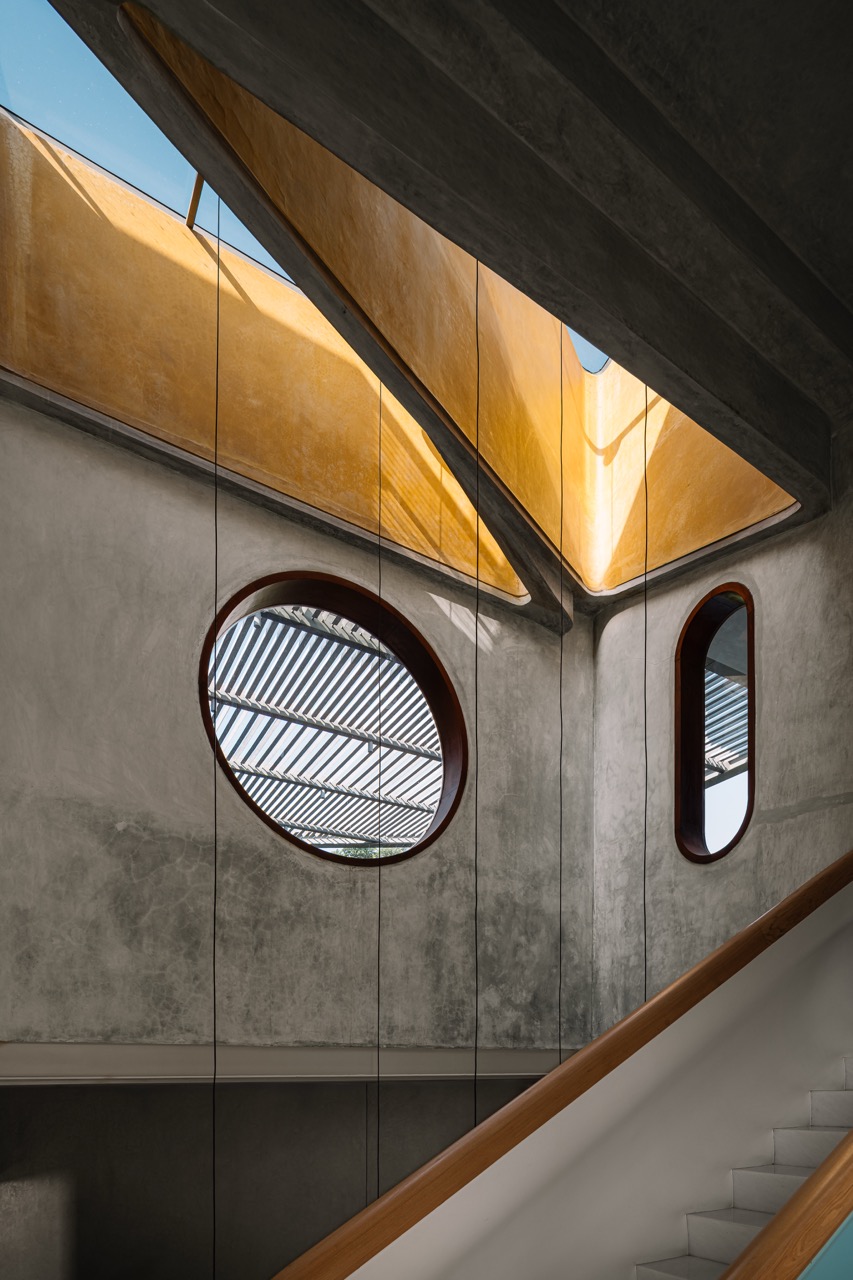
From the living area, your eye is drawn outward to the canopy of trees on the north, making the house feel less like it sits on a plot and more like it is held within foliage. “It feels like we’re living in a tropical resort at times,” the homeowners say. The constrained edge, running parallel to the neighbouring homes, holds the atrium and staircase, which form the vertical core that pulls light in from above and connects the three floors. A skylight, formed by intersecting triangular planes, brings in diffused light through the day, washing the white oxide-finished walls with a soft, shifting glow.
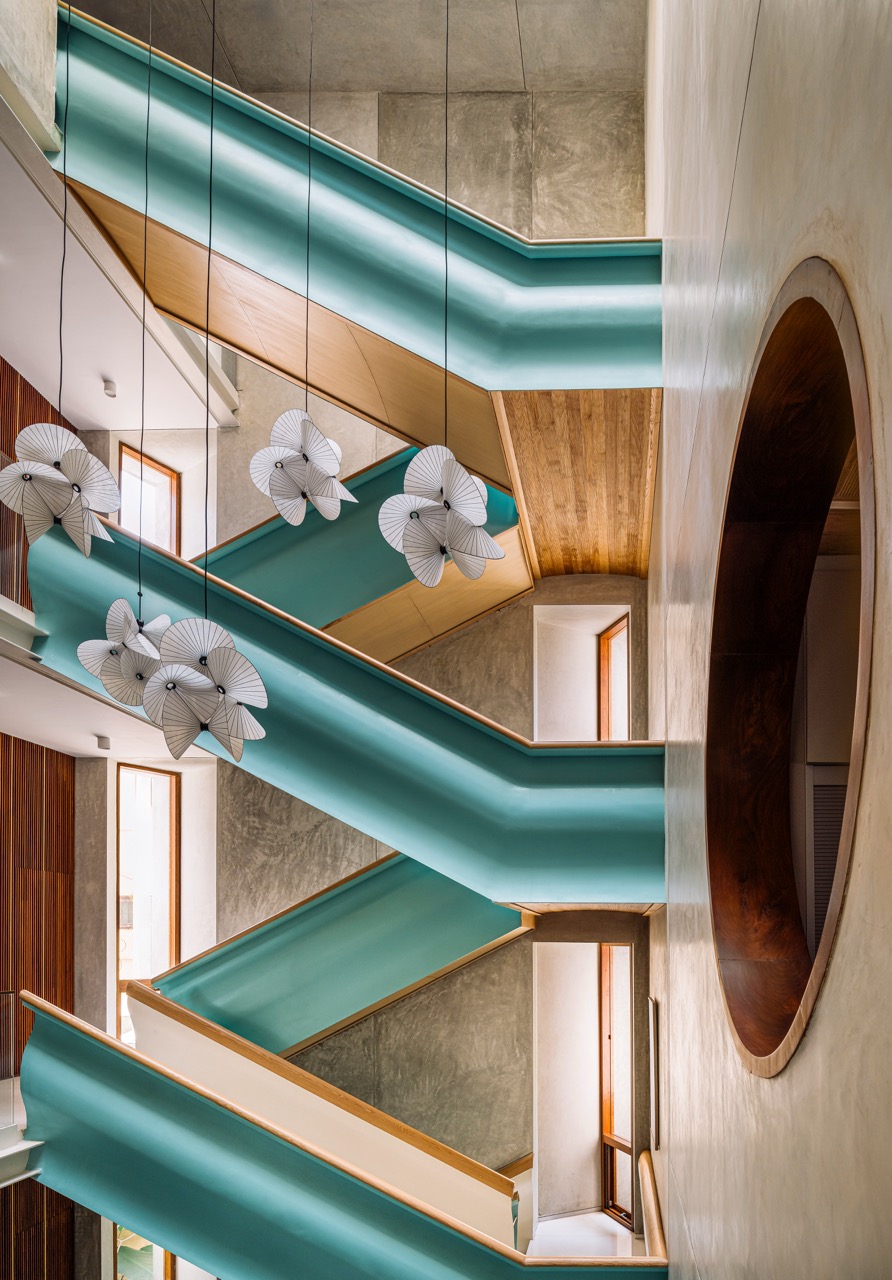
The staircase, a load-bearing element, shapes both movement and experience. Its form moves away from rigid geometry into something more fluid, with cast steel railings and a soft powder blue finish. Wood lines its underside, balancing the metal with warmth. “The staircase is the heart of the house,” says Amaresh. “It brings everything together vertically and fills the home with energy and light.” At certain times of the day, the house becomes almost theatrical. This comes from the concrete pergola with triangular and square cut-outs on the terrace. Shadows fall in patterns across floors and walls, constantly shifting. It adds a layer of gentle dynamism, like the whole space is in conversation with the sun.
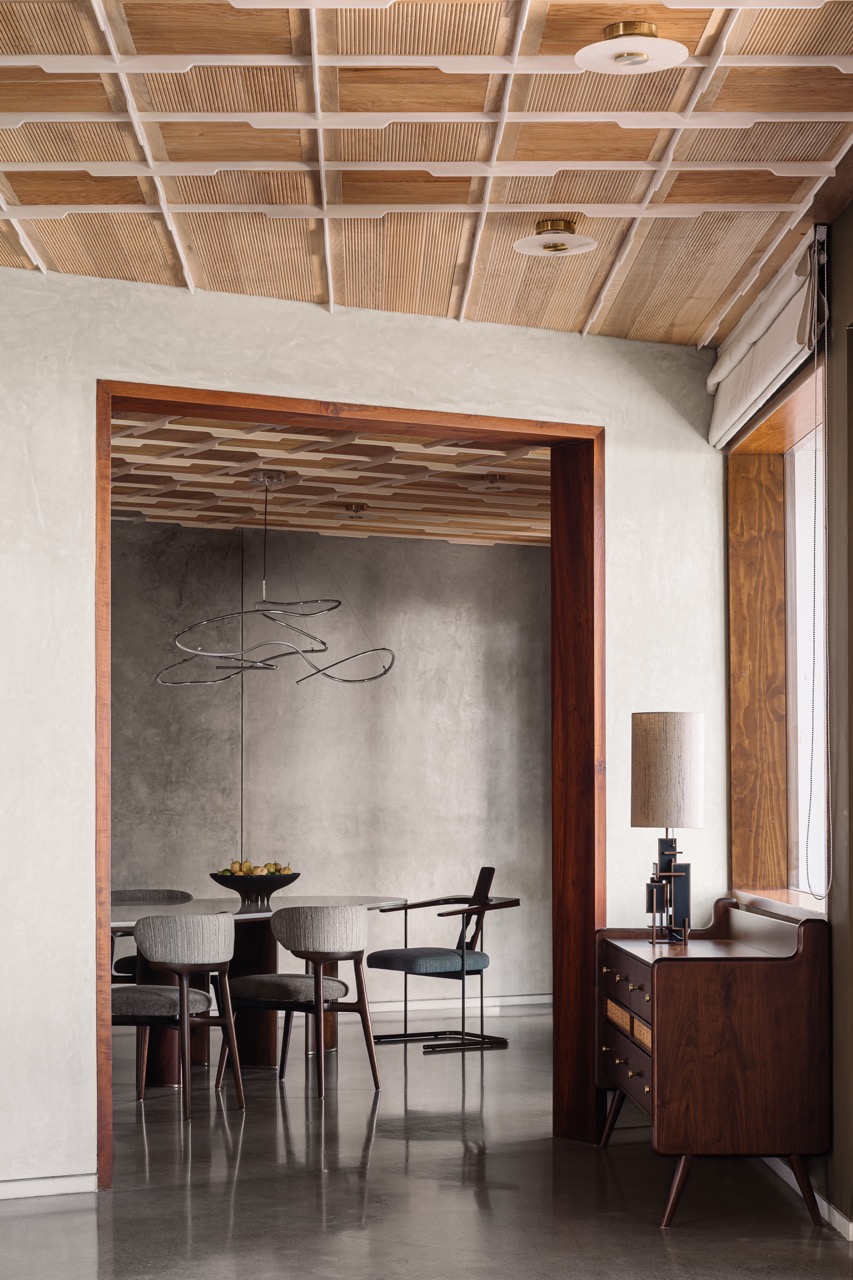
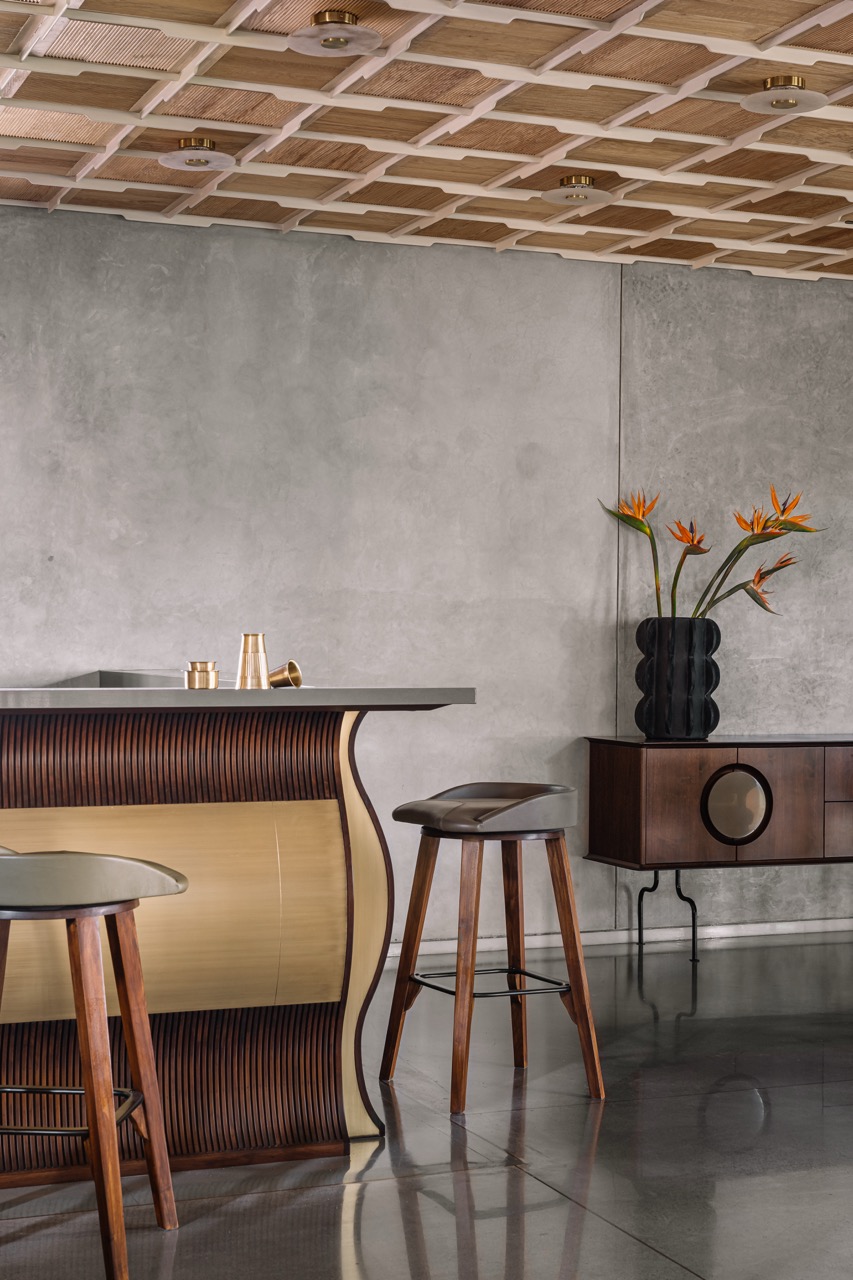
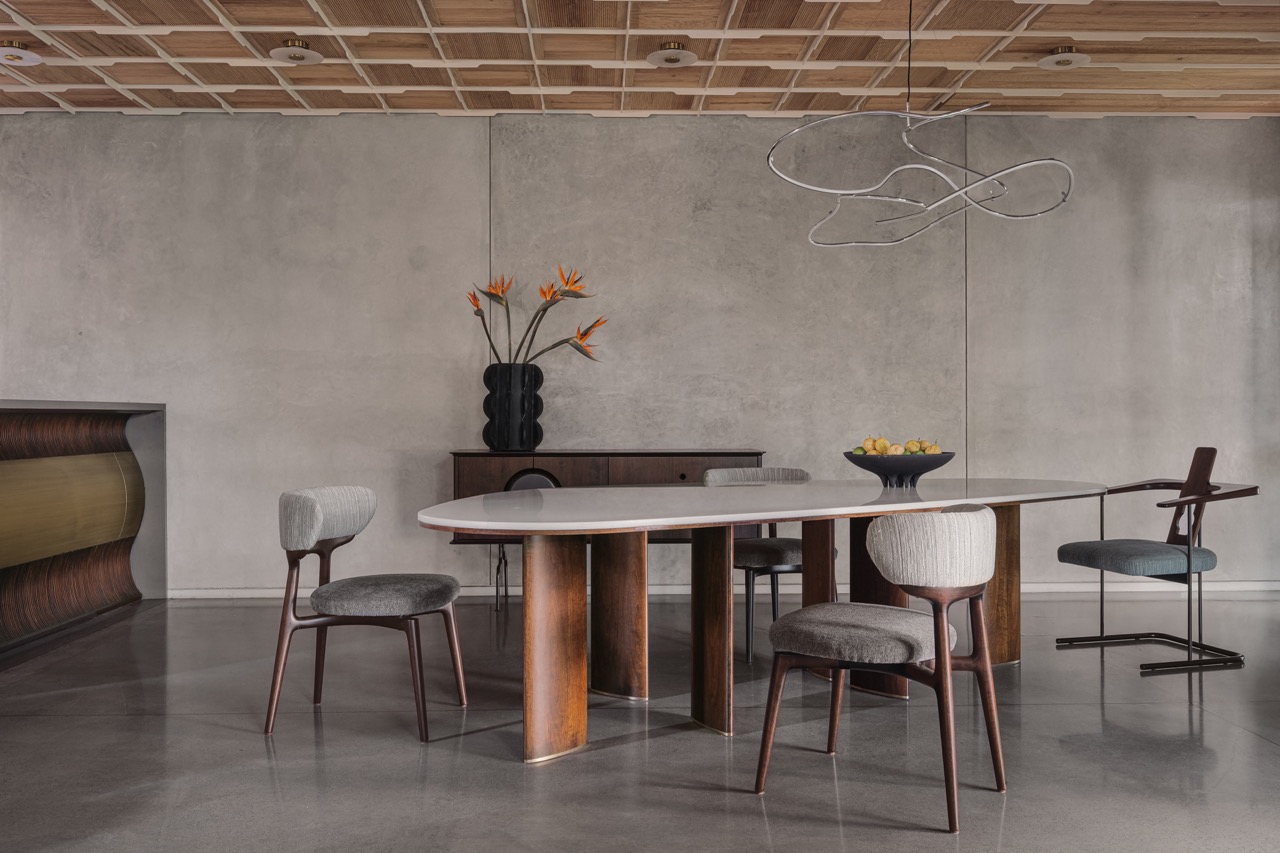
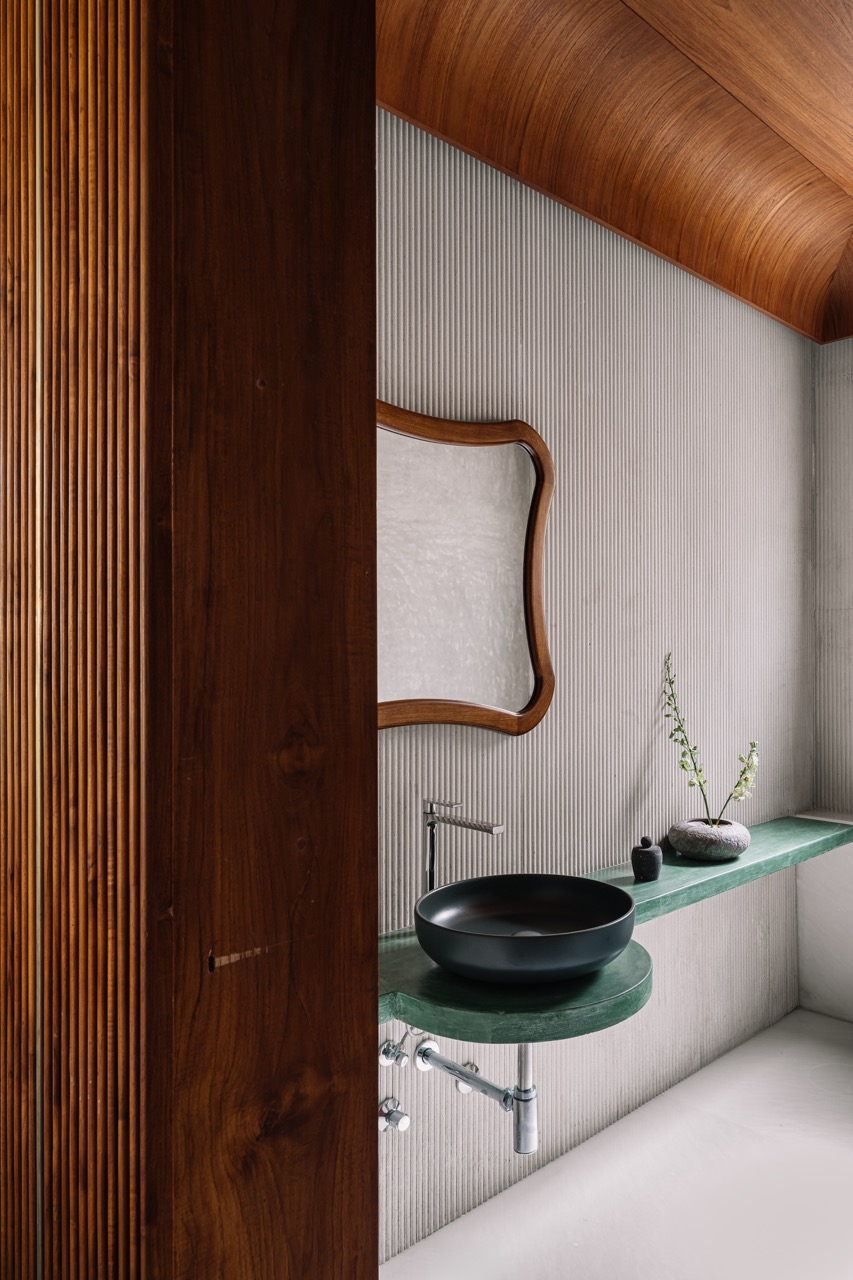
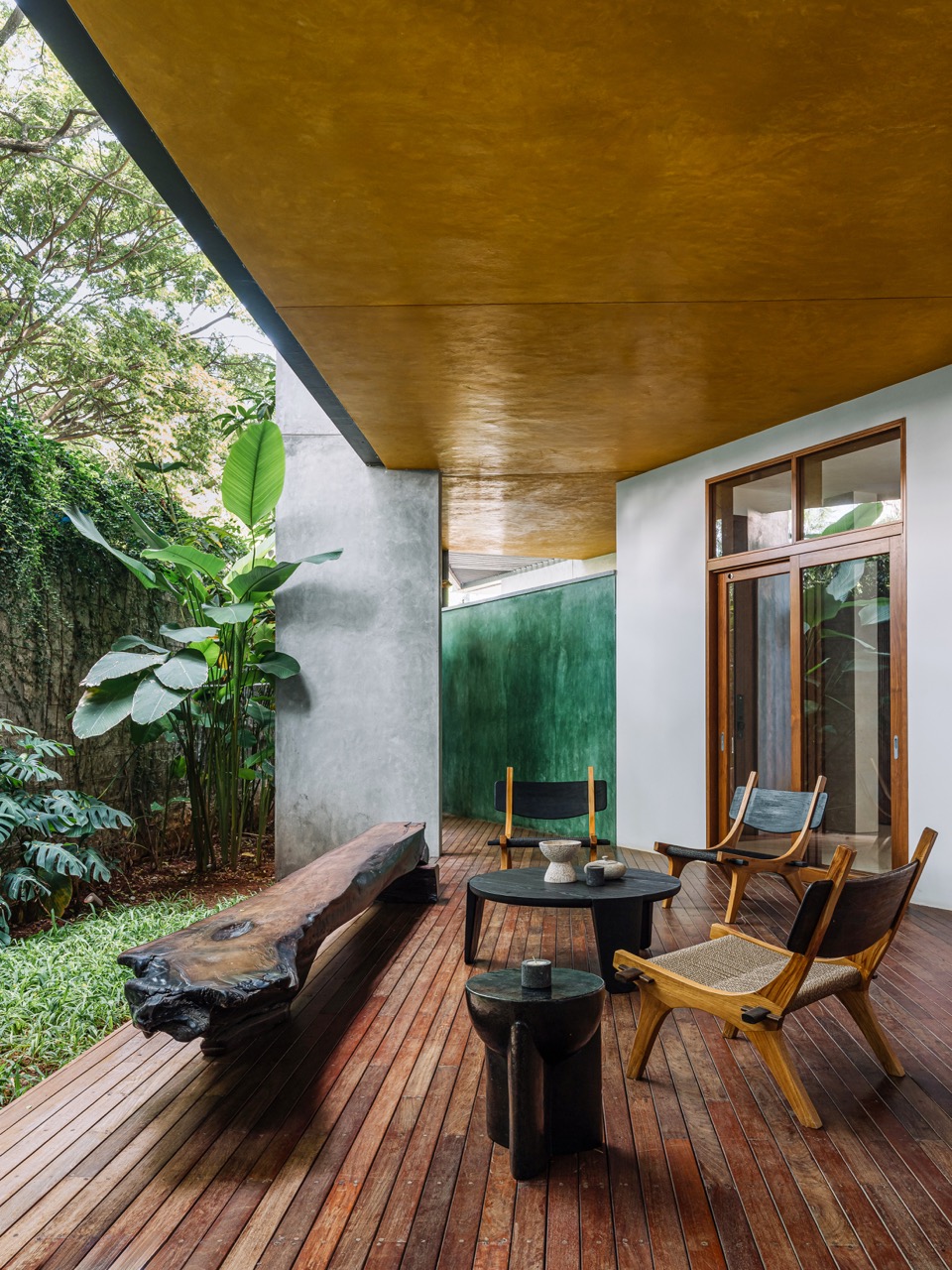
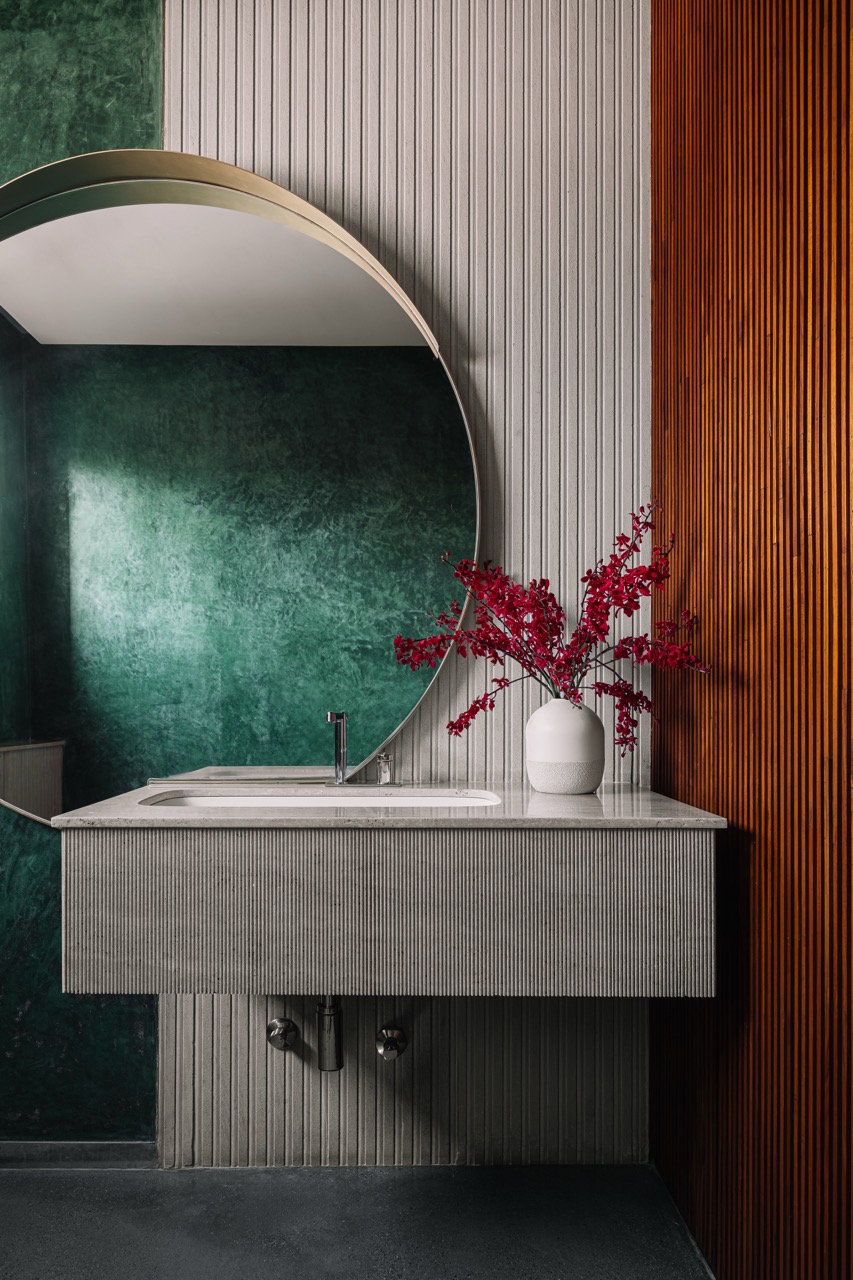
Material choices are consistent and purposeful, centred around specially developed oxide, wood, and cement-based finishes. “We’ve worked extensively on these mixes over the years,” Amaresh says, referring to experiments that began in his own home. White oxide walls, grey oxide surfaces in the dining space, and green oxide at the entrance and terrace bring variation without disrupting continuity. These finishes also help regulate heat, keeping the interiors cooler. Wood is used to balance this palette, with fluted ash panels lining the ceilings in the living and dining areas, while the underside of the staircase is clad in the same material. As you walk through, the geometry subtly shifts. The house isn’t entirely straight lines. You feel guided rather than directed. The curves soften movement, making circulation feel intuitive and almost instinctive, rather than planned.
What this home does beautifully is shift your attention away from “rooms” and toward states of feeling – light, air, softness, and a constant connection to something living just beyond the walls. For the homeowners, the experience is more immediate. “It’s our grounding wire,” they say. “In a fast-paced world, coming back to this space feels like a deep exhale.” And that is exactly what this home holds — a sense of ease that stays with you, long after you’ve moved through the house.