

Inside a layered Chennai home where craft takes centre stage, softly
Words
Vaishnavi Nayel TalawadekarPhotos
Phosart Studio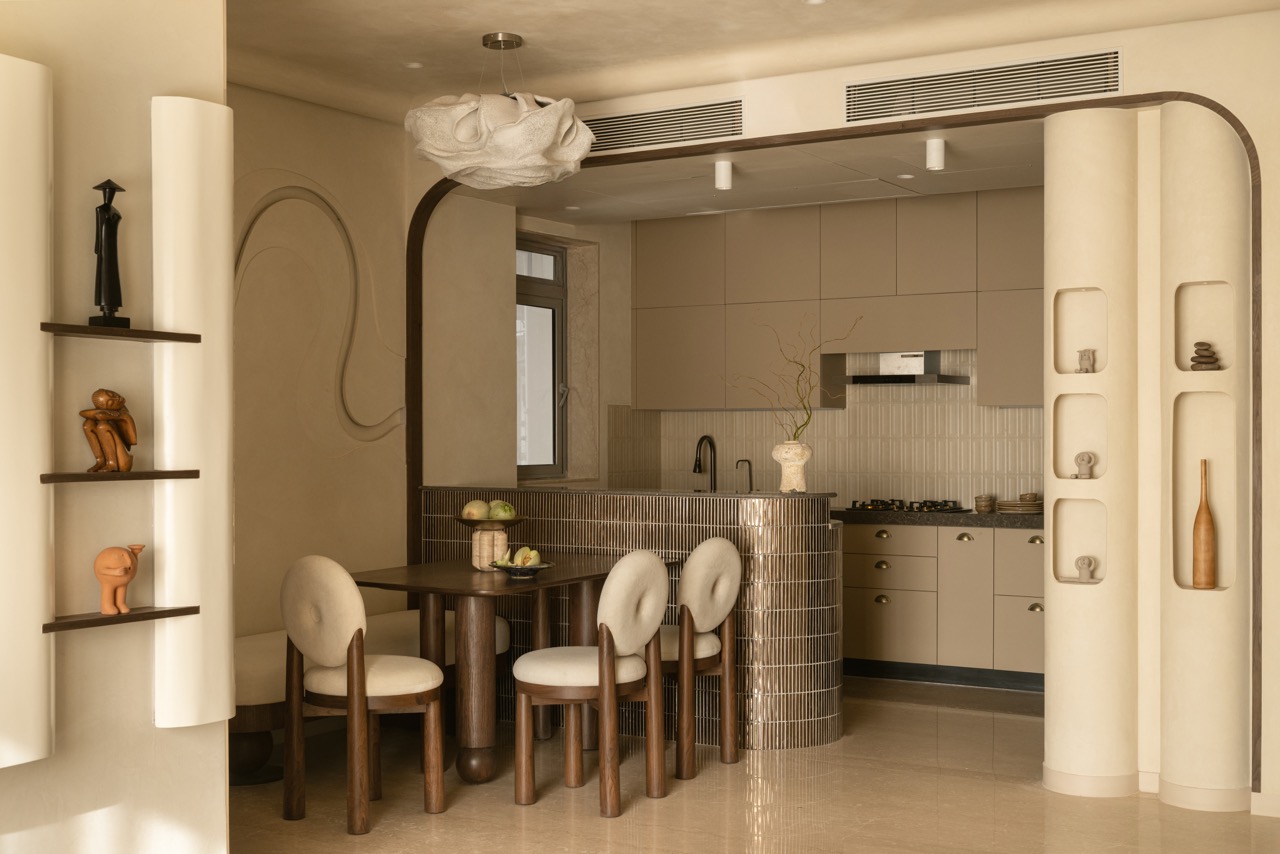
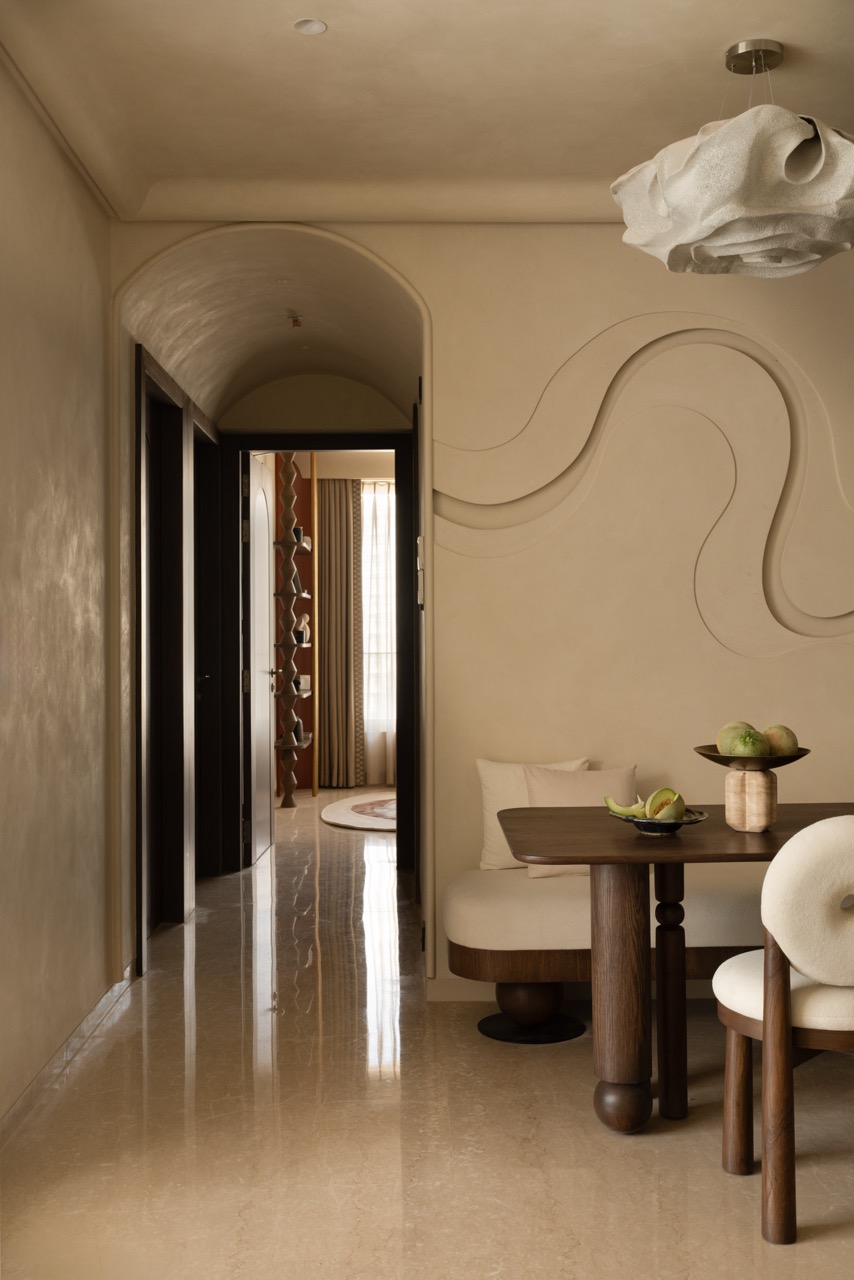
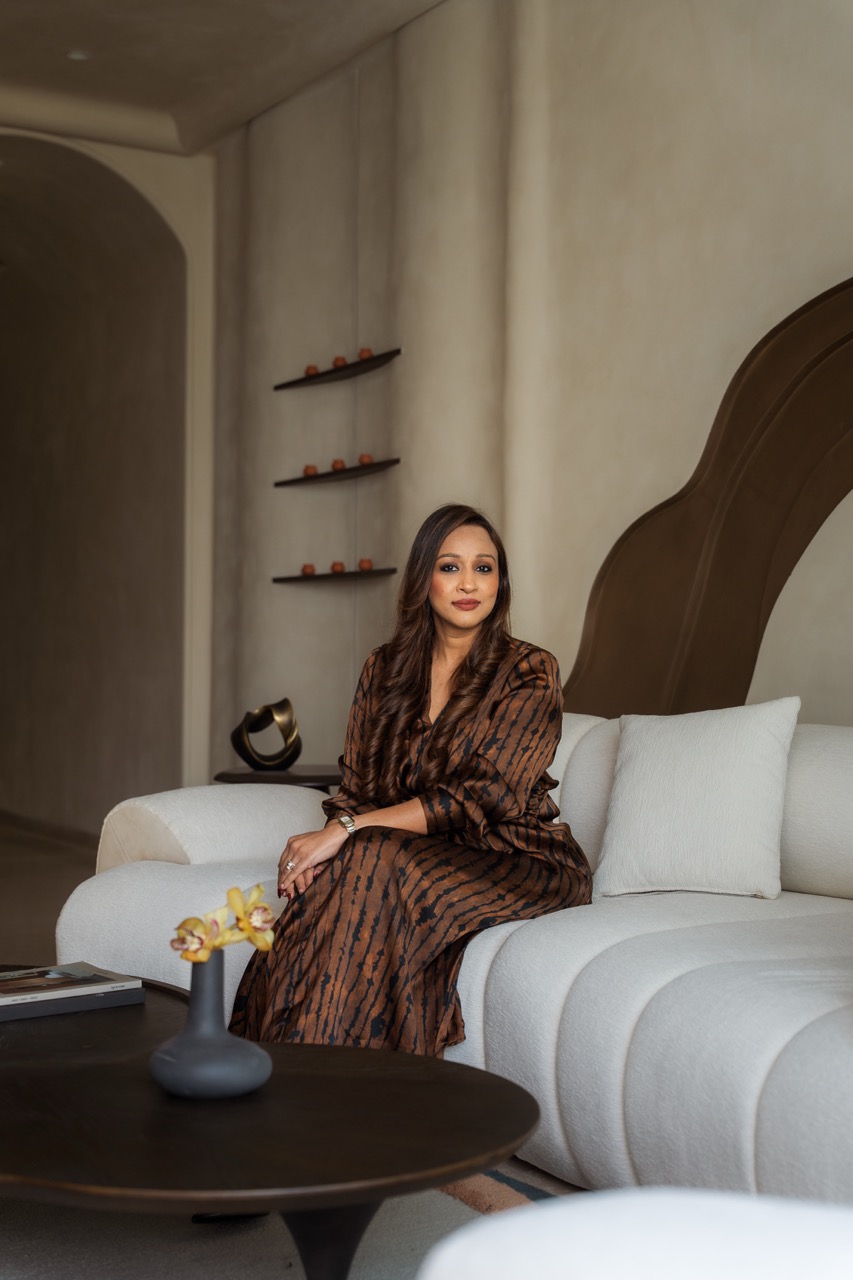
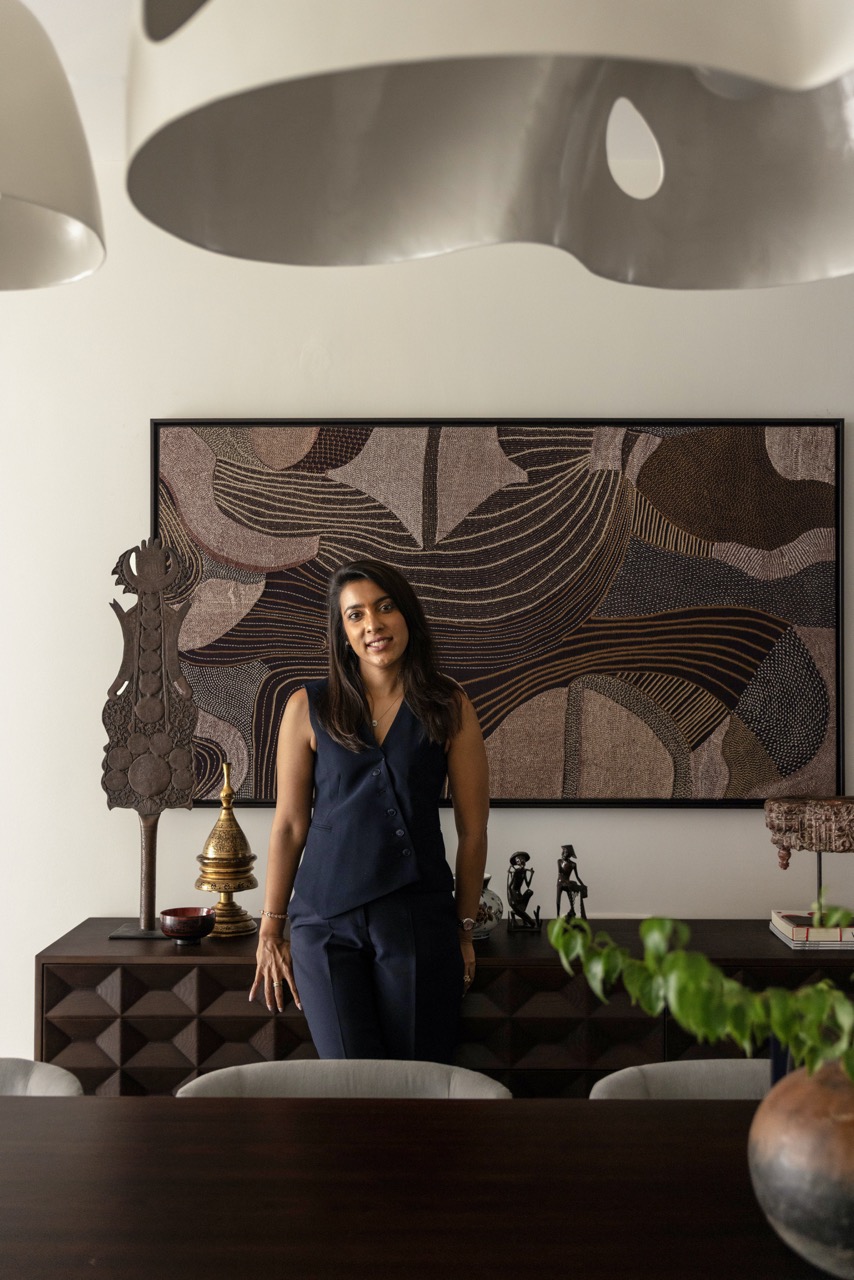
Above the dining table in a Poes Garden, Chennai home, floats a sculptural light that looks like it’s drifted in from a fairy tale. Part chimney, part cloud – entirely unfazed by the attention. Getting it up there, though, required every bit of it. As Amrita Thomas of Chennai-based Alara Studio puts it, the piece by Arjun Rathi arrived in bits, like an oversized jigsaw, and had to be assembled on site with a fair amount of coaxing – and, one imagines, a few deep breaths. “When it finally came together, there was a collective sigh of relief – and the distinct sense that the room had been waiting for it all along,” she says of the installation.
That feeling, of things clicking quietly into place, runs through the rest of the residence. Spread across 4,000 sq ft, the home doesn’t try too hard to impress – and is all the more impressive for it. It takes its time instead, revealing itself slowly, much like its homeowners, whose sensibility Amrita describes as thoughtful, restrained, and attuned to craft. Referred to her through mutual friends, the brief was refreshingly clear: a home anchored in material honesty, with plenty of room for memory to move in.
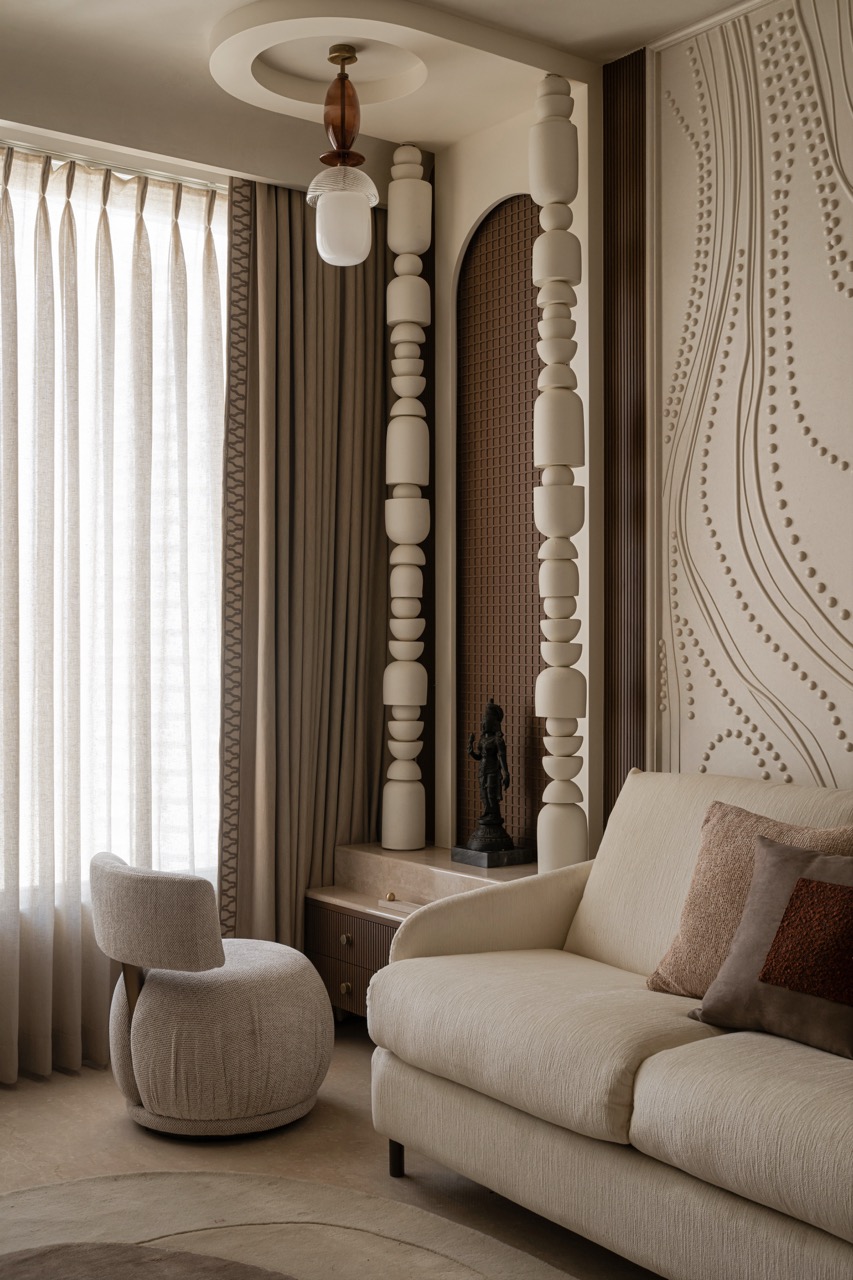
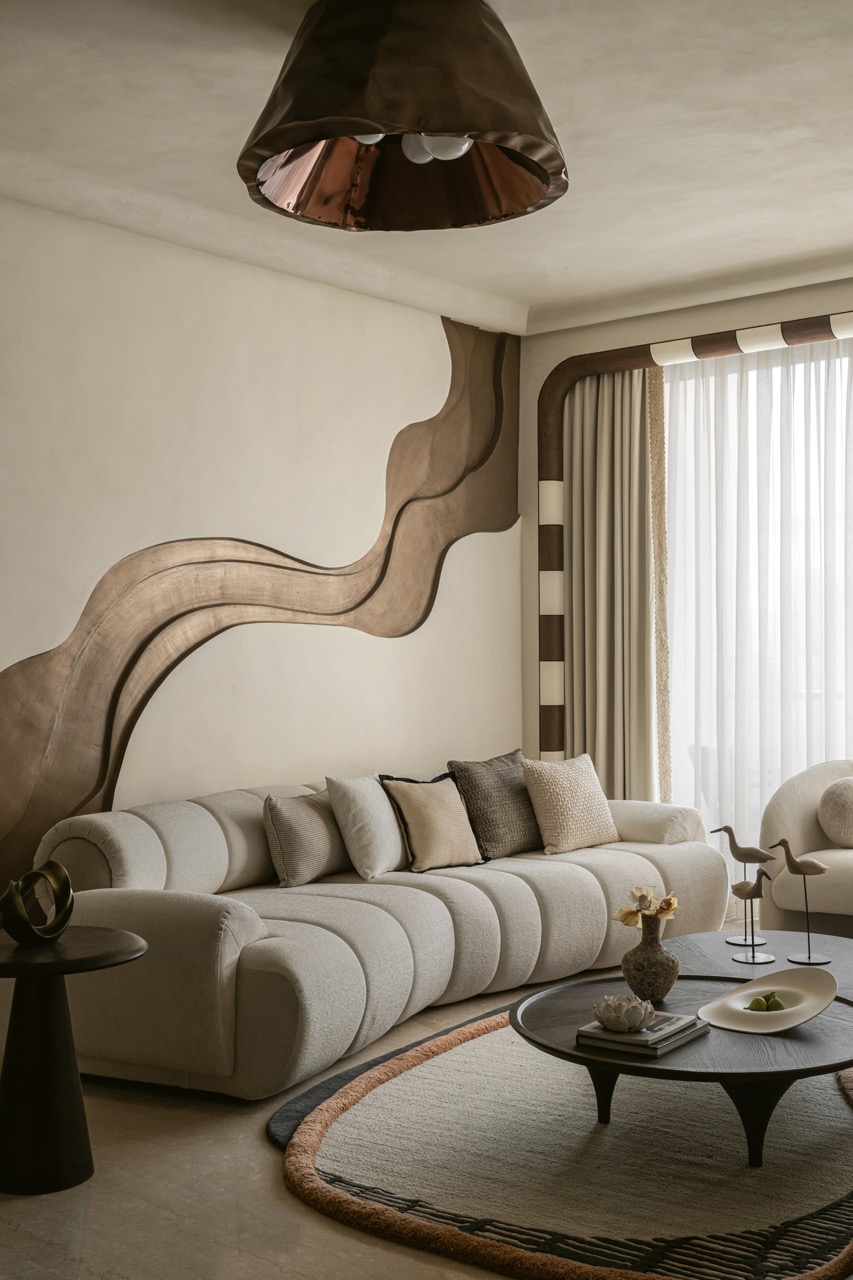
The architecture does the grounding work. High ceilings, generous volumes, and continuous grey marble floors create a calm, almost elemental shell that’s bold, but never overbearing. Into this, Amrita layers a considered mix of ceramic, concrete, and collected artefacts, each chosen less for its decoration than for the integrity of its making. This balance between restraint and warmth was the project’s inherent challenge. “The architecture already had a strong presence,” she says, “so every piece within had to be intentional.” And it shows – nothing feels accidental, yet nothing feels overworked either.
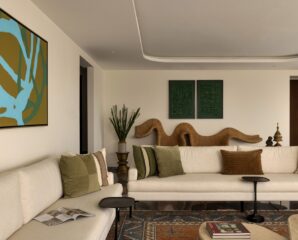
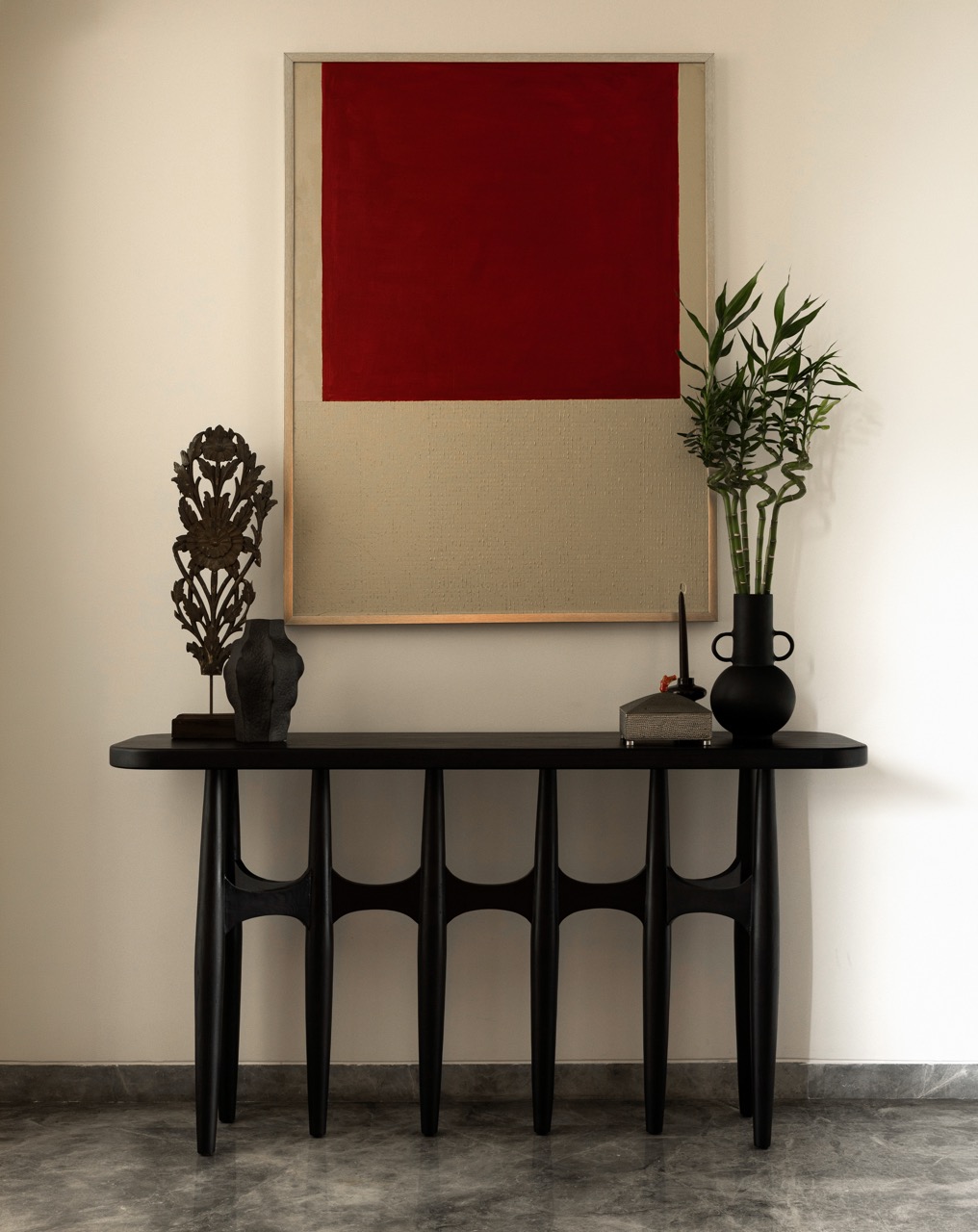
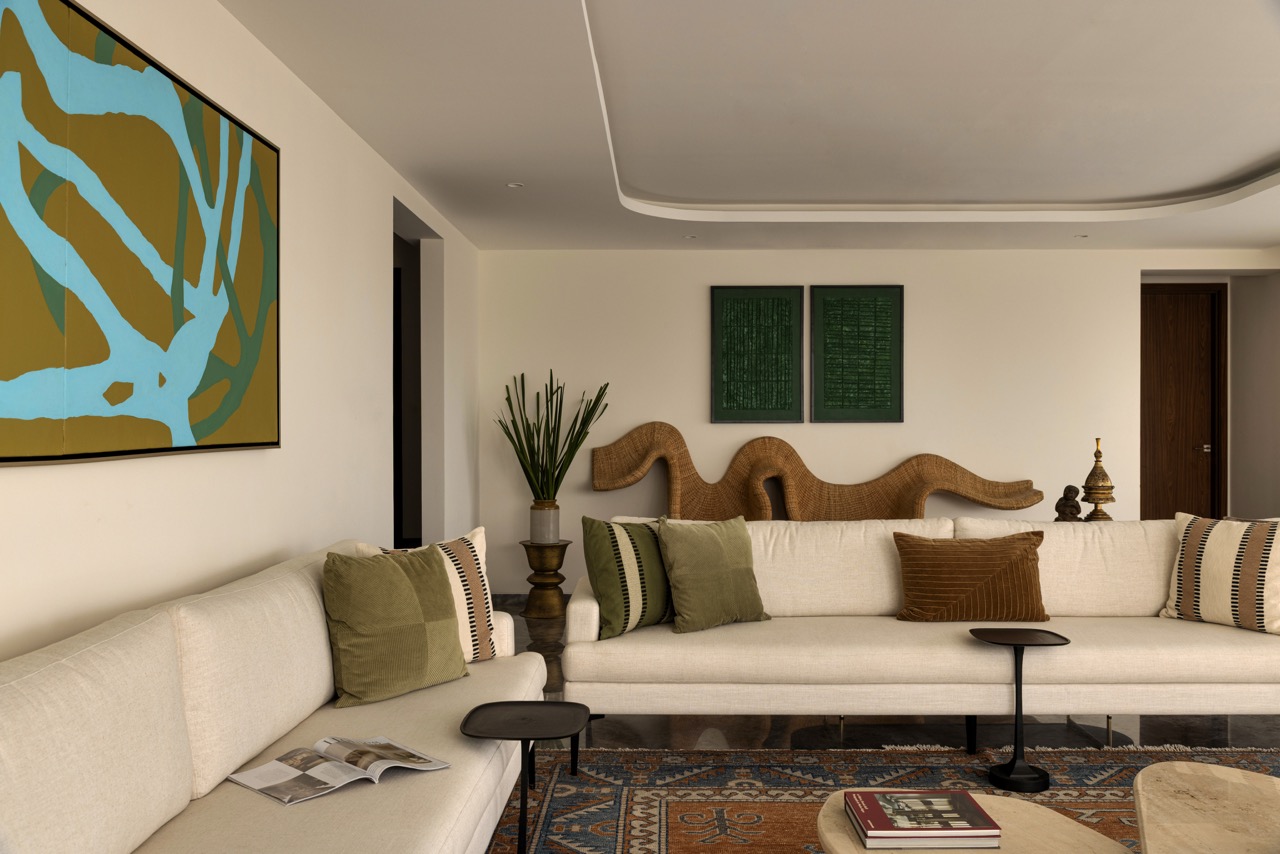
The foyer sets the tone with a retro console, a deep red textured artwork, and a cluster of travel finds that feel personal without being precious. The living room follows suit, unfolding into two easy zones anchored by a sculptural cane seat and a fluted console layered with objects. A rust-toned kilim, marble tables, and a soft-glowing floor light bring the space together, while Chandigarh chairs add a familiar modernist note.
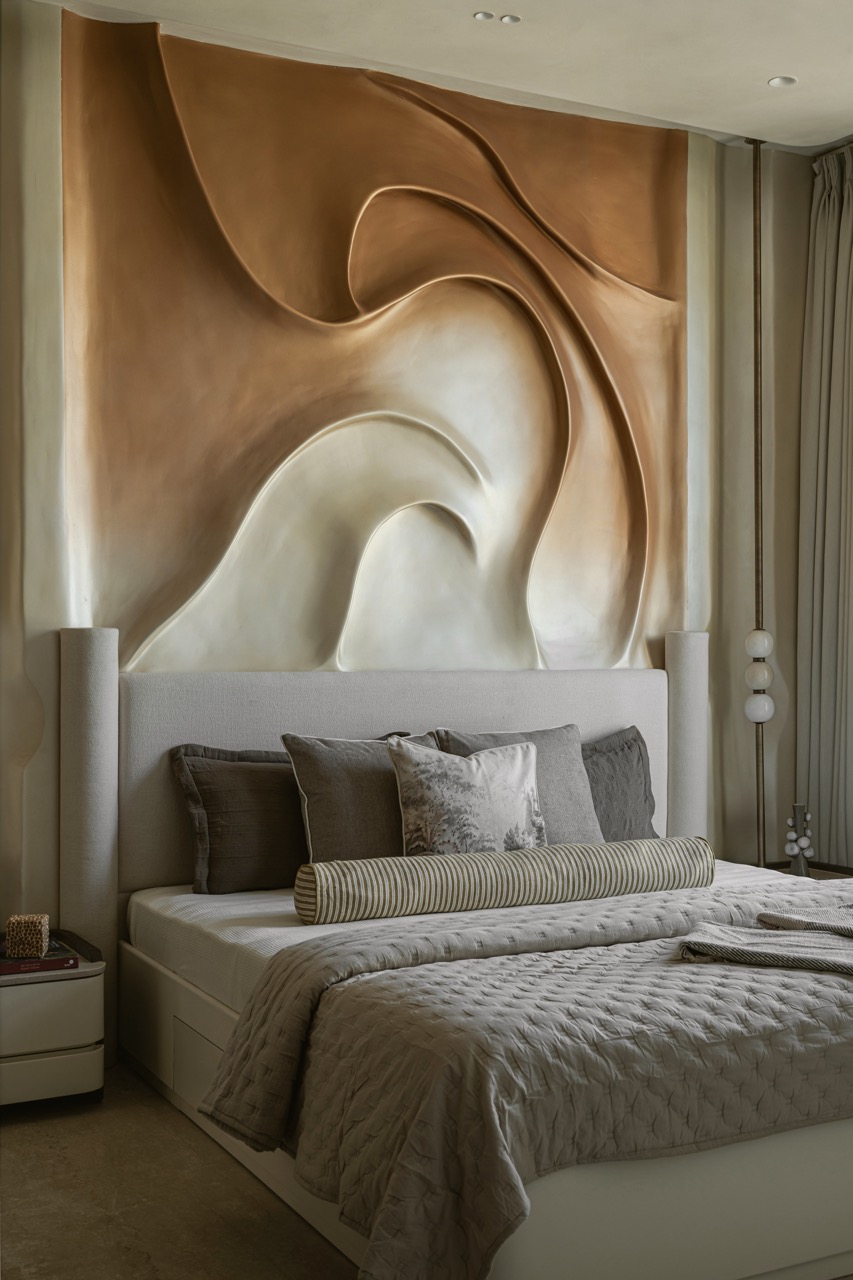
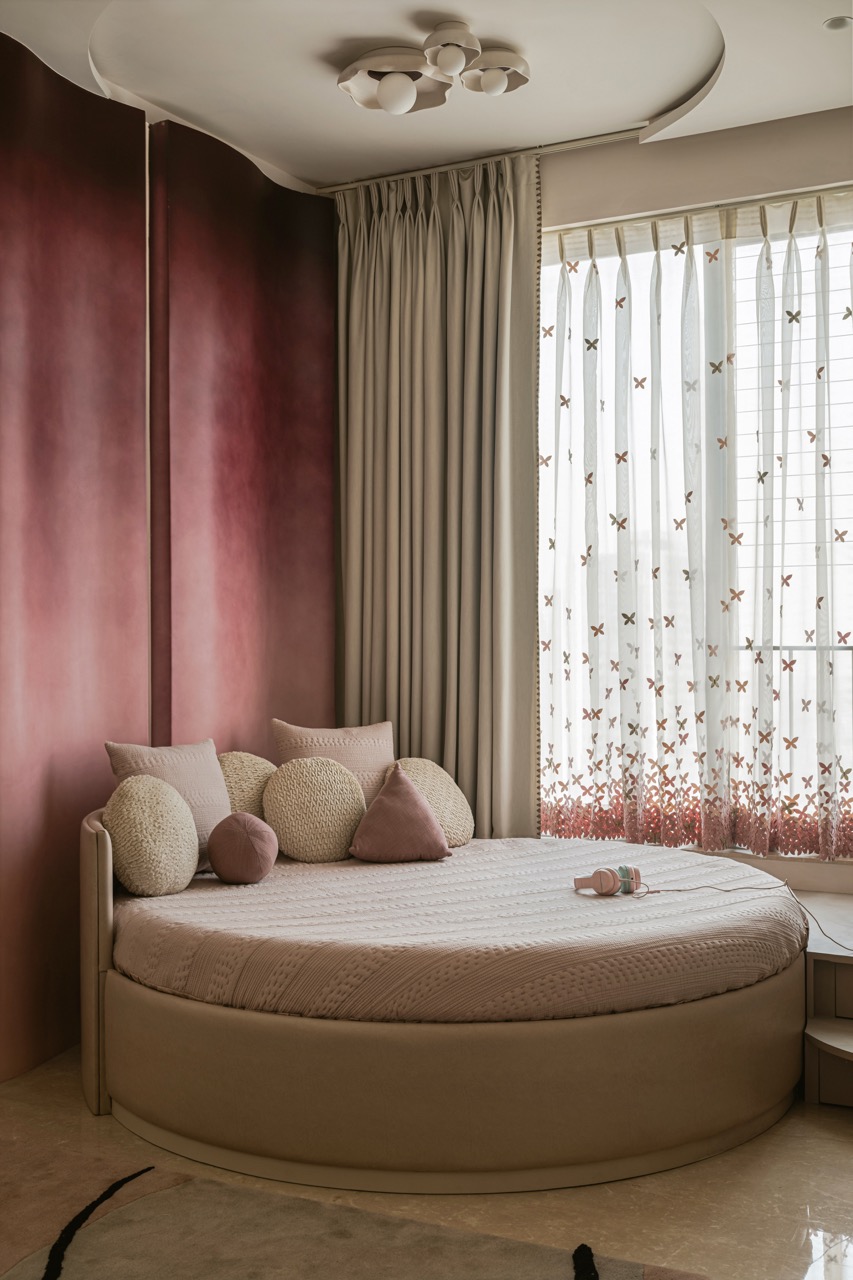
Materiality does much of the storytelling. Cane is treated architecturally, woven into custom furniture by The Wicker Story; concrete finds expression in the dining room’s now-iconic dome; and ceramic surfaces as hand-painted totems introduce gentle colour. Objects sourced from Jew Town in Kochi add a layer of history, sitting comfortably alongside contemporary pieces. Elsewhere, the mood shifts subtly. The family room is lighter and more relaxed, while the bedrooms adopt a quieter rhythm: the master layered with photographs and personal objects, the guest room pared back and restful.
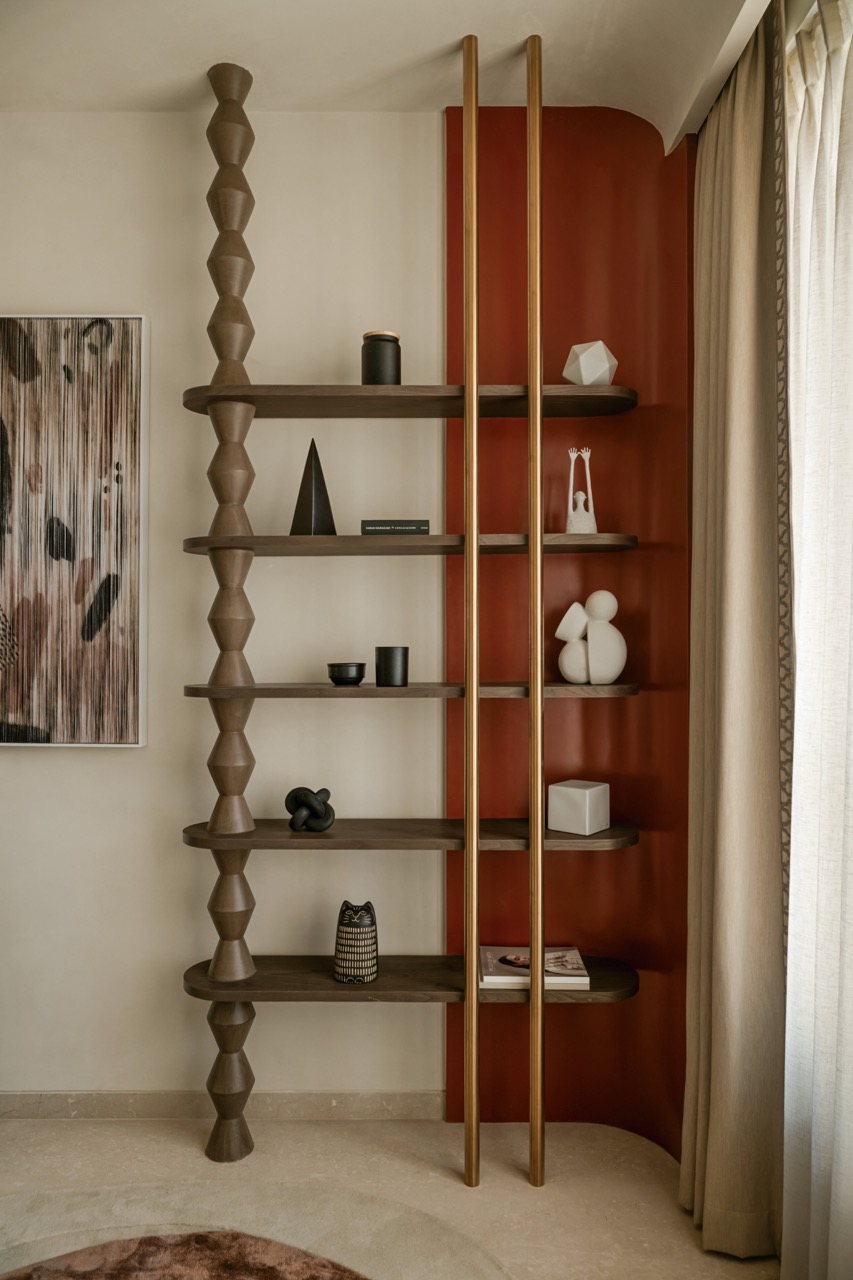
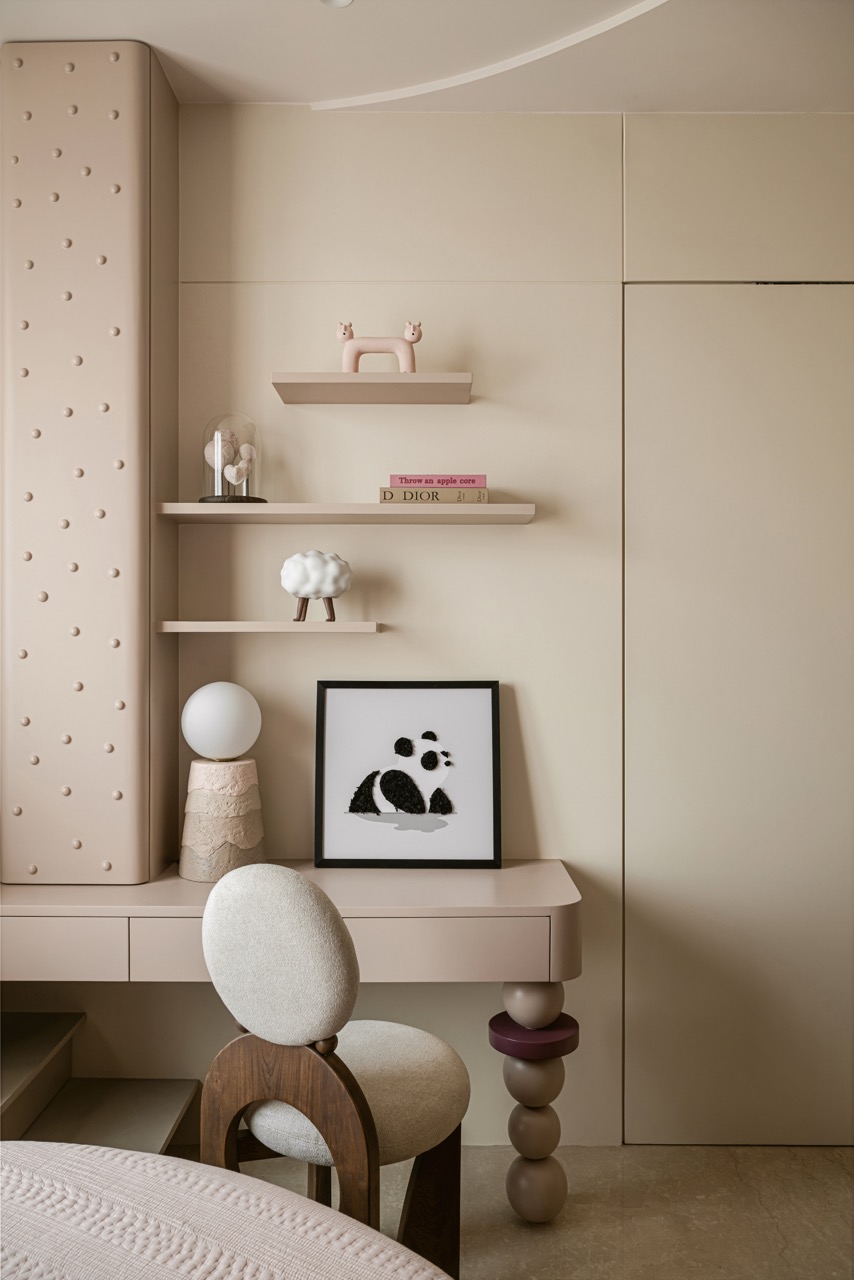
Throughout, the palette remains muted, allowing texture and form to lead. Colour appears sparingly through textiles, art, and the occasional object, making each moment feel deliberate. It’s a home that resists the urge to overstate, choosing instead to let things unfold at their own pace. In a way, it mirrors that dining room moment: considered, pieced together with care, and resolved without fuss. No theatrics – just clarity, restraint, and subtle confidence.
Designer Profile