

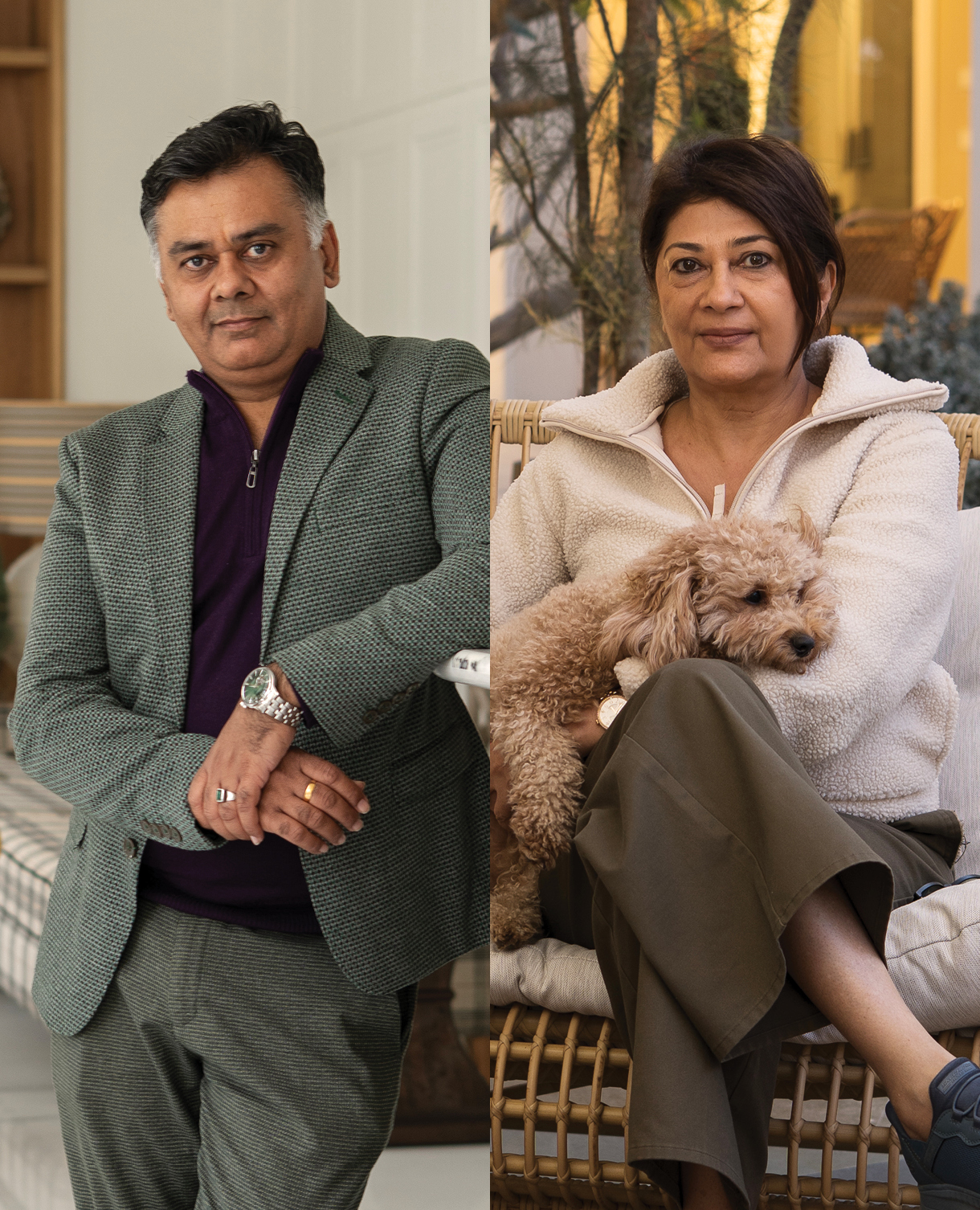
Architect Gourav Sharma, founder of GEOM Design, collaborates with Anuradha Duggal on her Delhi ‘tri-villa’ built amongst the trees
Words
Gauri KelkarPhotos
Tarang GoyalStyling
Anuradha Duggal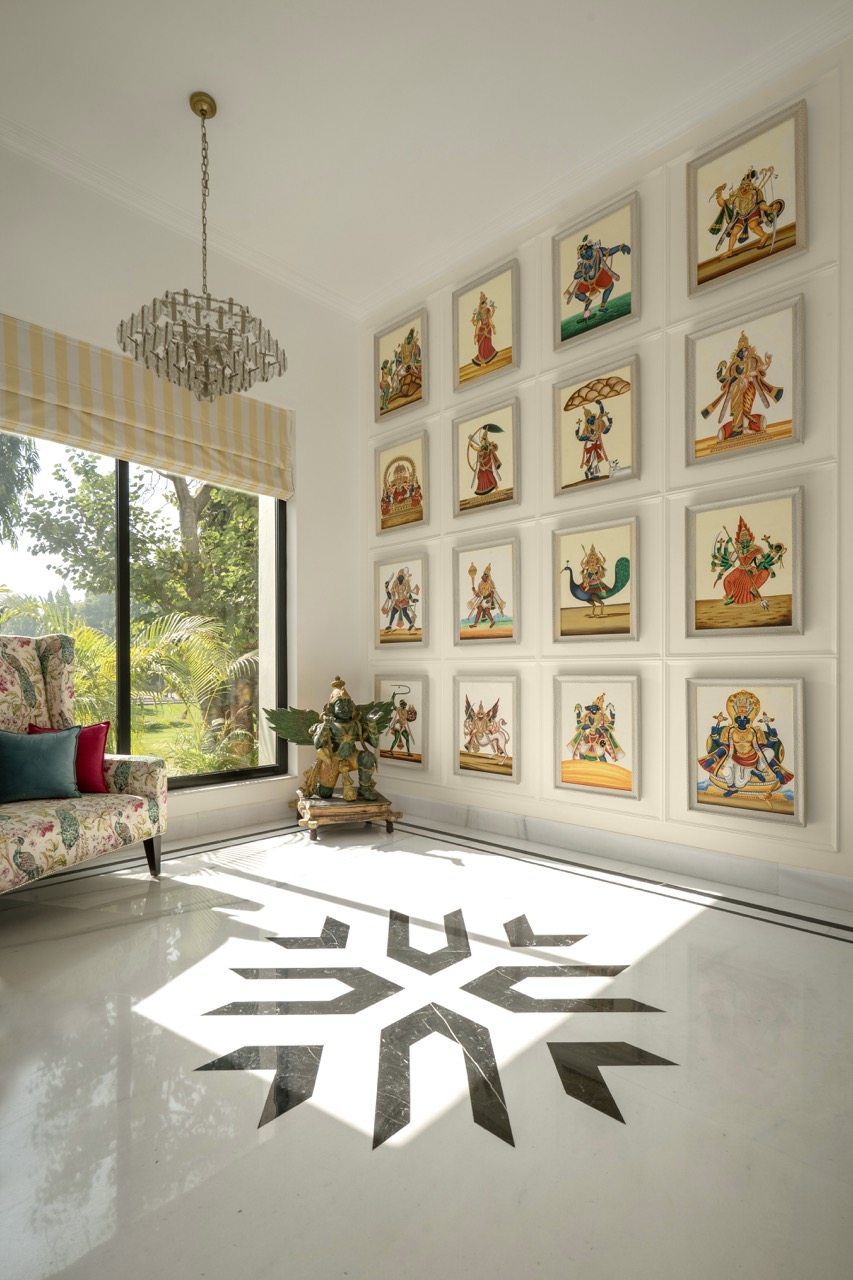
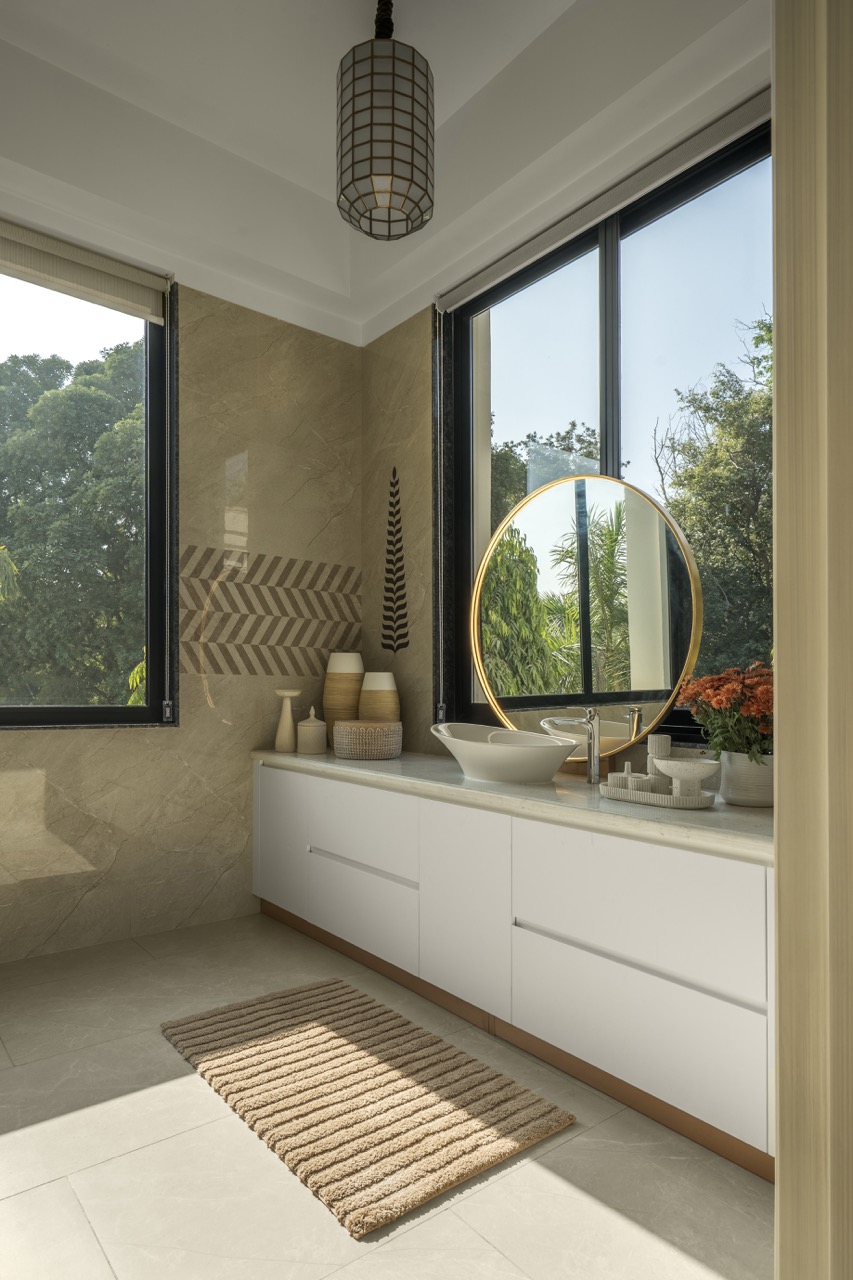
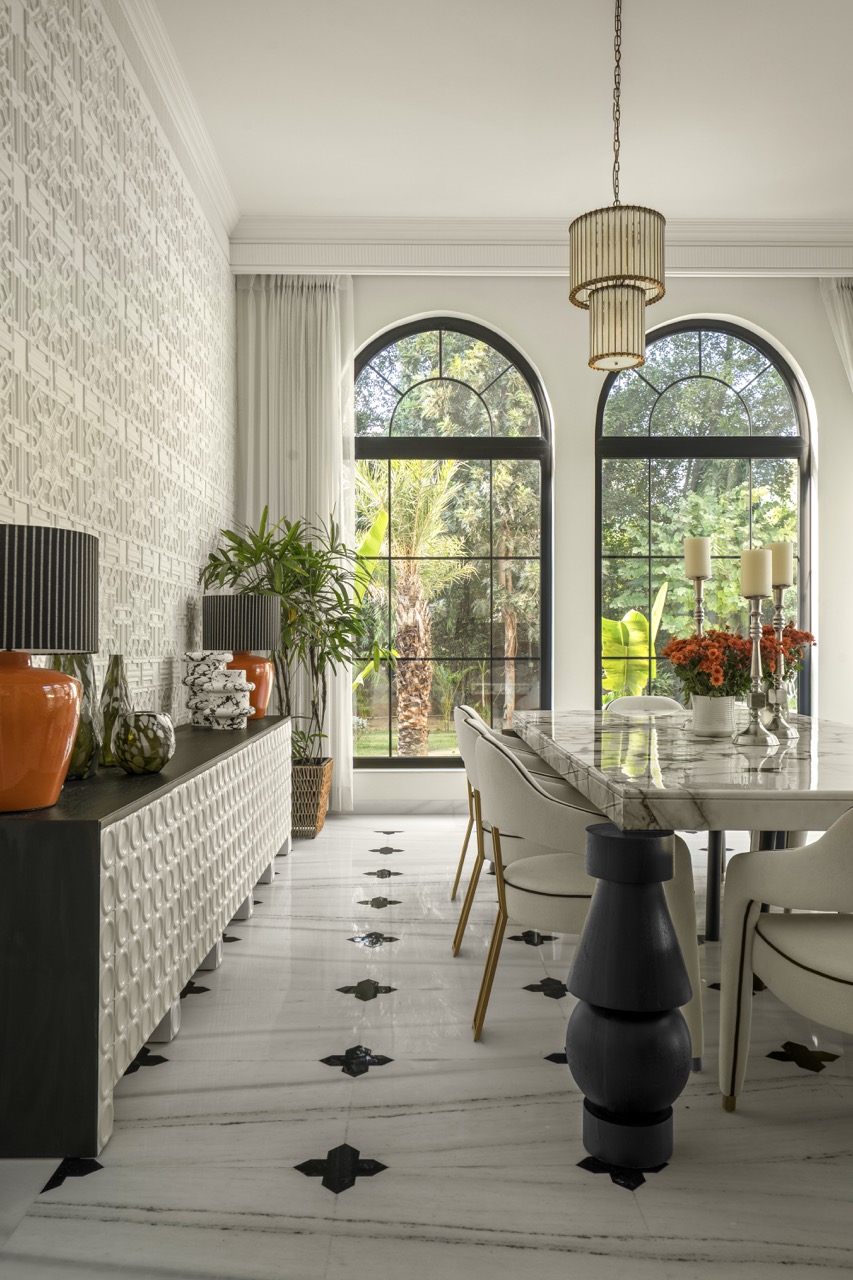
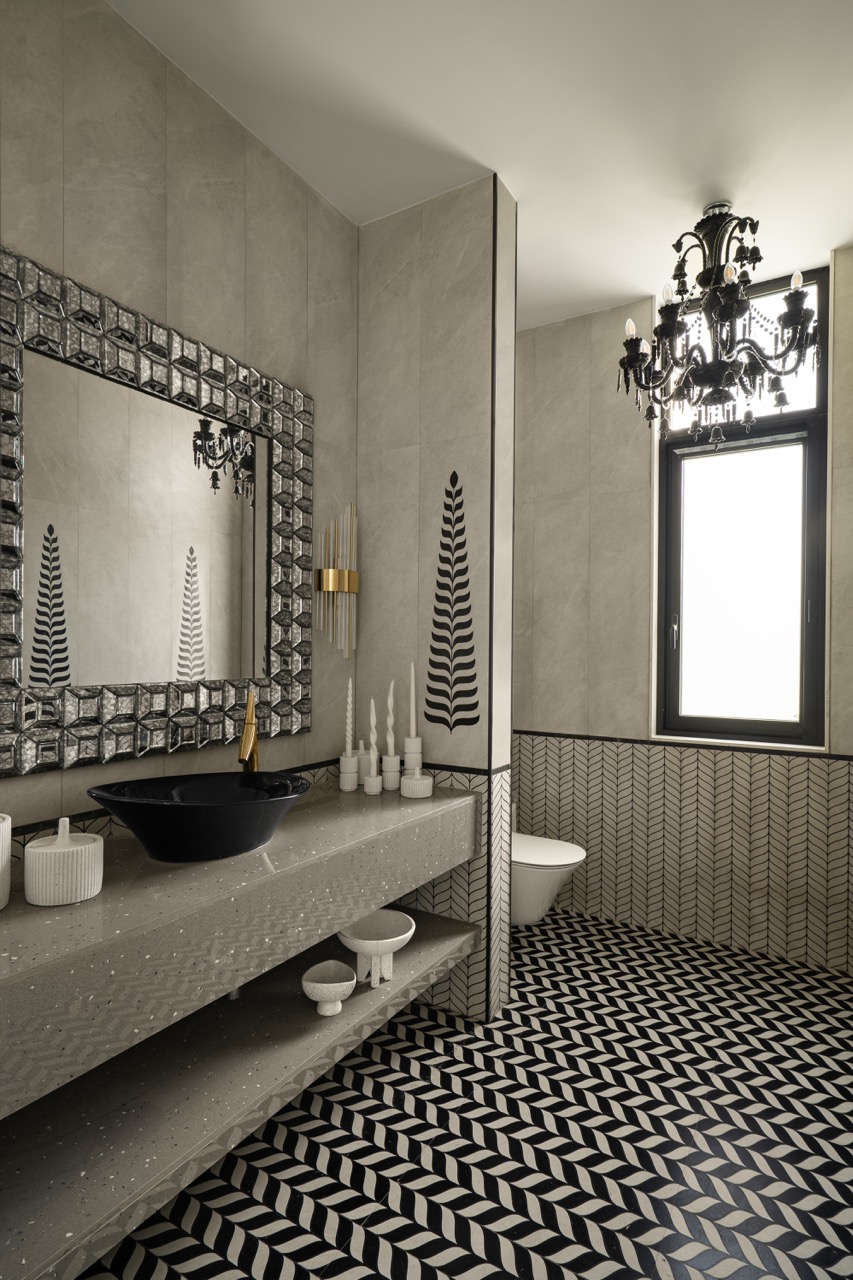
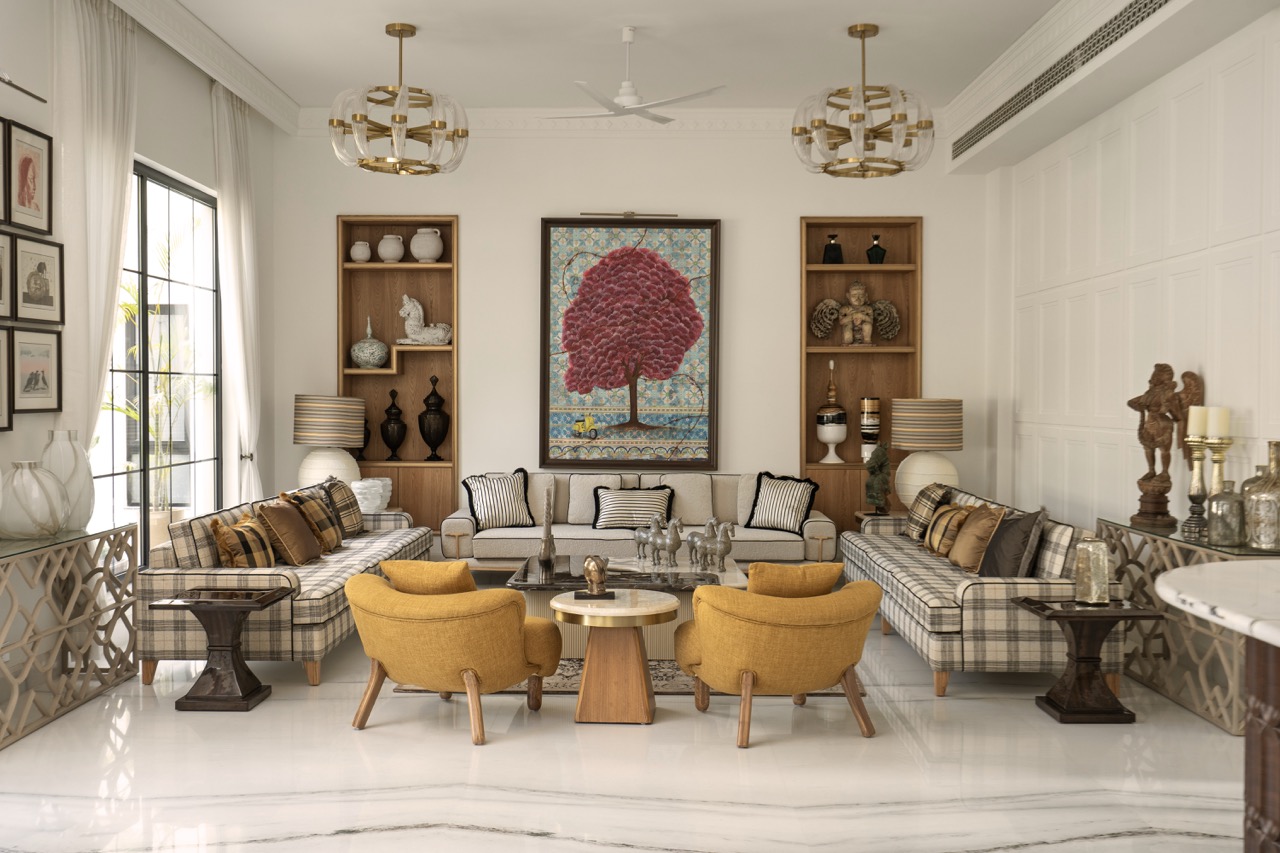
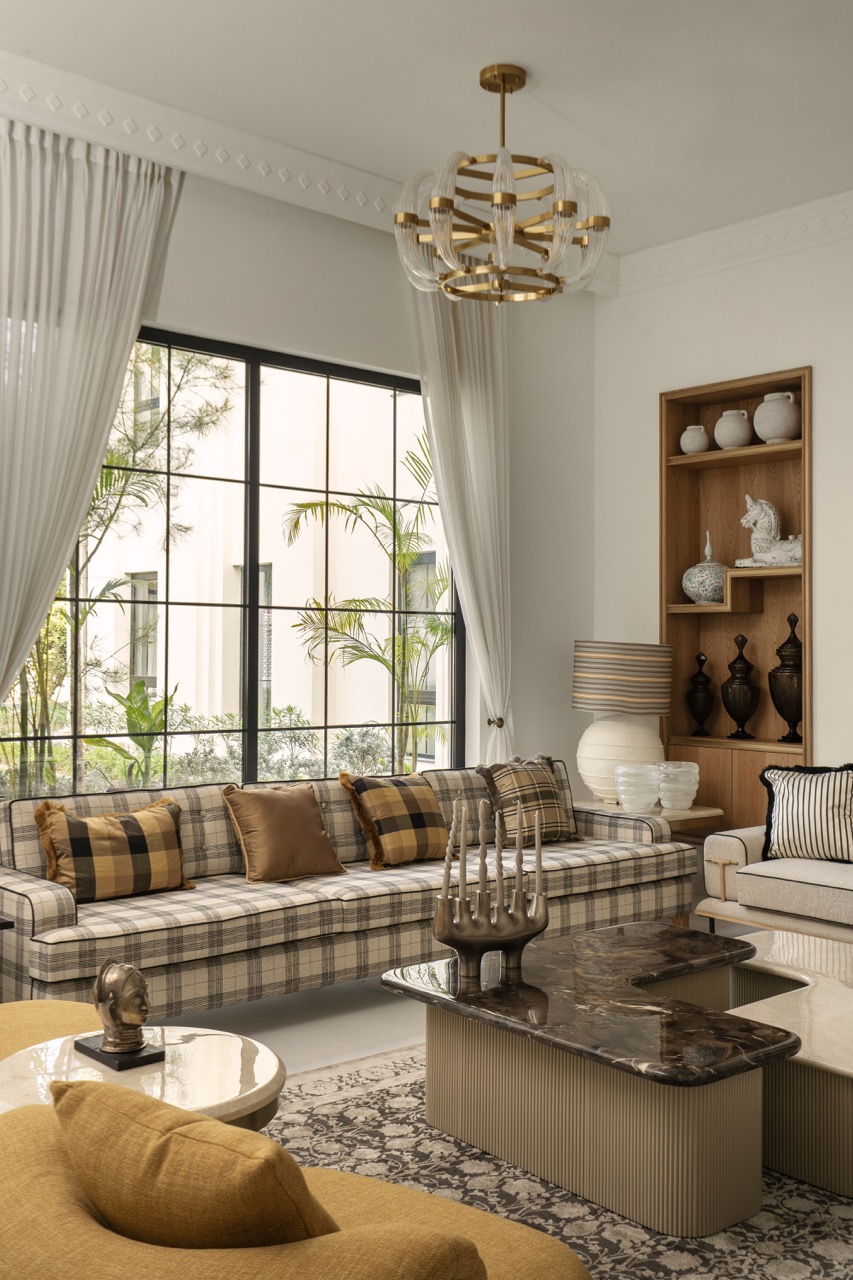
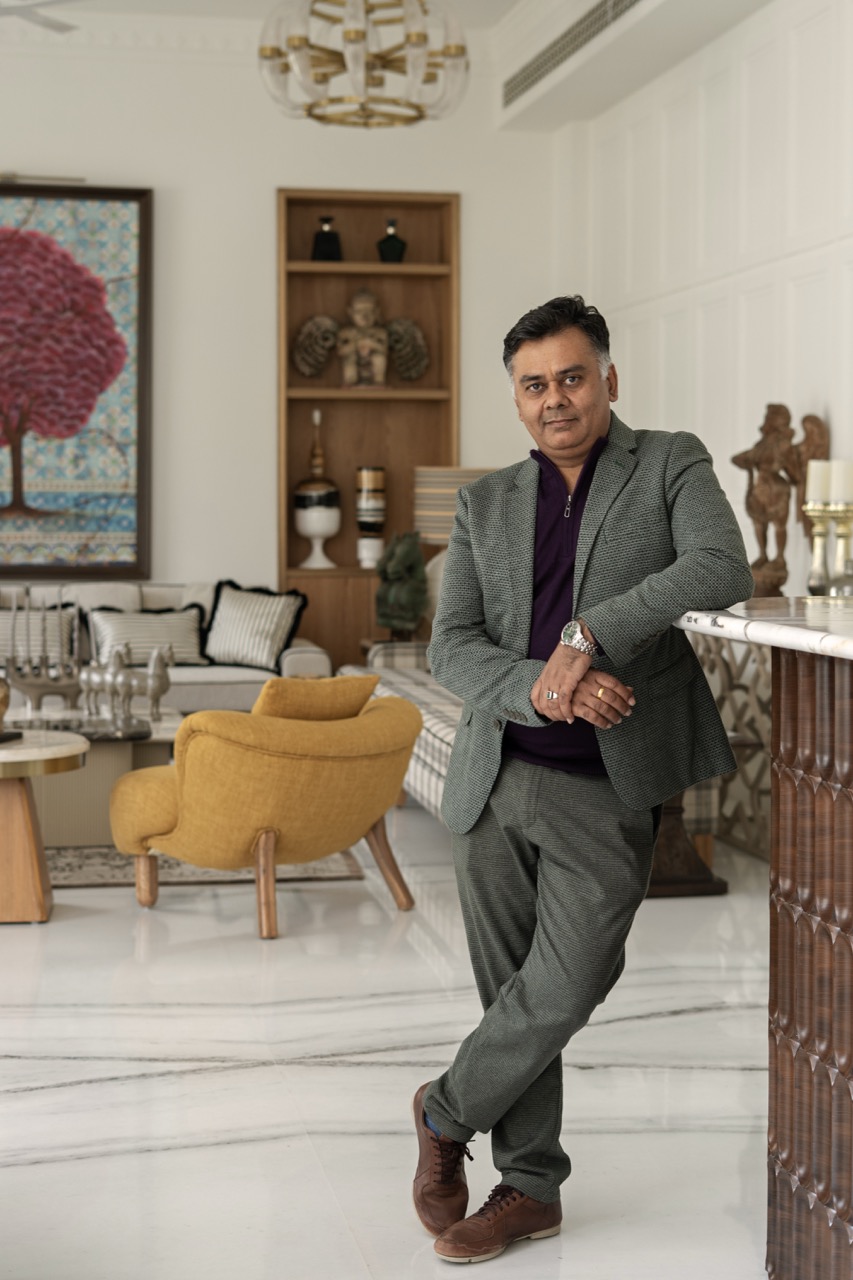
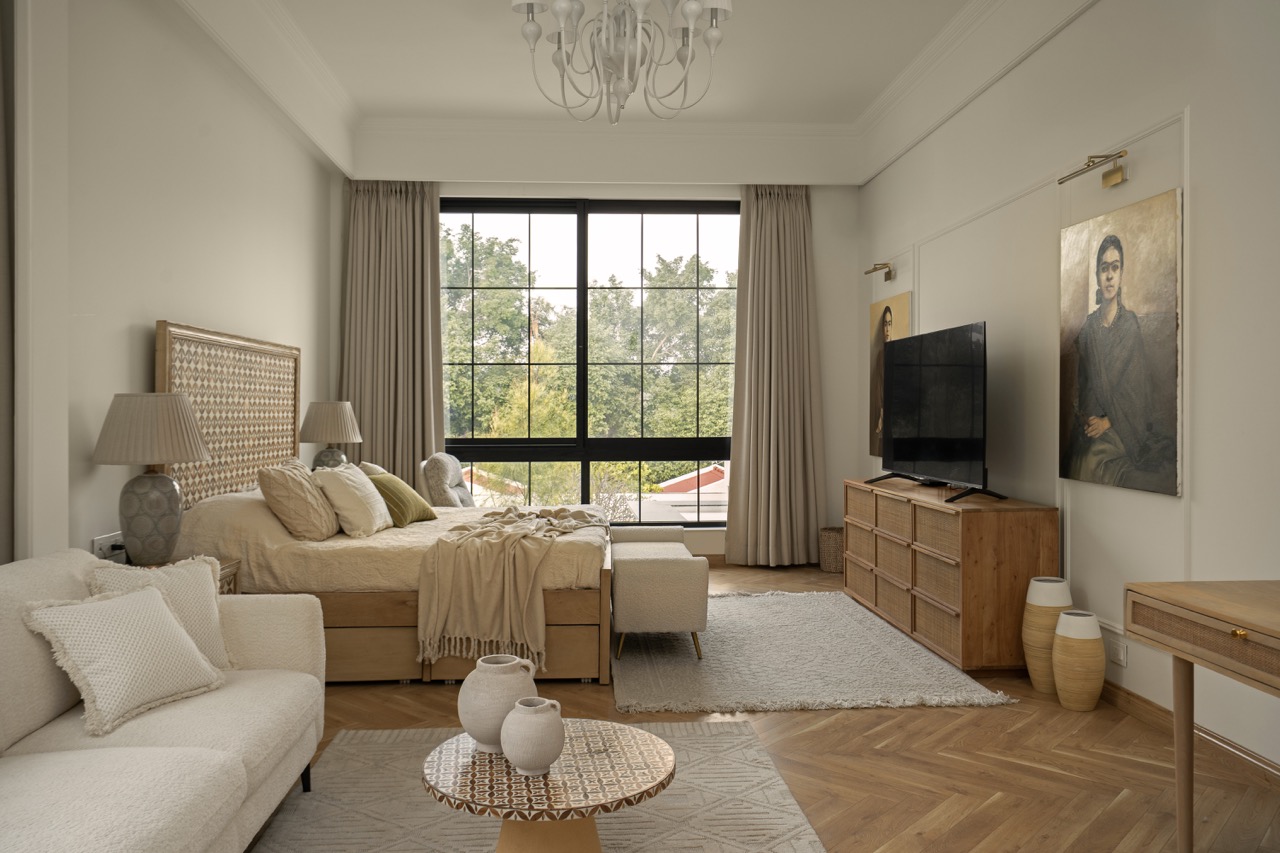
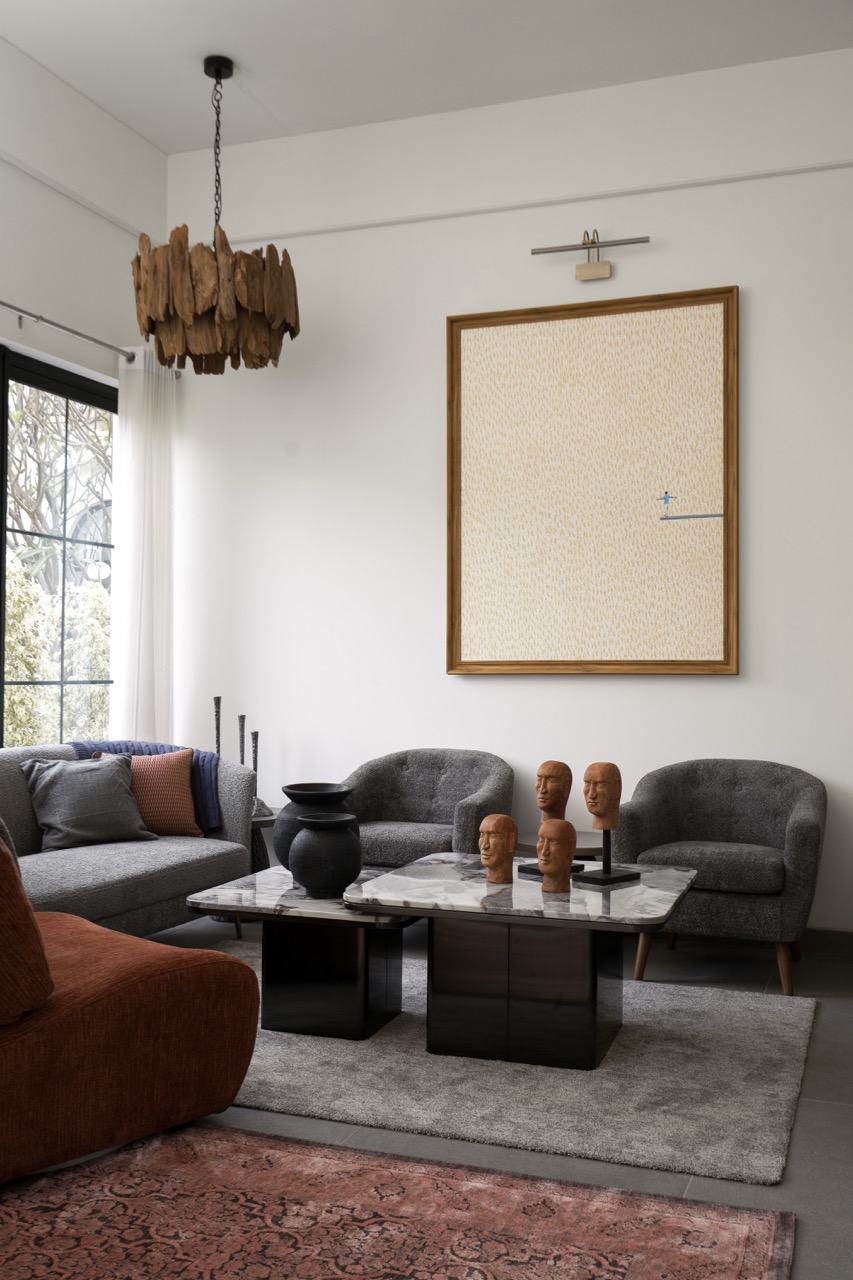
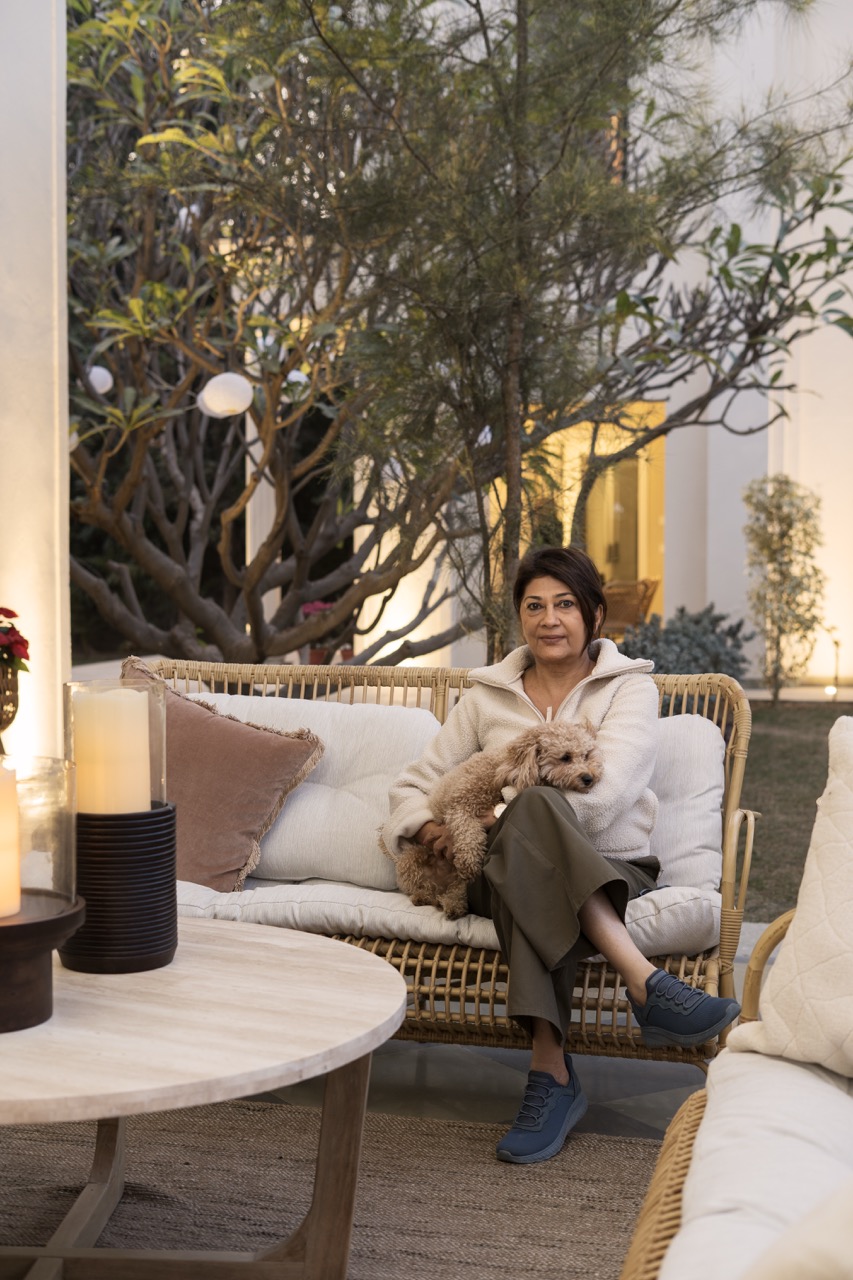
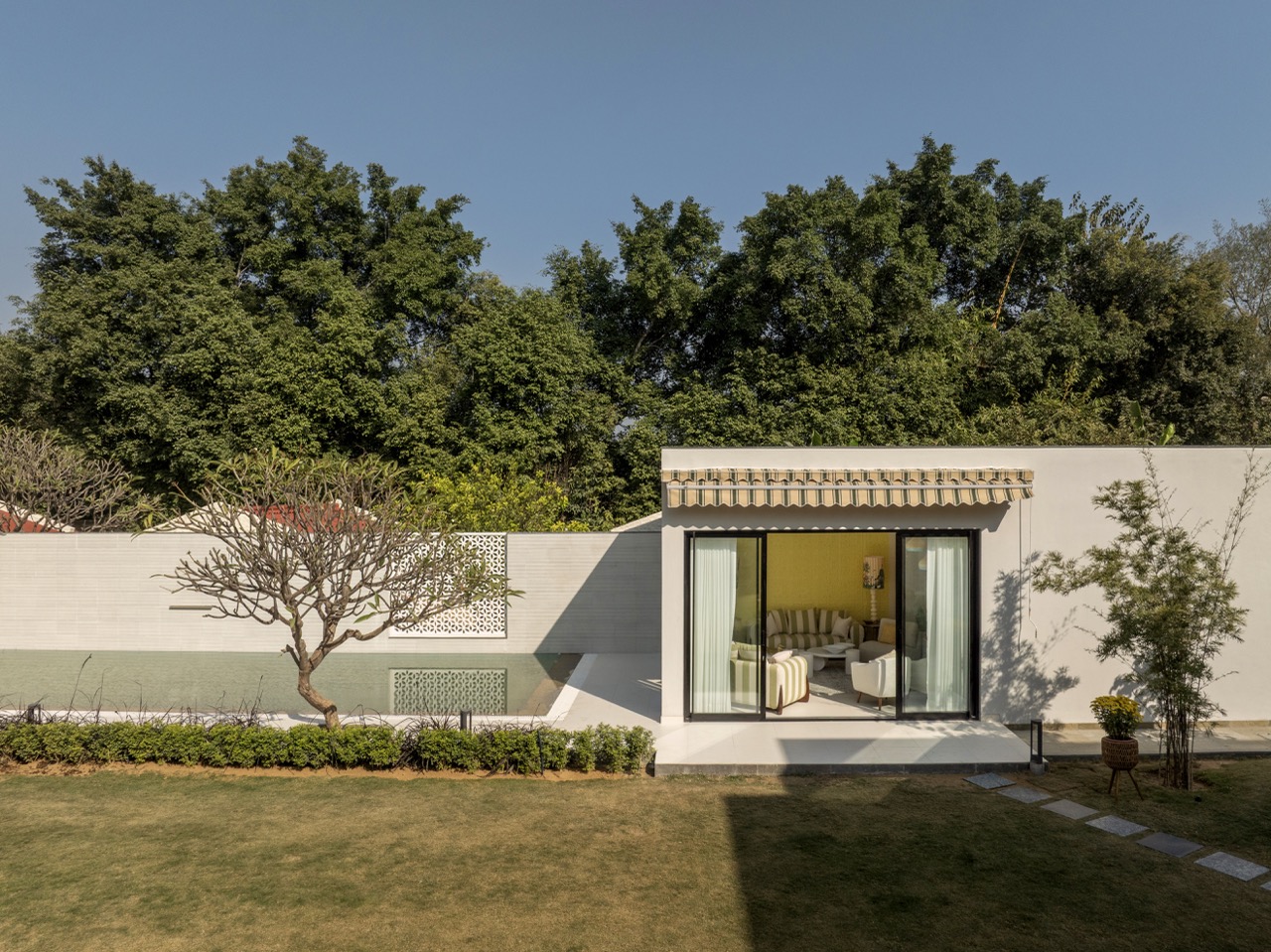
Twenty-five years ago, when the Duggals purchased a plot of land in Chattarpur, Anuradha Duggal planted a few champa trees on the property. When it was time to build their home here, those trees – now mature adults – were going to be central to her plans. They are what the architect Gourav Sharma calls “the protagonists”. These silent but willing participants – three champa trees and the land at large – got equal play as Anuradha and Gourav got down to brass tacks and blueprinted a plan for her 15,000 sq ft home.
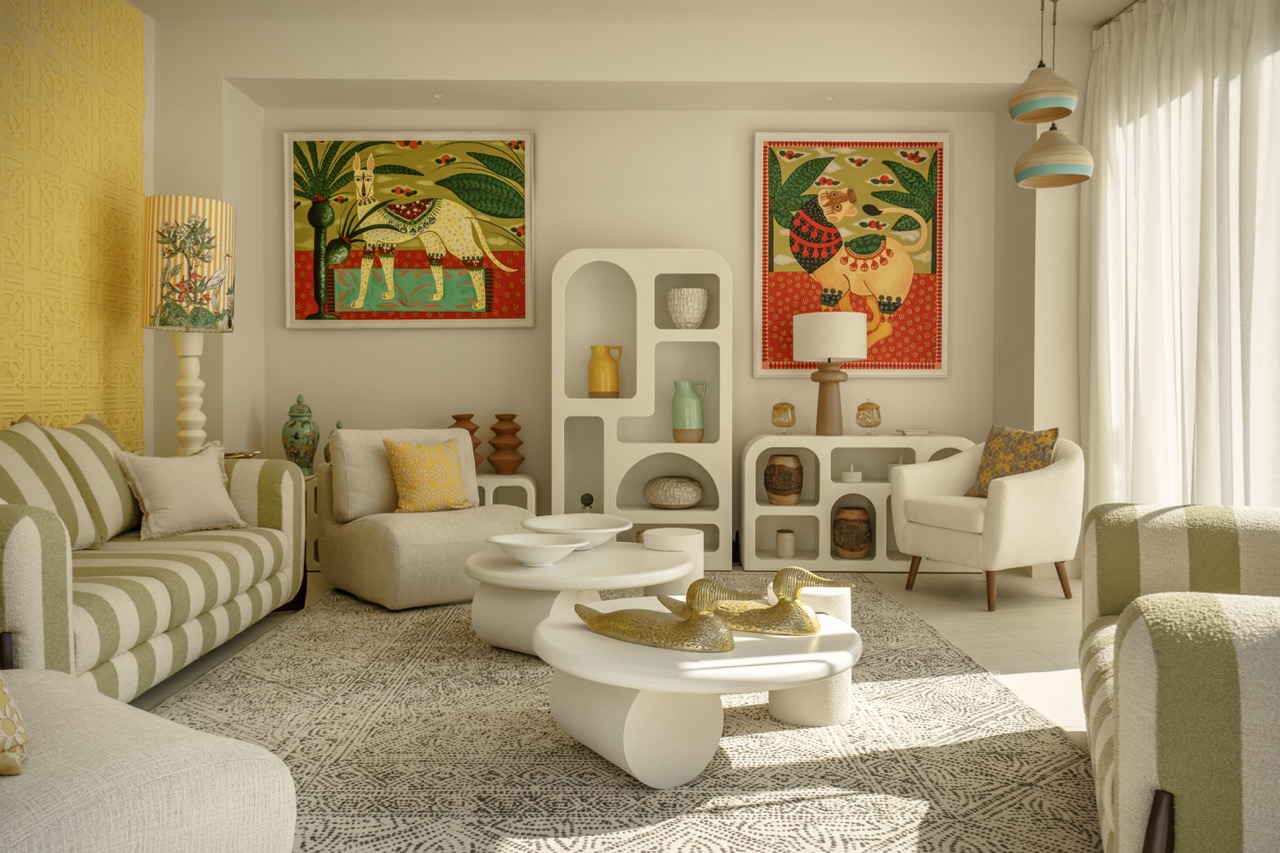
“My brief to Gourav was fairly clear do not cut down or move any of the trees,” says Anuradha. Gourav notes the clarity of her vision, and also her “curatorial eye and her instinctive understanding of colour, proportion, and composition.” That strength meant she was perfectly positioned to take on more than just client duties. As a fashion designer with four homes already under her belt, Anuradha donned the role of interior designer while Gourav focused on shaping the architecture.
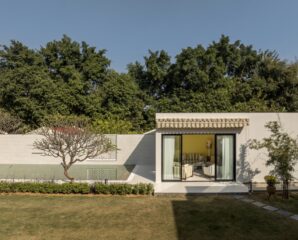
Together, the duo arrived at a design that reconfigures multigenerational living with three, two-storey neo-classical villas across two-and-a-half acres, arranged around a shared central lawn and swimming pool. Built for three households – Anuradha and her husband, and their two adult sons, the villas are together yet apart. “We wanted to accommodate three independent households on a single parcel of land without compromising autonomy or togetherness,” explains Gourav. “The key non-negotiable was what I describe as spatial diplomacy: distinct private domains that remain visually and spatially connected.”
He did this by building similar exteriors with three different interiors to reflect its individual inhabitants. Working within the framework of Anuradha’s brief for restrained elegance, he created structures that aligned with her ‘Indo-Parisian vision.’ The classical touches show up in corniced parapets and fluted Ionic columns supporting the three villas. His colour and material palette also draw from this sensibility, with details like white marble flooring inlaid with black motifs running through each villa, complementing each of Anuradha’s distinct colour stories.
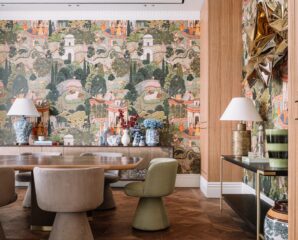
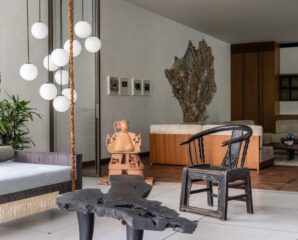
As Gourav worked on the bones of the spaces, Anuradha began adding the substance. Over a “two year curatorial journey”, she visited Istanbul, Kochi, Jodhpur, Goa, and Rajasthan, hunting, seeking, scouring, and acquiring art, artefacts, and objects to build a narrative that was made-to-measure. Part of that meant working closely with upcoming artists, particularly those practising Gond art, to use the villas as canvases for creative expression.
The trees, though, anchor everything. Large panelled and arched windows are positioned to frame views of the landscape, letting ample light filter through. And the largest champa tree – six metres in diameter – commands the dining room view. Two-and-a-half decades after Anuradha planted them, these trees have watched sprawling architecture come up around them. And in these three villas that honour their first-mover privilege, the champa trees, stoic and lovely, are now as much a part of the homes as its people.
Designer Profile